

Why Is the Three Phase Squirrel Cage Motor the Most Widely Used AC Motor
2026-07-24
Walk into any industrial plant, pumping station, or HVAC room, and you will hear the same steady hum. That sound often comes from a Three Phase Squirrel Cage induction motor. This motor design has dominated global industry for over a century. But what makes it so universal? The answer lies in a perfect balance of simplicity, cost, durability, and performance. At Hongyunteng, we have supplied thousands of these units across sectors, and we see daily proof of why this motor remains the first choice for engineers worldwide.
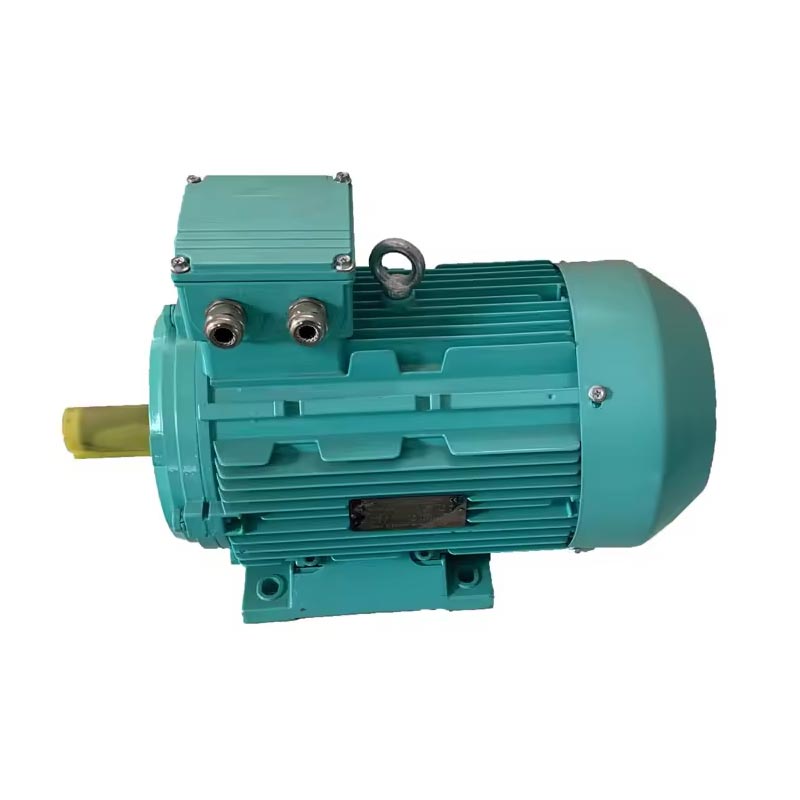
The Core Design That Wins Every Time
The Three Phase Squirrel Cage motor gets its name from its rotor construction. The rotor consists of conductive bars shorted at both ends, resembling a hamster wheel or squirrel cage. This rotor has no windings, no slip rings, and no brushes. This absence of moving electrical contacts delivers a massive reliability advantage over other AC motor types.
| Feature | Three Phase Squirrel Cage | Wound Rotor Motor | DC Motor |
|---|---|---|---|
| Rotor complexity | Very low (cast bars) | High (windings + slip rings) | Very high (commutator + brushes) |
| Maintenance frequency | Minimal (bearings only) | Moderate (rings + brushes) | High (brush replacement) |
| Initial cost | Low | Moderate to high | High |
| Efficiency (full load) | 90–96% | 88–93% | 85–90% |
| Speed regulation | Slip-dependent (~3–5%) | Adjustable via external resistance | Excellent (but costly) |
| Overload capacity | High (up to 300% torque) | Moderate | Moderate |
This table shows that the Three Phase Squirrel Cage design offers the best compromise for 90% of industrial applications. No other motor type gives you this combination of low upfront investment and long-term operational savings.
Five Concrete Reasons for Global Dominance
1. Extreme Ruggedness
Because the rotor has no windings, it withstands mechanical stress, vibration, and thermal cycling better than any wound design. Hongyunteng field data shows that properly maintained units often run 15–20 years without rotor failure.
2. Simple Starting Methods
You can start these motors with direct-on-line (DOL), star-delta, or soft starters. This flexibility matches any grid capacity. For large ratings, reduced-voltage starters work seamlessly with the Three Phase Squirrel Cage rotor.
3. Low Maintenance Cost
Maintenance is limited to bearing lubrication, air gap inspection, and terminal box checks. No brush changes, no slip-ring resurfacing, and no commutator skimming. This translates into lower total cost of ownership.
4. High Efficiency Across Loads
Modern designs with copper rotors and premium-grade silicon steel laminations achieve IE3 and IE4 efficiency levels. This means less energy waste and lower electricity bills, a critical factor in continuous-duty applications.
5. Standardization and Spare Availability
IEC and NEMA standards ensure that Three Phase Squirrel Cage motors from different manufacturers share mounting dimensions and shaft heights. Hongyunteng stocks interchangeable frames, so you never face long downtime waiting for custom parts.
Performance Comparison Under Real Conditions
| Operating Parameter | Squirrel Cage | Synchronous Motor | Wound Rotor |
|---|---|---|---|
| Starting current (% of full load) | 500–700% | 300–400% | 250–350% |
| Starting torque (% of full load) | 150–250% | 100–150% | 200–300% |
| Power factor (at 75% load) | 0.82–0.88 | 0.90–1.0 (excited) | 0.80–0.85 |
| Sensitivity to voltage dips | Moderate | High (loses sync) | Moderate |
| Suitability for hazardous areas | Excellent (no sparking parts) | Good | Poor (brush sparks) |
This data explains why the Three Phase Squirrel Cage motor is the default option for pumps, fans, compressors, conveyors, and crushers. It handles voltage fluctuations better than synchronous motors and poses no ignition risk, making it safe for chemical and mining environments.
Frequently Asked Questions About the Three Phase Squirrel Cage Motor
Q1: Can a Three Phase Squirrel Cage motor operate with a variable frequency drive (VFD) without derating?
A: Yes, but with important precautions. A standard Three Phase Squirrel Cage motor can run on a VFD, but you must consider the additional heating caused by harmonic currents and reduced cooling at low speeds. For continuous operation below 50% of base speed, you should either use an externally forced ventilation fan or choose an inverter-duty rated motor with class F or H insulation. Hongyunteng recommends checking the motor's voltage/frequency curve and ensuring the VFD's carrier frequency does not exceed 4 kHz for standard units. Also, install dV/dt filters for cable runs longer than 50 meters to protect winding insulation. With these measures, you can safely operate from 10 Hz to 120 Hz without significant life reduction.
Q2: How do I determine if my Three Phase Squirrel Cage motor has a rotor bar defect without disassembling it?
A: Rotor bar defects such as cracks or porosity are common failure modes in aging motors. The most reliable non-destructive test is the current signature analysis (CSA) or motor current signature analysis (MCSA). Connect a high-resolution current clamp to one supply line and perform a Fast Fourier Transform (FFT) on the startup current. A healthy Three Phase Squirrel Cage rotor shows sideband frequencies around the line frequency at slips times the number of poles. Specifically, look for sidebands at �����±2⋅�⋅�����, where � is the slip. If these sidebands exceed -50 dB relative to the fundamental, suspect a broken bar. Another practical field test is the rotor influence test – apply reduced voltage (10–20% of rated) and slowly rotate the rotor by hand while monitoring stator current. A steady current indicates good bars; fluctuating current points to defective bars. Hongyunteng offers portable test kits for this diagnosis.
Q3: What is the correct procedure to reverse the rotation direction of a Three Phase Squirrel Cage motor during commissioning?
A: Reversing a Three Phase Squirrel Cage motor is straightforward but must follow a strict safety sequence. First, isolate the motor from the power supply using a lockout/tagout procedure. Wait at least 5 minutes for the DC bus capacitors in the starter or VFD to discharge. Then, open the terminal box and interchange any two of the three incoming supply lines (e.g., swap L1 and L2). Do not change the internal stator winding connections (delta or star) – only swap external cables. After re-energizing, perform a brief jog test (less than 2 seconds) to verify the new direction matches your driven equipment's arrow. For motors with built-in thermal protectors or PTC sensors, double-check that the swapping does not affect the control circuit polarity. Hongyunteng advises marking the original phase sequence with color-coded sleeves before any change, and always consult the driven machine manual – some pumps and fans have specified rotation to avoid impeller damage.
Real-World Economic Impact
Consider a 150 kW motor running 8,000 hours annually at an electricity cost of $0.12/kWh. A 2% efficiency difference between a standard Three Phase Squirrel Cage motor and a wound rotor motor means:
-
Annual energy loss difference: 150 kW × 0.02 × 8,000 h = 24,000 kWh
-
Annual cost saving: 24,000 × $0.12 = **$2,880**
Over 10 years, that single motor saves nearly $30,000. Now multiply this by hundreds of motors in a large plant. Hongyunteng helps clients conduct these payback calculations to justify premium-efficiency squirrel cage investments.
The Verdict
The Three Phase Squirrel Cage motor is not the most efficient, not the most precise, and not the highest starting torque. But it excels in what matters most: dependable, economical, and trouble-free operation across a vast range of duties. Its simple rotor makes it immune to many failure modes that plague other designs. Its standardized frames allow quick replacement. Its compatibility with modern VFDs extends its relevance into the age of automation.
Ready to select the right Three Phase Squirrel Cage motor for your specific application? Our team at Hongyunteng provides full technical support, from sizing calculations to vibration analysis and efficiency audits. Contact us today with your load profile, duty cycle, and environmental conditions – we will respond within 4 hours with a customized proposal and a 3D model of the mounting arrangement.