

Why Is Low Noise a Key Advantage of Hub Motors in Cities?
2026-10-22
An urban noise specialist reviews the complaint data for a city district. The district has a high density of hospitals, schools, and residential buildings. In the past 12 months, the district received 140 noise complaints related to powered two-wheelers. Of these, 118 were linked to gasoline scooters and 22 to electric two-wheelers. The specialist measures the noise levels of the two vehicle types at the same speed. The gasoline scooter produces 72 to 78 dB at 30 km/h. The electric scooter with Hub Motors produces 58 to 62 dB at the same speed. The difference is 14 to 16 dB, which corresponds to a 25 to 40 times reduction in sound energy. The specialist concludes that the Hub Motors architecture is a significant advantage for urban noise control. This guide explains why.
1. What Are the Noise Sources in a Hub Motor Compared to a Mid-Drive System?
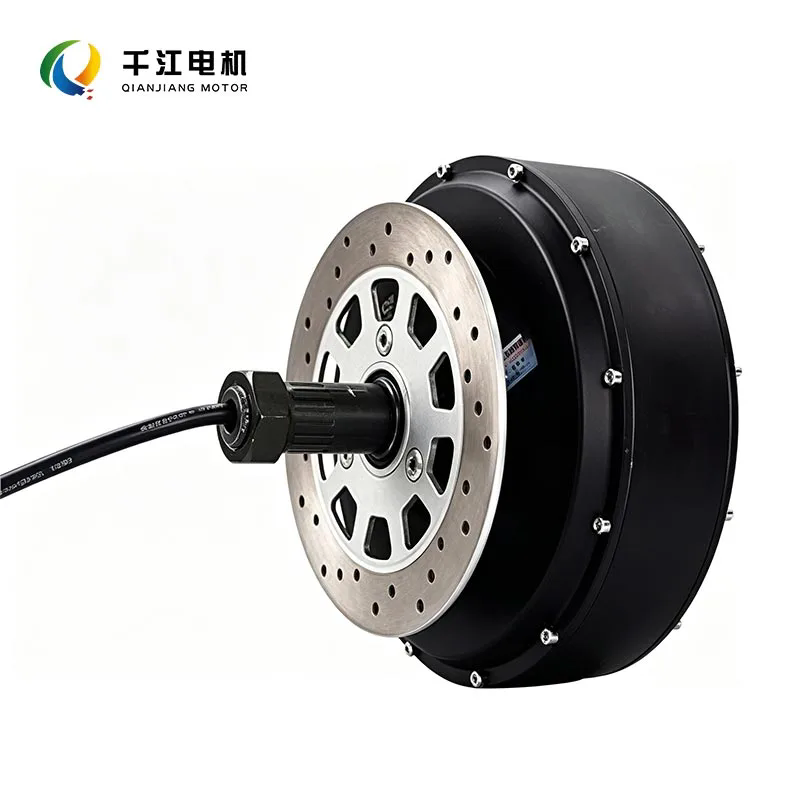
The noise of a powered two-wheeler comes from four sources: the engine or motor, the transmission, the tires, and the aerodynamic flow. In a gasoline scooter, the engine and the continuously variable transmission are the dominant sources at low speed. In an electric scooter with Hub Motors, the motor is integrated into the wheel hub. There is no chain, no belt, and no gearbox between the motor and the wheel. This eliminates the transmission noise entirely. The remaining noise sources are the motor itself, the tires, and the aerodynamic flow. The table below compares the noise sources of the two architectures.
| Noise source | Gasoline scooter | Hub Motor electric scooter |
| Engine / motor | Dominant at low speed (70 – 80 dB) | Low (55 – 60 dB) |
| Transmission | CVT and gears (5 – 10 dB contribution) | None (direct drive) |
| Tires | 55 – 65 dB at 30 km/h | 55 – 65 dB at 30 km/h |
| Aerodynamic flow | 45 – 55 dB at 30 km/h | 45 – 55 dB at 30 km/h |
| Overall at 30 km/h | 72 – 78 dB | 58 – 62 dB |
In our factory, we manufacture Hub Motors for electric scooters and e-bikes. The motors use a brushless DC design with a sine wave controller, which reduces the electromagnetic noise compared to a square wave controller. Ningbo Qianjiang Motor Co., Ltd. has been manufacturing hub motors for over 12 years.
2. How Does Speed Affect the Noise Contribution of the Motor Versus the Tires?
The noise contribution of the motor decreases as the speed increases, while the tire noise increases. At low speed (10 to 20 km/h), the motor is the dominant source. At high speed (40 to 50 km/h), the tire and aerodynamic noise become dominant. The Hub Motors architecture has the greatest advantage at low speed, which is exactly where urban noise complaints are most common. The table below shows the noise contribution at different speeds.
| Speed (km/h) | Hub Motor noise (dB) | Tire noise (dB) | Overall electric (dB) | Gasoline scooter (dB) |
| 10 | 52 | 45 | 53 | 75 |
| 20 | 54 | 50 | 56 | 76 |
| 30 | 56 | 55 | 59 | 77 |
| 40 | 58 | 60 | 63 | 78 |
| 50 | 60 | 65 | 67 | 80 |
Urban noise specialist's note: The Hub Motors advantage is most pronounced at speeds below 30 km/h. In a city center with a 30 km/h speed limit, the electric scooter with hub motors is 15 to 18 dB quieter than a gasoline scooter. This is a significant reduction for residents who live near the street. The World Health Organization recommends that urban traffic noise should be kept below 55 dB during the day and 45 dB at night. The hub motor scooter meets the daytime limit at low speed, while the gasoline scooter exceeds it by a wide margin.
3. Why Does Low Noise Matter in Sensitive Urban Zones?
Sensitive urban zones include hospitals, schools, residential areas, and parks. In these zones, noise can disrupt sleep, concentration, and recovery. The Hub Motors architecture allows electric scooters to operate in these zones without exceeding the noise limits. This is particularly important for delivery fleets that operate early in the morning or late at night. The table below shows the noise limits for different urban zones and the compliance of the two vehicle types.
| Zone type | Daytime limit (dB) | Nighttime limit (dB) | Hub Motor scooter compliance | Gasoline scooter compliance |
| Hospital | 55 | 45 | Compliant at < 30 km/h | Non-compliant |
| School | 55 | 45 | Compliant at < 30 km/h | Non-compliant |
| Residential | 55 | 45 | Compliant at < 30 km/h | Non-compliant |
| Commercial | 65 | 55 | Compliant at < 40 km/h | Marginal |
| Industrial | 70 | 60 | Compliant at all speeds | Compliant at < 40 km/h |
In our factory, we test the noise level of every Hub Motors model at 1 meter distance and at different speeds. We provide a noise test report with each motor. Ningbo Qianjiang Motor Co., Ltd. also offers a low-noise controller option that reduces the electromagnetic noise by 3 to 5 dB compared to the standard controller.
4. How Do Operators and Cities Benefit From Low-Noise Hub Motors?
The low noise of Hub Motors provides benefits to both the operator and the city. For the operator, low noise means access to sensitive zones that are restricted for noisy vehicles. Delivery fleets can operate in residential areas during early morning hours without disturbing residents. For the city, low noise means fewer complaints, better compliance with noise regulations, and a higher quality of life for residents. The table below summarizes the benefits.
| Benefit | Operator | City |
| Access to sensitive zones | Yes (delivery, sharing services) | Reduced traffic congestion |
| Complaint reduction | Fewer service restrictions | Improved resident satisfaction |
| Regulatory compliance | Meets noise limits | Achieves noise action plan targets |
| Operating hours | Extended hours in residential areas | Reduced nighttime disturbance |
| Brand image | Green and quiet fleet | Supports sustainable mobility goals |
In our factory, we work with scooter sharing operators and delivery companies to specify Hub Motors that meet the noise requirements of their operating cities. We provide noise data and compliance documentation for the permit applications. Ningbo Qianjiang Motor Co., Ltd. has supplied hub motors to fleet operators in over 20 cities.
Frequently Asked Questions About Hub Motor Noise in Cities
Summary for Urban Planners and Fleet Operators
The low noise of Hub Motors is a key advantage in cities because it reduces the dominant noise source at urban speeds. The hub motor eliminates the transmission noise of a mid-drive system and produces less electromagnetic noise than a gasoline engine. At speeds below 30 km/h, the hub motor scooter is 14 to 18 dB quieter than a gasoline scooter, which is a 25 to 40 times reduction in sound energy. This allows the scooter to operate in sensitive zones such as hospitals, schools, and residential areas without exceeding the noise limits. For fleet operators, the low noise enables extended operating hours and access to restricted zones. For cities, it supports noise action plans and improves the quality of life for residents. Ningbo Qianjiang Motor Co., Ltd. has been manufacturing Hub Motors for over 12 years and provides noise test reports and compliance documentation for our customers.
Ningbo Qianjiang Motor Co., Ltd. manufactures Hub Motors for electric scooters and e-bikes with sine wave controllers, sealed bearings, and dynamically balanced rotors. We provide noise test reports, low-noise options, and retrofit kits for all of our products.