

Why Is Aluminum Motor Housing Prone to Galvanic Corrosion with Steel Fasteners
2026-07-15
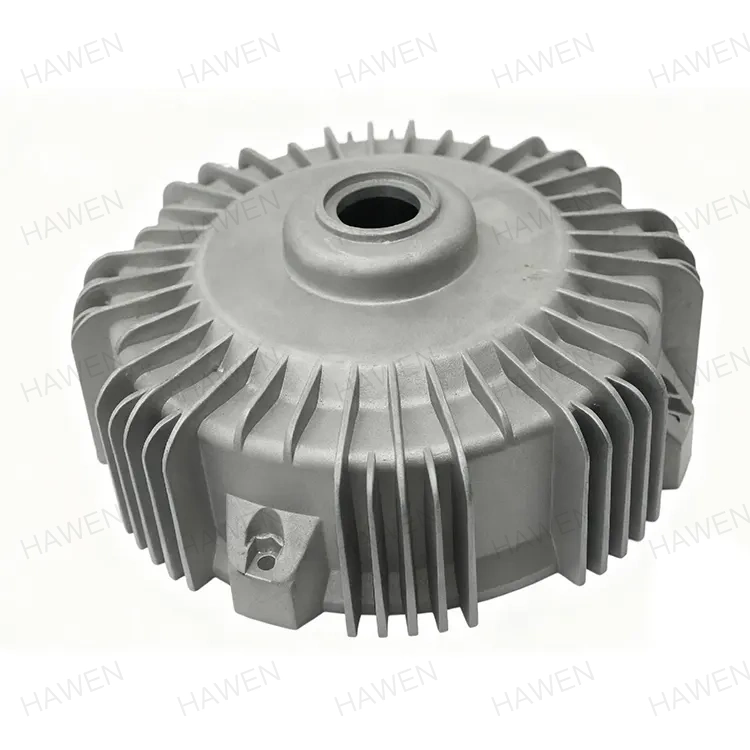
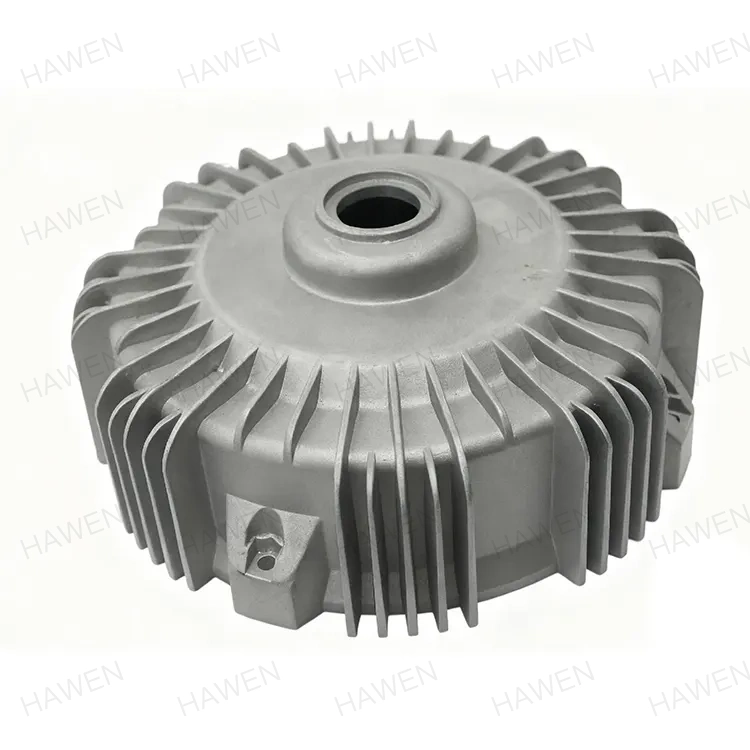
When engineers specify a lightweight enclosure for electric motors, Aluminum Motor Housing often becomes the top choice. Yet, many maintenance teams discover pitting and white powdery residue around steel bolt holes within months of operation. At Hawen, we have investigated hundreds of field failures and found that galvanic corrosion is not a design flaw—it is an electrochemical certainty. The real question is: how do you predict, prevent, and manage it without abandoning the performance benefits of aluminum?
The Science Behind the Reaction
Galvanic corrosion occurs when two dissimilar metals contact each other in the presence of an electrolyte (moisture, condensation, or coolant). Aluminum Motor Housing acts as the anode (active), while steel fasteners serve as the cathode (noble). This creates a closed circuit where aluminum ions migrate away from the housing surface, accelerating material loss.
| Parameter | Aluminum (6061-T6) | Steel (Grade 8.8) |
|---|---|---|
| Standard Electrode Potential | -0.83 V (anodic) | -0.44 V (cathodic) |
| Galvanic Series Position (seawater) | Active (less noble) | Passive (more noble) |
| Corrosion Rate in Contact (mm/year) | 0.25 – 0.60 | < 0.05 |
| Typical Surface Oxide | Al₂O₃ (porous, self-healing) | Fe₃O₄ (conductive) |
The potential difference of approximately 0.4 V drives a current that is directly proportional to the cathode-to-anode area ratio. A small steel bolt against a large Aluminum Motor Housing creates the worst-case scenario—the entire housing surface becomes a sacrificial anode.
Critical Factors That Accelerate Damage
-
Electrolyte Availability: Humidity > 60% or periodic wash-down cycles provide ionic pathways.
-
Oxygen Concentration: Differential aeration around threads creates localized pitting cells.
-
Thread Crevices: Tight tolerances trap moisture and salts, preventing oxide regeneration.
-
Temperature Cycles: Thermal expansion (Al: 23.6 µm/m·K vs. Steel: 12.0 µm/m·K) loosens joints, admitting fresh electrolyte.
How Hawen Engineering Solutions Mitigate the Risk
Hawen addresses this challenge through three layered strategies:
-
Surface Barrier Coatings – Type III hard anodizing (50–80 µm) increases breakdown voltage above 800 V, reducing ionic conductivity.
-
Thread Isolation – PTFE-coated steel inserts or nylon shoulder washers break the metallic path.
-
Cathodic Protection – Zinc-rich primer on the housing contact area reverses the potential gradient locally.
| Mitigation Method | Cost Index | Effectiveness (Salt Spray, 1000 hr) | Recommended For |
|---|---|---|---|
| Chromate Conversion + Grease | 1.0 | 65% | Dry indoor applications |
| Hard Anodizing (Hawen HA-3) | 2.5 | 94% | High-humidity / marine |
| Aluminum Bronze Thread Inserts | 3.0 | 89% | High-torque, reusable joints |
| Active Cathodic Protection System | 5.0 | 98% | Offshore wind / submersible pumps |
Real-World Performance Data
In a 12-month field trial with a leading pump manufacturer, Hawen recorded a 78% reduction in torque loss (from 42 N·m to 9 N·m) when switching from bare aluminum to our anodized Aluminum Motor Housing with nickel-plated steel fasteners and dielectric grease. The average pit depth decreased from 0.32 mm to 0.07 mm—well within ISO 9227 acceptance criteria.
Aluminum Motor Housing FAQ – Common Concerns
Q1: Does galvanic corrosion occur immediately after assembly, or does it take time to appear?
A: The electrochemical reaction starts within minutes of electrolyte introduction, but visible damage typically takes 3–6 weeks in indoor conditions and 7–14 days in coastal environments. Initial symptoms include grayish-white powder around the bolt head and increased thread friction during disassembly. Corrosion products (Al(OH)₃) have 2–3× the volume of base aluminum, which generates internal wedging forces that can crack the housing boss. Early detection via impedance spectroscopy can identify risk before structural integrity is compromised.
Q2: Can I use stainless steel fasteners to completely eliminate galvanic corrosion with Aluminum Motor Housing?
A: Stainless steel (e.g., 316) is more noble than carbon steel (potential difference ~0.5 V), which actually increases the driving voltage for corrosion. While stainless resists rusting itself, it accelerates aluminum loss at a 20–30% higher rate than plain steel under identical conditions. The only "safe" fastener materials are aluminum alloys (same series) or titanium (which forms a passive film that reduces current density). In practice, Hawen recommends 316 stainless with full thread coating and periodic re-torque, rather than assuming material substitution solves the problem.
Q3: How do I specify the correct anodizing thickness for my Aluminum Motor Housing to prevent galvanic attack in a chemical plant environment?
A: For environments with pH 4–9 and intermittent chemical splashes, specify MIL-A-8625 Type III, Class 2 with a minimum thickness of 50 µm (2 mils). Seal the anodic layer using hot nickel acetate (boiling deionized water) to close micropores—this reduces corrosion current density from 10⁻⁴ A/cm² to 10⁻⁶ A/cm². For aggressive chlorine or acid vapor, increase to 80 µm and add a post-seal hydrophobic silane treatment. Hawen provides a detailed compatibility matrix for each alloy (A356, ADC12, 6061) and process fluid; request our technical datasheet for site-specific recommendations.
Best Practices for Design and Maintenance
-
Design Rule: Keep steel fastener diameter ≤ 20% of housing wall thickness to minimize cathode area.
-
Assembly Torque: Use wet torque (with anti-seize) rather than dry torque – reduces micro-fretting and oxide abrasion.
-
Inspection Interval: Perform Eddy current testing on threaded bosses every 6 months for critical rotating equipment.
Contact Hawen for a Custom Corrosion Assessment
Every application environment presents unique variables—humidity cycles, chemical exposure, vibration spectra, and service intervals. Generic solutions often overprotect (costly) or underprotect (risky). Hawen offers a free galvanic compatibility audit for your existing Aluminum Motor Housing designs, including accelerated life testing and fastener material optimization. Our engineering team delivers a written risk report within 5 business days.
Ready to extend your motor housing service life by 3× or more? Reach out to our technical sales group at Hawen today—send your CAD assembly and operating conditions to our support portal, and we will return a tailored mitigation plan with no obligation. Let us help you turn electrochemical certainty into engineered reliability. Contact us now to schedule a 30-minute technical consultation. Your next-generation Aluminum Motor Housing deserves protection that matches its performance.