

Why Does an XHS Radial Piston Motor Make More Sense for Heavy-Duty Hydraulic Applications?
2026-04-03
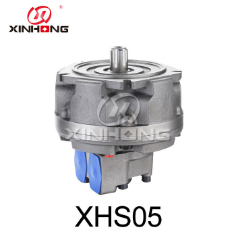
When I evaluate a hydraulic drive solution for demanding equipment, I do not just look at catalog numbers. I look at how the unit starts under load, how it behaves at low speed, how much torque it can deliver without hesitation, and how reliably it keeps working when the environment is harsh. That is exactly why I pay close attention to products from Ningbo Xinhong Hydraulic Co.,Ltd. and, in particular, the XHS Radial Piston Motor. In real purchasing decisions, buyers are rarely looking for a motor in the abstract. They are looking for a dependable answer to difficult field conditions, tight maintenance windows, efficiency demands, and long-term operating cost pressure. A well-matched motor can solve those problems quietly every day.
In this article, I want to explain how I would present the XHS Radial Piston Motor to practical buyers who care about performance, durability, and value rather than empty claims. I will focus on the pain points that matter most in construction, marine work, mining, drilling, winch systems, gearbox drives, and other heavy-duty hydraulic applications. My goal is to show why the right motor design can reduce startup struggle, improve low-speed stability, support heavy loads, and help operators get more predictable results from their equipment.
What Problems Do Buyers Usually Face When Choosing a Hydraulic Motor?
In my experience, many buyers are not struggling to find “a motor.” They are struggling to find the right motor for a demanding operating profile. A hydraulic motor that looks acceptable on paper can still create very real field problems:
- Weak starting performance under load
- Jerky movement at low speed
- Efficiency losses that increase fuel or power consumption
- Premature wear caused by friction, shock, or overload
- Unstable performance in continuous heavy-duty work
- Limited adaptability for winches, crane drives, marine systems, or industrial machinery
- Maintenance concerns that raise downtime costs
These issues are expensive because they do not stay in the hydraulic system alone. They spread into productivity, safety, maintenance scheduling, and customer satisfaction. That is why I always prefer to discuss application reality before I discuss price. If the motor cannot deliver stable torque and dependable output where it actually matters, the lowest quote on the table is not the lowest real cost.
How Does an XHS Radial Piston Motor Address Those Pain Points?
What makes the XHS Radial Piston Motor especially attractive is that its design direction matches the problems buyers actually care about. Instead of focusing on one isolated specification, it is built around a combination of startup capability, mechanical efficiency, volumetric efficiency, load capacity, and smoother oil distribution. For buyers, that combination matters more than marketing language because it affects daily operating behavior.
When I look at a radial piston motor in a serious application, I want to see signs that the manufacturer has thought about startup friction, low-speed creep, internal losses, and structural robustness. A product with those priorities tends to perform better in the field, especially in systems where the load is not forgiving. That is why the XHS Radial Piston Motor stands out as a more practical choice for heavy-duty hydraulic transmission tasks.
Why Does Startup Torque Matter So Much in Real Work?
Startup torque is one of the first things I examine because it influences whether a machine feels confident or compromised the moment it begins moving. In applications such as winches, cranes, marine deck machinery, drilling drives, and mining equipment, the load is often substantial from the very first rotation. If the motor hesitates or struggles at startup, the operator notices it immediately.
A motor with strong startup behavior helps equipment do three important things:
- Start smoothly under heavy load
- Reduce shock and stress on connected components
- Improve control when precise movement is required
From a buyer’s perspective, this is not a small technical detail. It is directly linked to operator confidence, system protection, and work efficiency. When I recommend a solution for demanding hydraulic power transmission, I want a motor that does not need excuses when the load is real. That is one reason the XHS Radial Piston Motor has strong commercial relevance in industrial markets.
How Can Low-Speed Stability Improve Equipment Control?
Low-speed performance is often overlooked by inexperienced buyers, but it matters greatly in applications that require controlled motion. If a motor creeps unevenly, surges, or becomes unstable at low speed, operators lose precision. That can affect safety, positioning accuracy, and component wear. I have seen projects where the issue was not whether the system could move, but whether it could move smoothly enough to do the job properly.
In practical terms, better low-speed behavior can mean:
- More stable lifting and lowering in winch and crane systems
- Cleaner motion control in marine or offshore equipment
- Better operational feel in heavy machinery
- Less vibration and less unnecessary stress on the drivetrain
This is where a well-developed radial piston motor becomes more than just a power unit. It becomes part of the machine’s control quality. When I explain value to a buyer, I often point out that smooth low-speed operation can be just as important as peak output.
What Product Advantages Should Serious Buyers Pay Attention To?
If I were comparing options for a customer, I would focus on the broader value package rather than chasing a single number. A strong hydraulic motor should support durability, efficiency, and load-handling confidence at the same time. That is the kind of positioning that makes a product easier to specify and easier to sell.
| Buyer Concern | What Matters in Practice | Why It Supports Purchasing Value |
| Starting under load | High startup torque and reduced friction influence | Helps machines begin work more confidently and reduces system strain |
| Low-speed movement | Stable creep-speed behavior and smoother output | Improves control, positioning, and operator experience |
| Efficiency | Strong mechanical and volumetric performance | Supports lower internal loss and better energy use |
| Heavy-duty reliability | Robust structure and stronger load capacity | Helps buyers reduce risk in demanding applications |
| Continuous operation | Ability to work under sustained power demand | Improves suitability for industrial and mobile equipment |
| System integration | Useful for winches, crane drives, gearboxes, and more | Expands commercial flexibility across industries |
I like this way of comparing products because it mirrors how actual procurement decisions happen. Most buyers are not choosing a motor for a test bench. They are choosing a motor for a machine that must work reliably, repeatedly, and profitably.
Why Is Structural Design So Important When Loads Become More Demanding?
One of the easiest mistakes in product selection is to assume all motors in the same category will behave similarly. They do not. Structural design affects efficiency, wear characteristics, load response, and long-term stability. When a motor is intended for tougher duty cycles, its internal arrangement becomes a major part of its commercial value.
For me, a convincing heavy-duty motor design should point toward the following practical outcomes:
- Better support during startup and low-speed operation
- Reduced friction-related losses
- More reliable internal oil flow behavior
- Improved ability to handle internal and external load demands
- Stronger confidence in continuous industrial operation
That is why I do not treat the XHS Radial Piston Motor as a commodity item. A buyer who needs dependable torque transfer and stronger structural assurance is usually not shopping for the cheapest piece of hardware. They are shopping for operating stability and service life.
Where Can an XHS Radial Piston Motor Create the Most Value?
The best products are not only technically sound. They are also commercially flexible. When I look at where this type of motor makes the most sense, I see a broad set of industries where heavy load, stable output, and durable hydraulic transmission are all essential.
- Construction equipment
- Marine and deck machinery
- Mining systems
- Drilling equipment
- Plastic processing machinery
- Winches and lifting systems
- Crane drives
- Gearbox-related hydraulic power systems
This range matters from an SEO and market expansion perspective because it allows content to speak to multiple search intentions without sounding forced. Buyers from different sectors may use different terms, but many of them are trying to solve the same underlying problem: they need hydraulic power converted into reliable mechanical output under real working stress.
How Should I Compare a Standard Option With a More Purpose-Built Radial Piston Solution?
When I explain product positioning to buyers, I often use a practical comparison instead of overloading them with isolated specifications. The real question is not whether a motor can run. The real question is whether it can support the job conditions with less compromise.
| Comparison Point | Generic Hydraulic Motor Choice | XHS Radial Piston Motor Positioning |
| Heavy-load startup | May feel acceptable in lighter systems but less confident under high demand | Better aligned with applications that require strong startup torque |
| Low-speed control | May show uneven or less refined motion | More suitable where controlled low-speed output matters |
| Long-duty operation | Performance depends heavily on design margin | Positioned for strong continuous working conditions |
| Load-handling confidence | Can vary widely by model and structure | Better matched to higher load capacity expectations |
| Application breadth | May fit only narrower use cases | Useful across industrial, marine, mining, and lifting scenarios |
I find that this kind of framing helps buyers move beyond price-only thinking. It brings the conversation back to application fit, which is where successful long-term purchasing decisions are usually made.
What Should Buyers Ask Before Sending an Inquiry?
If I were helping a customer shortlist options, I would encourage them to ask the right questions before they request a formal quote. That makes selection faster and reduces the chance of mismatch.
- What load does the motor need to start under?
- How important is smooth low-speed control?
- Will the application operate continuously or intermittently?
- What kind of environmental stress will the equipment face?
- Is the motor being used for a winch, crane drive, gearbox, or another specialized function?
- How much value does the buyer place on long-term reliability versus initial cost?
- Does the project require a supplier that can support long-term cooperation?
These questions are useful because they turn the discussion into a solution process instead of a simple transaction. In B2B purchasing, that shift often leads to better margins, fewer complaints, and a more durable customer relationship.
Why Does Supplier Reliability Matter Almost as Much as Product Performance?
Even a strong product can become a weak purchase if the supplier is difficult to work with. I always remind buyers that consistent manufacturing, technical understanding, communication quality, and delivery reliability all shape the final result. The product and the supplier should be evaluated together, not separately.
For overseas buyers in particular, confidence grows when the supplier demonstrates a clear focus on hydraulic components, real manufacturing experience, and the ability to support long-term cooperation. That is part of what makes content around Ningbo Xinhong Hydraulic Co.,Ltd. commercially meaningful. Buyers are not just searching for a motor model. They are often searching for a stable manufacturing partner who understands how performance, service, and repeat business connect.
How Can the Right Motor Choice Reduce Cost Over Time?
I do not like oversimplified “save money” claims, but I do believe the right selection can reduce total cost in ways that matter. A motor that starts more reliably, controls low-speed movement more smoothly, and performs efficiently under load can contribute to better overall system economics.
Those long-term gains may include:
- Lower downtime risk
- Less stress on connected components
- More consistent machine output
- Better operator confidence and reduced handling issues
- Improved value retention in demanding industrial environments
That is why I see the XHS Radial Piston Motor as more than a catalog entry. For the right customer, it is a risk-reduction decision. And in industrial purchasing, reducing risk is often just as important as improving performance.
Why Should I Contact You If I Am Looking for a Dependable Hydraulic Motor Solution?
If you are sourcing a hydraulic motor for winches, crane drives, marine systems, mining equipment, drilling machinery, or other demanding industrial applications, I believe it is worth taking a closer look at the XHS Radial Piston Motor. A good purchasing decision should give you more than movement. It should give you reliable startup torque, smoother low-speed behavior, stronger load confidence, and a better fit for real-world working conditions.
If you want to discuss your project, compare models, or confirm the right hydraulic solution for your equipment, contact us today. Send your inquiry with your application details, performance expectations, and purchasing requirements, and we will help you move toward a more practical and dependable solution with Ningbo Xinhong Hydraulic Co.,Ltd.. If your priority is long-term value rather than short-term guesswork, now is the right time to contact us and start the conversation.