

Why Choose an HF Series Parallel Shaft Helical Gear Motor for Industrial Applications?
2026-10-23
In modern industrial production, reliable power transmission is essential for maintaining productivity, improving equipment performance, and controlling operating costs. An HF Series Parallel Shaft Helical Gear Motor is designed to deliver controlled speed, increased output torque, and stable mechanical transmission for a wide range of industrial applications. Its parallel-shaft arrangement and helical gear design make it a practical option for machinery that requires dependable power delivery and efficient use of installation space. For manufacturers seeking a suitable drive solution, understanding its operating principles, performance benefits, and application requirements can help improve equipment selection. Wenzhou Hemu Mechanical Equipment Co., Ltd. provides industrial transmission products for customers looking for reliable and application-oriented drive solutions.
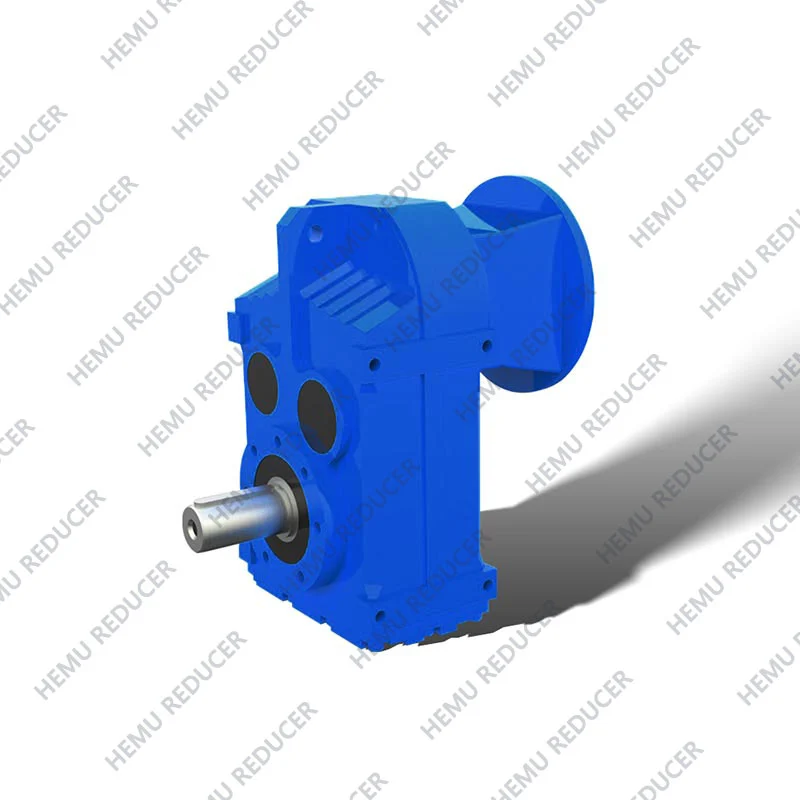
1. What Is an HF Series Parallel Shaft Helical Gear Motor?
An HF Series Parallel Shaft Helical Gear Motor combines an electric motor with a helical gear reduction system. The motor supplies rotational power, while the gearbox adjusts the relationship between input speed and output torque to meet the requirements of the driven equipment.
Unlike a drive system with perpendicular input and output shafts, a parallel-shaft configuration places the shaft axes parallel to each other. This arrangement can simplify integration into machinery where installation space, shaft alignment, and transmission layout are important considerations.
The helical gears feature angled teeth that engage progressively during rotation. Compared with conventional straight-tooth spur gears, this engagement can reduce sudden impacts and help achieve smoother, quieter operation when the unit is correctly selected and installed.
Key Product Characteristics
Typical features of this type of gear motor include:
-
Parallel-shaft transmission: Supports equipment layouts requiring parallel input and output shafts.
-
Speed reduction: Helps match motor speed to the operating requirements of industrial machinery.
-
Torque conversion: Provides increased output torque through an appropriate reduction ratio.
-
Smooth transmission: Progressive tooth engagement supports stable power delivery.
-
Compact installation: Can help optimize equipment layouts where mounting space is limited.
-
Versatile applications: Suitable for various material-handling and industrial drive systems.
2. How Does It Improve Industrial Equipment Performance?
The importance of a gear motor extends beyond simply transmitting power. The right drive system helps machinery operate at an appropriate speed, handle working loads, and maintain consistent performance throughout production cycles.
Improved Speed and Torque Matching
Industrial motors often operate at speeds that do not directly match the requirements of the driven machine. A gear reduction system lowers rotational speed while increasing output torque according to its transmission ratio and mechanical efficiency.
For example, a conveyor may require relatively slow, continuous movement to transport products safely and consistently. By selecting a suitable reduction ratio, an HF Series Parallel Shaft Helical Gear Motor can help deliver the required output speed and torque.
Correct sizing is essential. The motor power, reduction ratio, operating load, and duty cycle should all be evaluated before selecting a specific model.
Smoother and More Stable Transmission
Helical gears engage gradually, allowing multiple teeth to share the load during operation. This characteristic helps reduce abrupt engagement compared with many straight-tooth gear arrangements.
In practical applications, smoother transmission can contribute to reduced vibration, more consistent equipment movement, and improved operating conditions. These benefits are particularly valuable in production environments where machinery runs for extended periods.
Better Use of Installation Space
Industrial equipment often needs to accommodate motors, gearboxes, conveyors, structural supports, and other components within a limited footprint. A parallel-shaft gear motor can provide a convenient transmission arrangement for appropriately designed machinery.
Its suitability depends on the available mounting space, shaft orientation, output configuration, and maintenance access. Evaluating these factors early can help simplify equipment integration.
3. Where Can an HF Series Parallel Shaft Helical Gear Motor Be Used?
The versatility of parallel-shaft helical gear motors makes them suitable for a variety of industrial drive applications. Their actual suitability depends on the required torque, speed, load characteristics, and environmental conditions.
Conveyor and Material-Handling Systems
Conveyors require consistent movement to transfer materials between production, storage, and packaging processes. A properly selected gear motor can provide the controlled speed and torque needed for continuous transportation.
Typical applications include assembly conveyors, warehouse handling equipment, and bulk-material transportation systems.
Automated Production Lines
Automated machinery relies on coordinated movement between individual processing stations. Stable drive performance helps support repeatable production cycles and reduces unwanted interruptions caused by unsuitable transmission components.
Parallel-shaft gear motors can be considered for selected feeding, conveying, and auxiliary drive mechanisms.
Packaging and Processing Machinery
Packaging equipment often requires controlled movement to maintain product positioning and processing consistency. A suitable gear motor can support conveyor belts, feeding mechanisms, and other transmission components.
For demanding applications, buyers should also consider starting frequency, load fluctuations, operating temperature, and required positioning accuracy.
Construction and Industrial Equipment
Certain construction and general industrial machines require dependable torque transmission under changing loads. A properly engineered drive system can support these requirements when its rated capacity and operating conditions match the application.
Before using a gear motor in heavy-duty or safety-critical equipment, engineers should verify the manufacturer's specifications and applicable safety requirements.
4. What Factors Should Buyers Consider Before Selection?
Selecting an industrial gear motor based on price alone can lead to inadequate performance or unnecessary operating expenses. A systematic evaluation helps buyers identify a suitable configuration.
| Selection Factor | Why It Matters |
|---|---|
| Motor power | Determines the available driving power for the application. |
| Gear ratio | Establishes the relationship between input and output speed. |
| Output torque | Indicates the unit's ability to drive the required load. |
| Mounting arrangement | Ensures compatibility with the machine structure and shaft layout. |
| Duty cycle | Helps determine suitability for intermittent or continuous operation. |
| Operating environment | Influences enclosure, sealing, lubrication, and material requirements. |
| Maintenance requirements | Affects service planning and long-term operating costs. |
Buyers should also evaluate starting torque, radial and axial loads, ambient temperature, and the frequency of starts and stops where relevant.
A correctly selected unit should meet both normal operating requirements and foreseeable load variations without being unnecessarily oversized.
5. How Can Proper Maintenance Extend Service Life?
Even a well-designed gear motor requires appropriate installation and maintenance to achieve reliable operation. Preventive maintenance helps identify developing problems before they lead to costly equipment downtime.
Recommended practices include:
-
Check lubrication: Use the specified lubricant and follow the manufacturer's maintenance intervals.
-
Inspect mounting bolts: Ensure the unit remains securely mounted during operation.
-
Monitor noise and vibration: Investigate unusual changes that may indicate wear, misalignment, or other mechanical issues.
-
Check operating temperature: Unexpected overheating may indicate overloading, inadequate lubrication, or ventilation problems.
-
Verify shaft alignment: Correct alignment helps reduce unnecessary mechanical stress.
-
Follow operating limits: Avoid exceeding rated torque, power, speed, or permissible loads.
Maintenance schedules should be adjusted to the equipment manufacturer's instructions and the actual operating environment. Heavy-duty, dusty, or high-temperature applications may require more frequent inspections.
6. Why Work with Wenzhou Hemu Mechanical Equipment Co., Ltd.?
Choosing an industrial transmission supplier involves more than identifying a product category. Buyers also need clear technical information, appropriate model selection, and a drive solution compatible with their equipment.
Wenzhou Hemu Mechanical Equipment Co., Ltd. offers the HF Series Parallel Shaft Helical Gear Motor for industrial transmission applications. When evaluating this product, customers should confirm the available model range, rated power, reduction ratio, output torque, mounting options, and delivery requirements with the supplier.
A careful technical discussion can help purchasing teams compare configurations, reduce selection errors, and identify a solution that fits their production requirements.
Before placing an order, provide the supplier with the following information whenever possible:
-
The machine type and intended application.
-
Required output speed and torque.
-
Available motor power supply and power rating.
-
Installation dimensions and mounting preferences.
-
Operating conditions and expected daily running hours.
These details make it easier to assess product compatibility and clarify the specifications required for procurement.
Conclusion
An HF Series Parallel Shaft Helical Gear Motor can play an important role in improving industrial power transmission through appropriate speed reduction, torque delivery, and smooth mechanical operation. Its parallel-shaft configuration makes it a useful option for selected conveyor systems, automated production lines, packaging machinery, and other industrial applications.
However, long-term performance depends on choosing the correct specifications, ensuring proper installation, and following a suitable maintenance program. By evaluating operating requirements before purchasing, manufacturers can make more informed decisions and build more dependable drive systems.
Looking for a suitable gear motor for your industrial equipment? Contact Wenzhou Hemu Mechanical Equipment Co., Ltd. to discuss your application requirements, confirm product specifications, and explore the right HF Series Parallel Shaft Helical Gear Motor for your transmission needs. Contact us today to learn more about available solutions.