

Why Are So Many Industrial Systems Switching to Hydraulic Motor Technology?
2026-03-10
In recent years, I have noticed a growing shift across industries toward more compact, high-torque power solutions. During my work with equipment manufacturers and engineering teams, I also saw how Ningbo Helm Tower Hydraulic Co., Ltd. gradually introduced advanced Hydraulic Motor solutions that addressed many of the performance issues companies struggle with in demanding environments. Instead of relying solely on traditional mechanical drives, engineers increasingly choose a Hydraulic Motor because it offers higher torque density, improved durability, and more stable operation under extreme working conditions.
From construction machinery to agricultural equipment and industrial automation systems, the modern Hydraulic Motor has become a reliable power component that allows machines to work longer, stronger, and more efficiently.
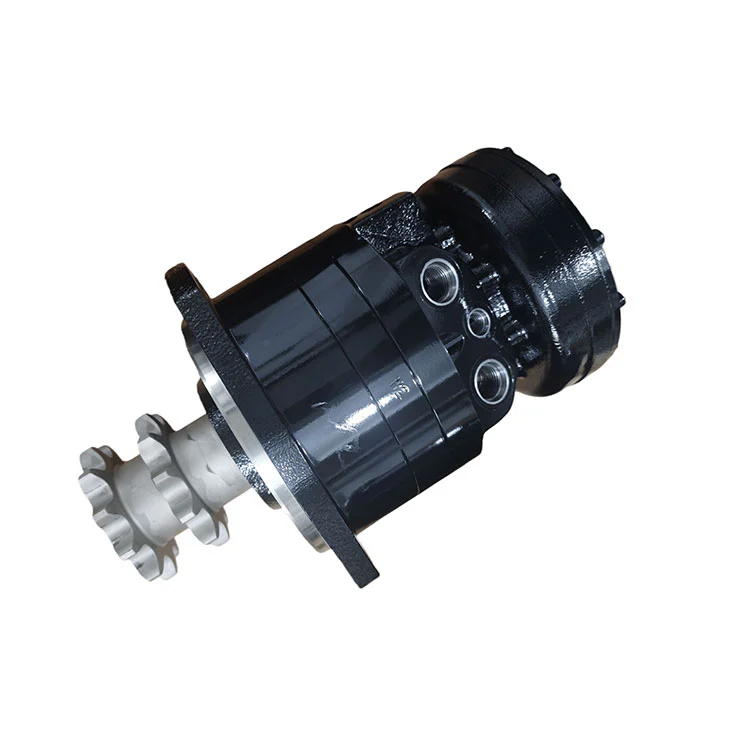
What Challenges Do Equipment Manufacturers Face When Selecting a Hydraulic Motor?
When I speak with equipment designers or purchasing managers, they often mention several recurring challenges. Selecting the right Hydraulic Motor is not simply about power output; it also involves durability, compatibility, and long-term cost control.
- Insufficient torque at low speeds
- Frequent overheating under continuous load
- Short service life caused by poor internal sealing
- Compatibility problems with existing hydraulic systems
- High maintenance costs due to inefficient design
These issues directly affect machine uptime, productivity, and overall operating expenses. That is why many engineers now evaluate the internal structure and material quality of a Hydraulic Motor before making purchasing decisions.
How Does a Hydraulic Motor Improve Power Efficiency in Industrial Machinery?
One of the reasons I recommend a well-designed Hydraulic Motor is its ability to convert hydraulic energy into mechanical rotation with impressive efficiency. Compared with traditional mechanical transmission systems, hydraulic drives allow smoother torque delivery and better load control.
When integrated into modern hydraulic circuits, the motor can deliver consistent power output even when operating under fluctuating loads. This makes it ideal for equipment such as:
- Excavators and drilling rigs
- Mining machinery
- Agricultural harvesters
- Material handling systems
- Marine hydraulic equipment
Because hydraulic systems distribute force through pressurized fluid, the Hydraulic Motor can maintain stable torque even at very low rotational speeds. This characteristic is particularly valuable in heavy-duty industrial operations.
Which Technical Features Make a High-Quality Hydraulic Motor Stand Out?
In my experience evaluating different manufacturers, several technical features consistently determine whether a Hydraulic Motor performs reliably in real-world environments.
| Feature | Engineering Value | Operational Benefit |
| High torque output | Optimized rotor and stator geometry | Improved performance for heavy loads |
| Precision sealing system | Advanced sealing materials | Reduced leakage and longer service life |
| Durable housing structure | High-strength alloy materials | Better resistance to vibration and impact |
| Compact design | Integrated internal components | Easier installation in limited spaces |
| Thermal stability | Optimized fluid flow channels | Reduced overheating during continuous operation |
Why Do Engineers Prefer Hydraulic Drive Systems in Heavy Equipment?
Hydraulic systems offer a level of control and flexibility that mechanical transmissions often cannot match. When I analyze heavy equipment systems, I often see the Hydraulic Motor integrated with pumps, valves, and controllers to create a highly adaptable power network.
This configuration provides several advantages:
- Smooth speed regulation under changing loads
- Higher torque density compared with electric motors
- Improved shock absorption in dynamic environments
- Reduced mechanical wear in transmission components
- More compact machine architecture
For industries where reliability and power stability are critical, these advantages make the Hydraulic Motor a preferred choice.
What Should Buyers Consider Before Choosing a Hydraulic Motor Supplier?
After working with various industrial clients, I always recommend evaluating several factors before selecting a supplier.
- Engineering expertise and manufacturing capability
- Material quality and machining precision
- Product testing and quality control procedures
- Customization options for specific equipment
- Technical support and long-term service
Manufacturers such as Ningbo Helm Tower Hydraulic Co., Ltd. focus on combining precision manufacturing with practical engineering design. This approach helps ensure that every Hydraulic Motor performs reliably across different industrial environments.
Could the Right Hydraulic Motor Improve Your Equipment Performance?
From my perspective, selecting the right Hydraulic Motor can significantly improve the performance and reliability of your machinery. A well-engineered motor not only delivers consistent torque and efficiency but also reduces downtime, maintenance costs, and operational risks.
If you are looking for durable hydraulic power solutions or want to explore how a high-quality Hydraulic Motor can upgrade your equipment system, I strongly recommend reaching out to experienced manufacturers.
To learn more about advanced hydraulic drive technology or to discuss your equipment requirements, please contact us today. Our team will be happy to help you find the most suitable Hydraulic Motor solution for your application and provide professional technical support for your next project.