

Why Are More Industrial Buyers Switching to Water Cooled Motor Solutions?
2026-03-20
When I look at how industrial equipment is expected to perform today, I see a clear shift toward systems that must run longer, stay quieter, and handle heat more intelligently. That is exactly where Zhejiang Jiafeng Power Technology Co.,Ltd. gradually comes into the picture. As more manufacturers seek dependable drive solutions for demanding environments, I find that a well-designed Water Cooled Motor offers a practical answer to many of the problems that traditional cooling methods struggle to solve.
I often hear the same concerns from equipment builders and plant managers. They want stable output, lower maintenance pressure, better thermal control, and a motor that can fit into increasingly compact equipment layouts without sacrificing service life. In those situations, choosing the right Water Cooled Motor is not just about replacing one motor with another. It is about improving the overall performance, cleanliness, and reliability of the whole system.
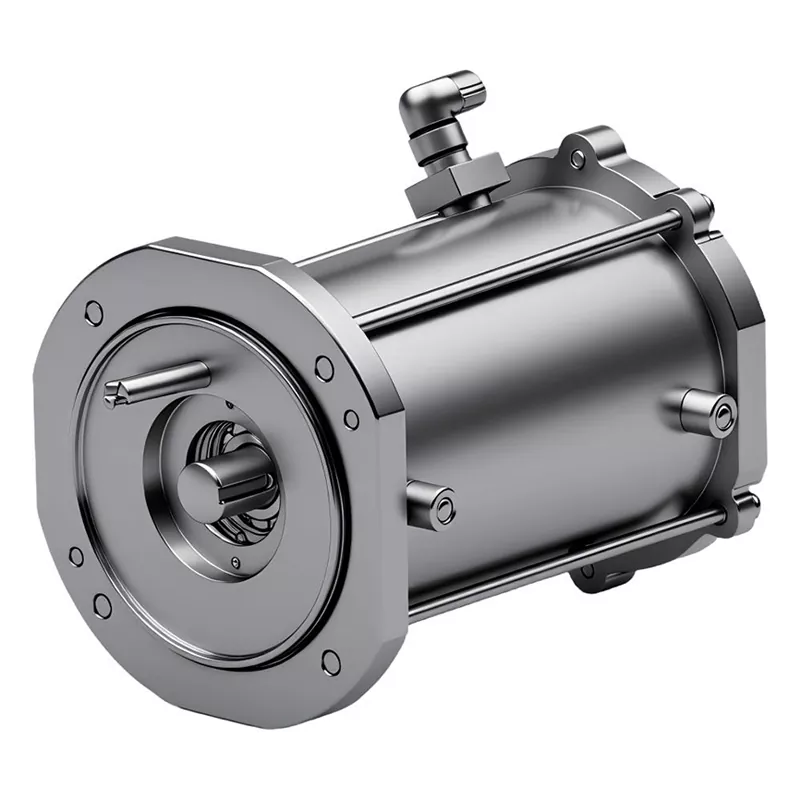
Why Does Heat Become a Hidden Cost in Industrial Motor Applications?
I have seen many production issues that do not begin with a dramatic breakdown. Instead, they start quietly with heat. Excessive operating temperature can shorten bearing life, stress winding insulation, increase downtime risk, and reduce efficiency over time. In enclosed or high-load applications, an air-cooled setup may also struggle to remove heat fast enough, especially when ventilation conditions are limited.
This is why I pay close attention to cooling strategy at the selection stage. A Water Cooled Motor helps move heat away more effectively and keeps temperature rise under better control. That stability matters in continuous-duty systems, precision equipment, and harsh environments where thermal fluctuation can affect both machine performance and product consistency.
- I can reduce the risk of overheating during long operating cycles
- I can support more stable output under heavy or changing loads
- I can improve the operating environment by lowering external heat release
- I can protect sensitive surrounding components in compact machinery layouts
What Makes a Water Cooled Motor More Practical Than Many Buyers Expect?
Some buyers assume water cooling automatically means higher complexity and less convenience. In practice, I see the opposite when the application is matched correctly. A properly engineered motor with water cooling can provide controlled thermal performance, cleaner operation, and quieter running characteristics that are difficult to achieve with a conventional fan-based approach.
What I appreciate most is that the benefit is not limited to one industry. Whether I am evaluating motors for vacuum systems, compressors, semiconductor equipment, photovoltaic production lines, automated manufacturing units, or other specialized industrial machinery, the same logic applies. Better cooling control supports better process stability.
| Buyer Concern | What Usually Happens with Poor Thermal Control | How a Water Cooled Motor Helps |
|---|---|---|
| Continuous heavy-duty operation | Heat accumulates and performance becomes less stable | Water circulation removes heat efficiently and supports steady running |
| Compact machine design | Airflow is limited and hot spots form easily | Cooling is less dependent on surrounding air volume |
| Noise-sensitive environments | Fan cooling can increase operating noise | Lower fan dependence helps create quieter operation |
| Harsh or sealed working conditions | Dust, moisture, or contamination affect reliability | Sealed motor structures can improve protection and long-term stability |
| Energy and maintenance pressure | Frequent temperature stress increases wear and service needs | Controlled temperature can help extend component life and reduce maintenance load |
How Can I Judge Whether Motor Protection and Sealing Really Matter?
I think sealing matters far more than many buyers realize. In real industrial use, dust, water, mist, chemical exposure, and fine particles do not just make equipment dirty. They accelerate wear, interfere with internal components, and increase the risk of unplanned shutdowns. When I compare motor options, I always ask how well the motor will hold up after months or years in the actual application environment rather than on paper.
That is why a sealed motor structure becomes a strong advantage. In applications where process cleanliness, environmental resistance, and long-term reliability matter, a well-built Water Cooled Motor can support more stable service by reducing exposure to contamination while maintaining controlled operating temperature. For users who cannot afford repeated line interruptions, that matters a great deal.
Why Do Equipment Builders Care So Much About Customization?
I rarely see industrial buyers working with truly standard conditions. Shaft requirements differ. Mounting dimensions differ. Load characteristics differ. Control systems differ. Some buyers need a motor for a vacuum pump. Others need one for a compressor, integrated drive unit, or specialized automation equipment. That is why I do not treat customization as a bonus. I treat it as part of the real buying decision.
When a supplier can adapt power range, speed, structure, interface details, and application fit, I can avoid the compromises that often come with forcing a generic motor into a specialized machine. A customized Water Cooled Motor helps me reduce integration problems, avoid rework, and improve overall machine efficiency from the start.
- I can match the motor more closely to the target load profile
- I can simplify integration with existing mechanical structures
- I can reduce redesign costs later in the project
- I can improve system compatibility with inverters and driven equipment
What Product Advantages Actually Matter to Industrial Buyers?
I do not believe buyers need vague promises. They need advantages that show up in daily operation, maintenance schedules, and energy bills. When I evaluate a motor solution seriously, I focus on the features that create measurable value across the full service cycle.
| Key Advantage | Why I Consider It Important | What It Can Mean for My Business |
|---|---|---|
| Efficient heat dissipation | It supports temperature stability under heavy load | Less thermal stress and more reliable operation |
| Quiet running | It improves the working environment and equipment experience | Better suitability for enclosed or noise-sensitive installations |
| Sealed construction | It helps resist contamination and external interference | Lower downtime risk in demanding environments |
| High-efficiency design | It reduces wasted energy over long operating cycles | Lower operating cost over time |
| Custom engineering support | It improves real-world equipment compatibility | Faster project progress and fewer installation compromises |
Can a Better Motor Choice Help Me Lower Long-Term Operating Costs?
Yes, and I would say this is one of the biggest reasons industrial users rethink their motor strategy. Many buyers look first at purchase price, but I always look at the total cost of ownership. If a motor runs hot, needs frequent servicing, causes unstable output, or contributes to downtime, the hidden cost can become much larger than the initial price difference.
With a quality Water Cooled Motor, I can pursue a more balanced cost structure. Better cooling can support longer service life. Stable operating temperature can reduce stress on critical internal parts. Lower noise and cleaner external heat management can improve the surrounding system environment. All of these factors can contribute to more efficient operation over the long run.
Why Is Noise Reduction Becoming More Important Than Before?
I notice that more buyers now care about noise not only for comfort, but also for application suitability. In certain production spaces, laboratories, clean manufacturing environments, and compact equipment rooms, excessive motor noise becomes a real concern. Traditional air cooling can add fan-related noise that is hard to ignore once multiple units operate together.
That is one reason I see growing interest in the Water Cooled Motor category. By reducing dependence on external air movement for heat removal, this design can help create a quieter operating profile. For businesses that want better working conditions without compromising industrial output, that combination is very appealing.
How Do I Know If This Type of Motor Fits Demanding Industrial Environments?
I usually ask a simple question. Will the motor keep performing when the environment stops being ideal? That means I think about moisture, dust, full-load operation, limited space, long duty cycles, and strict process requirements. If the answer depends on perfect conditions, then the motor may not be the right fit for serious industrial use.
A strong motor solution should be built for the environment it will actually face, not the one described in a brochure. This is where a carefully designed Water Cooled Motor shows its value. It supports consistent operation in applications that demand not only power, but also protection, efficiency, and thermal stability.
- It suits systems that run continuously or for extended periods
- It supports installations where surrounding airflow is limited
- It helps in equipment designs where space efficiency matters
- It fits applications that require reliable and clean thermal management
What Should I Look For Before Sending an Inquiry?
Before I move forward with a supplier, I try to prepare a few practical questions. This makes the discussion more productive and helps me get a motor solution that actually fits my project. I recommend checking operating conditions, target efficiency, mounting requirements, speed range, power demand, sealing expectations, and any inverter or system matching needs.
Here is the information I would usually prepare before requesting a quotation:
- Required power, voltage, and speed range
- Operating duty and load characteristics
- Ambient conditions such as moisture, dust, or chemical exposure
- Cooling system expectations and installation space limits
- Shaft, flange, and structural integration details
- Industry or machine type, such as pump, compressor, or automation equipment
Why Could Now Be the Right Time to Upgrade My Motor Solution?
If I am dealing with recurring heat issues, noise complaints, unstable output, or maintenance pressure, delaying an upgrade often costs more than acting early. Modern industrial systems demand better efficiency and better control. A motor that simply runs is no longer enough. It needs to support the equipment around it and help the whole system operate more smoothly.
If you are comparing motor options for demanding industrial use, this is a good time to take a closer look at what a reliable Water Cooled Motor can do for your application. If you want a solution that is better matched to your machinery, your operating environment, and your long-term performance goals, please contact us and send your inquiry today. I believe the right technical discussion at the start can save you time, cost, and avoidable trouble later.