

Why Are Differential Rear Axle Motors Used in Electric Motorcycle Motors for Tricycles?
2026-11-11
A tricycle builder is selecting a motor for a 1 ton cargo platform. The builder compares a two-wheel hub motor rated at 2.0 kW with a tricycle-grade unit of the same nominal power. The two-wheel motor is lighter and less expensive. But when the loaded tricycle climbs a 12 percent slope, the two-wheel motor draws 3.5 times its rated current for several minutes. The winding temperature rises above the insulation limit, and the motor derates or fails. The tricycle-grade Electric Motorcycle Motors is designed for this sustained overload. It has a larger stator, a higher insulation class, and a differential rear axle that splits the torque between two wheels. This guide explains why the differential rear axle is used in tricycle-grade motors and how to specify the motor correctly.
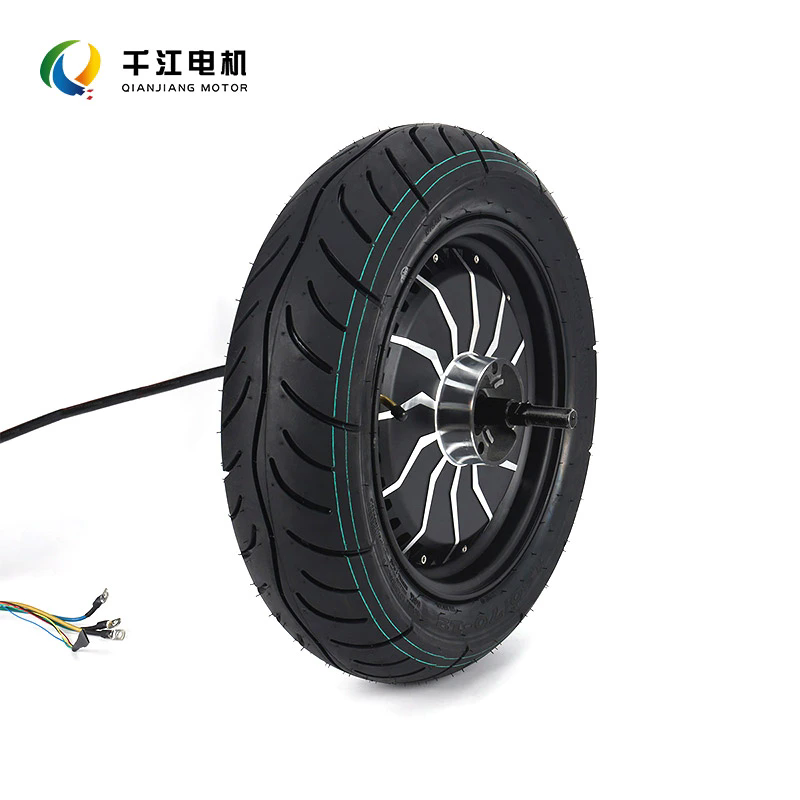
1. Why Do Tricycle Electric Motorcycle Motors Need a Different Design From Two-Wheel Motors?
The duty cycle of a tricycle is fundamentally different from that of a two-wheel motorcycle. A two-wheel motorcycle carries one or two people and operates at moderate load for short periods. A cargo tricycle carries up to 1,000 kilograms and operates continuously at high load. The motor must deliver a high torque at low speed for climbing and for starting from rest with a full load. It must also dissipate the heat generated by the sustained current. The Electric Motorcycle Motors for tricycles therefore has a larger frame, a larger stator, and a higher insulation class than a two-wheel motor of the same nominal power. In our factory, we design the tricycle motor with a continuous rating that matches the actual cargo duty, not the peak rating that is used for marketing. Ningbo Qianjiang Motor Co., Ltd. has been manufacturing electric motors for over 12 years.
The mechanical load is also different. The tricycle motor drives two rear wheels through a differential axle. The axle and the differential must be sized for the combined torque of the motor and the weight of the cargo. A two-wheel motor drives a single wheel through a belt or a chain, and the mechanical load is lower. The tricycle-grade motor is therefore integrated with a heavier axle and a stronger differential housing.
2. What Power, Torque, and Speed Ratings Define a Tricycle-Grade Electric Motorcycle Motor?
The specification of a tricycle-grade Electric Motorcycle Motors includes five ratings. The first is the continuous power, which is the power the motor can deliver indefinitely without exceeding the insulation temperature limit. The second is the peak power, which is the power the motor can deliver for a short period, typically 30 to 60 seconds. The third is the rated torque, which is the torque at the continuous power. The fourth is the peak torque, which is the torque at the peak power. The fifth is the rated speed and the maximum speed. The table below shows the typical ratings for common tricycle motor sizes.
| Nominal power | Continuous torque | Peak torque | Rated speed | Typical payload |
| 1.0 kW | 8 Nm | 18 Nm | 3,000 RPM | 300 – 500 kg |
| 1.5 kW | 12 Nm | 26 Nm | 3,000 RPM | 500 – 700 kg |
| 2.2 kW | 18 Nm | 40 Nm | 3,000 RPM | 700 – 1,000 kg |
| 3.0 kW | 24 Nm | 55 Nm | 3,000 RPM | 1,000 – 1,300 kg |
| 4.0 kW | 32 Nm | 72 Nm | 3,000 RPM | 1,300 – 1,800 kg |
In our factory, we measure the torque curve of every motor on a dynamometer and we provide the continuous and peak ratings on the nameplate. We also provide the insulation class, which is typically Class F for tricycle motors, and the protection class, which is typically IP54 or IP65 depending on the application. Ningbo Qianjiang Motor Co., Ltd. provides the test report with each motor.
3. How Does the Motor Torque Curve Match the Differential Rear Axle and Final Drive Ratio?
The motor torque curve determines the tractive effort at the wheels, and the tractive effort is multiplied by the final drive ratio. The final drive ratio is the product of the differential gear ratio and the wheel radius. A higher ratio provides more tractive effort at low speed but reduces the top speed. A lower ratio provides a higher top speed but reduces the climbing ability. The table below shows the effect of the final drive ratio on the tractive effort and the top speed for a 2.2 kW motor.
| Final drive ratio | Wheel tractive effort | Top speed | Gradeability (loaded) |
| 8:1 | 1,450 N | 32 km/h | 18% |
| 10:1 | 1,810 N | 26 km/h | 23% |
| 12:1 | 2,170 N | 21 km/h | 28% |
| 14:1 | 2,530 N | 18 km/h | 32% |
Drivetrain engineer's note: The final drive ratio must be selected to match the actual route. A tricycle that operates on flat city streets can use a lower ratio and a higher top speed. A tricycle that operates on hilly or muddy roads needs a higher ratio and a lower top speed. The differential rear axle is part of this selection, because the differential gear ratio is one of the two factors in the final drive ratio. In our factory, we calculate the tractive effort and the gradeability for each customer's route and we recommend the motor and the differential ratio together. Ningbo Qianjiang Motor Co., Ltd. provides a route analysis service for fleet buyers.
4. Why Do Thermal Management and Protection Ratings Decide Motor Life in Cargo Tricycles?
The cargo tricycle motor operates at high current for long periods, and the heat generated by the copper losses and the iron losses must be dissipated. The insulation class determines the maximum winding temperature. Class F insulation allows a maximum temperature of 155 degrees Celsius. Class H allows 180 degrees Celsius. A motor with Class F insulation that operates at 160 degrees Celsius will degrade quickly. The protection class determines the motor's resistance to water and dust. An IP54 motor is protected against dust and splashing water. An IP65 motor is protected against dust and water jets. In our factory, we test the motor at the continuous rated load for 4 hours and we measure the winding temperature. We also test the protection class with a dust chamber and a water spray. Ningbo Qianjiang Motor Co., Ltd. provides the temperature rise test report and the ingress protection test report with each motor.
We recommend that the buyer select a motor with a continuous rating that is at least 20 percent higher than the calculated continuous load, to provide a thermal margin for hot weather and for uphill routes. The additional cost is small compared with the cost of a motor replacement and the associated downtime.
5. How Should Buyers Specify and Verify Electric Motorcycle Motors for a Tricycle Platform?
The specification should include seven items. The first is the continuous power and the peak power. The second is the rated torque and the peak torque. The third is the rated speed and the maximum speed. The fourth is the final drive ratio, including the differential ratio. The fifth is the insulation class. The sixth is the protection class. The seventh is the cooling method, air cooled or liquid cooled. The verification should include four tests. The first is the dynamometer torque curve test. The second is the temperature rise test at the continuous load. The third is the ingress protection test. The fourth is the loaded gradeability test on the actual route. In our factory, we perform these tests on every motor and we provide the test report with the shipment. Ningbo Qianjiang Motor Co., Ltd. also offers a field trial for new tricycle platforms.
We recommend that the buyer verify the continuous rating, not just the peak rating. A motor that is advertised as 4.0 kW may have a continuous rating of only 2.2 kW. The peak rating is useful for acceleration and for short climbs, but the continuous rating is what determines the motor life on a long route.
Frequently Asked Questions About Electric Motorcycle Motors for Tricycles
Summary for Tricycle Manufacturers and Fleet Buyers
Electric Motorcycle Motors for tricycles require a different design from two-wheel motors because the duty cycle is heavier and the mechanical load is higher. The motor must be specified by its continuous rating, not its peak rating, and the continuous rating must match the actual cargo load and route. The final drive ratio, including the differential ratio, must be selected together with the motor to provide the required tractive effort and top speed. The insulation class and the protection class determine the motor life in hot, wet, and dusty environments. The buyer should verify the torque curve, the temperature rise, the protection class, and the gradeability before accepting the motor. Ningbo Qianjiang Motor Co., Ltd. has been manufacturing electric motors for over 12 years and provides full motor selection and verification support for tricycle manufacturers and fleet buyers.