

What Torque and Precision Can a Dexterous Hand Joint Module Achieve
2026-11-11
Robotic hands are only as capable as the joints that drive them. When engineers evaluate a Dexterous Hand Joint Module, torque and precision are the two specifications that most directly determine grasping strength, fine manipulation ability, and overall system reliability. SEA MOTION designs and manufactures Dexterous Hand Joint Modules engineered to deliver a practical balance of high torque density and sub-degree positioning accuracy, enabling robotic hands to handle everything from delicate laboratory work to industrial assembly tasks.
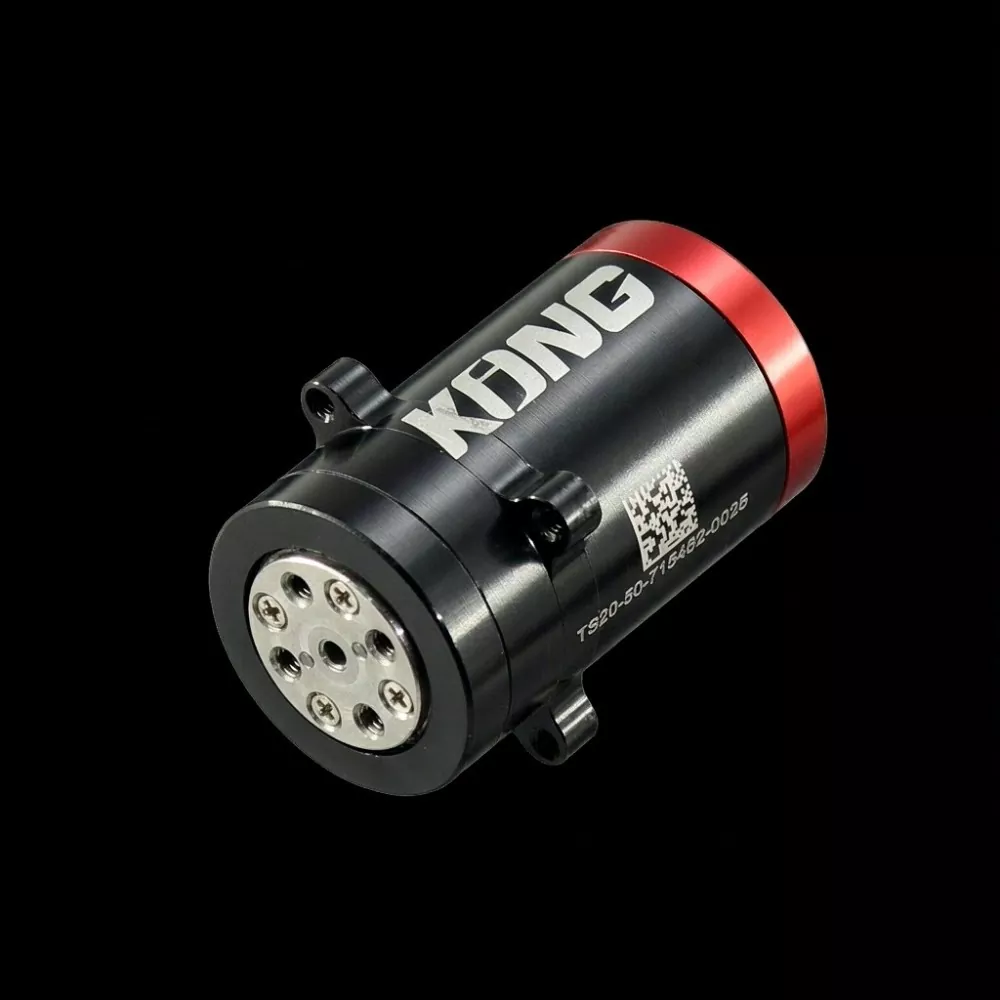
Why Torque and Precision Matter Together
Torque without precision produces crushing force; precision without torque produces weak, hesitant motion. A well-matched Dexterous Hand Joint Module delivers both, so the hand can grip a fragile object firmly enough to lift it and position it accurately enough to insert it. In practice, these two metrics define the usable performance envelope of any dexterous hand.
Typical Torque Performance
Torque requirements vary by finger, joint position, and application. The table below summarizes representative performance ranges for SEA MOTION Dexterous Hand Joint Modules:
| Joint Position | Typical Peak Torque | Typical Continuous Torque | Common Use Case |
|---|---|---|---|
| Fingertip / distal joint | 0.3–1.0 N·m | 0.15–0.5 N·m | Fine pinch, small-part handling |
| Middle phalanx joint | 0.8–2.5 N·m | 0.4–1.2 N·m | Power grasp, tool holding |
| Proximal / base joint | 2.0–6.0 N·m | 1.0–3.0 N·m | Enveloping grasp, load bearing |
| Thumb opposition joint | 1.5–4.0 N·m | 0.8–2.0 N·m | Precision pinch, in-hand rotation |
Key factors that shape achievable torque include:
-
Motor and gearbox selection — frameless brushless motors paired with low-backlash planetary or harmonic reducers
-
Torque density — compact housings that fit inside a finger while sustaining continuous load
-
Thermal design — heat dissipation that determines how long peak torque can be sustained
-
Integrated sensing — torque sensors that enable force-limited, safe interaction
Precision and Repeatability
Precision in a Dexterous Hand Joint Module is usually expressed through three metrics:
| Metric | Typical Achievable Value | What It Means |
|---|---|---|
| Position resolution | 0.01°–0.1° encoder resolution | Smallest detectable joint movement |
| Repeatability | ±0.05° to ±0.2° | Consistency when returning to the same position |
| Backlash | Below 0.1° with precision reducers | Lost motion when direction reverses |
| Force control accuracy | ±2% to ±5% of rated torque | Ability to regulate grip force |
High resolution alone is not enough. Repeatability and low backlash determine whether a hand can reliably perform the same delicate task thousands of times. SEA MOTION addresses this through integrated encoders, closed-loop control, and mechanically stiff joint structures that minimize compliance under load.
Balancing Torque, Precision, and Size
Finger joints impose severe space constraints. Achieving high torque and fine precision within a compact envelope requires careful integration of motor, reducer, encoder, and drive electronics. SEA MOTION Dexterous Hand Joint Modules are built as integrated units, which reduces wiring complexity, improves stiffness, and simplifies calibration for robot designers.
Frequently Asked Questions
What torque can a Dexterous Hand Joint Module typically achieve?
A Dexterous Hand Joint Module typically delivers peak torque from about 0.3 N·m at fingertip joints to 6 N·m at proximal or thumb joints, with continuous torque roughly 40–60% of peak, depending on thermal design and duty cycle.
How precise is a Dexterous Hand Joint Module?
Most Dexterous Hand Joint Modules achieve encoder resolution between 0.01° and 0.1°, repeatability of ±0.05° to ±0.2°, and backlash below 0.1° when equipped with precision reducers, supported by closed-loop force and position control.
Does higher torque reduce precision in a Dexterous Hand Joint Module?
Not necessarily. A well-designed Dexterous Hand Joint Module maintains precision at higher torque through stiff structures, low-backlash reducers, and integrated torque sensing, though excessive compliance or poor thermal management can degrade both.
Choosing the Right Specification
Select a Dexterous Hand Joint Module by starting from the task: object weight, grip type, required cycle time, and allowable force on the workpiece. Then match torque, repeatability, and backlash to those requirements rather than maximizing any single number.
Contact us at SEA MOTION to discuss your robotic hand requirements and receive specification guidance, samples, and integration support for Dexterous Hand Joint Modules.