

What Role Do Integrated Variable Frequency PMSMs Play in Modern Automation
2026-03-13
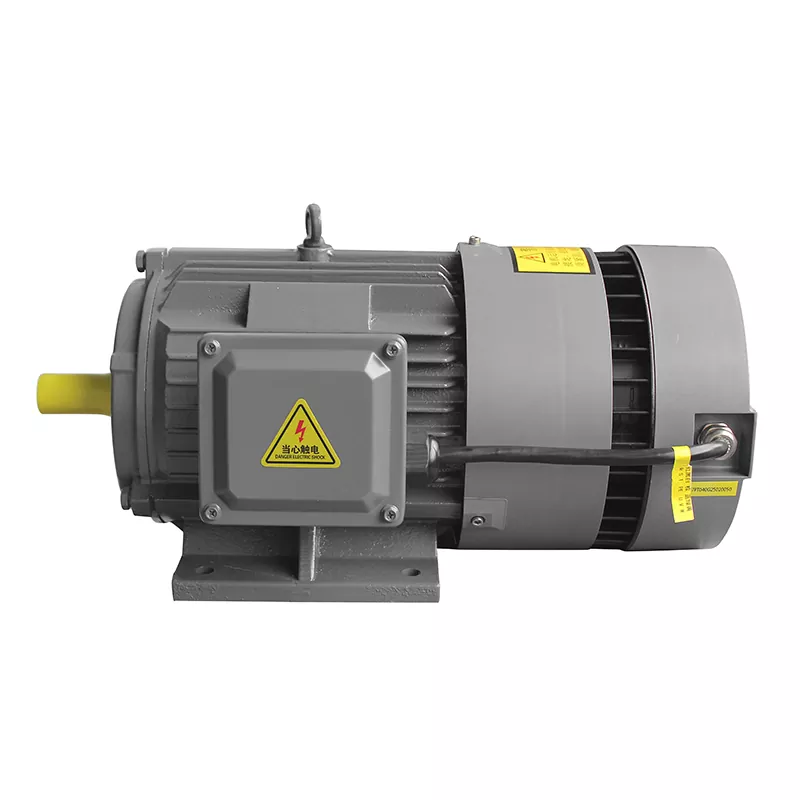
In the rapidly evolving landscape of industrial manufacturing, the demand for precision, energy efficiency, and compact design has never been higher. At the heart of this transformation lies the Integrated Variable Frequency PMSM. By combining a permanent magnet synchronous motor with a built-in variable frequency drive, these units eliminate the need for external cabinets and complex wiring. At Jiafeng, we recognize that this technology is not just a component but the backbone of smart factories, offering unparalleled control and reliability for modern automation systems.
The Core Advantages in Automated Systems
The shift toward decentralized automation architectures has accelerated the adoption of integrated drive solutions. Unlike traditional setups where a central cabinet controls multiple motors, an Integrated Variable Frequency PMSM places the intelligence directly on the motor. This design philosophy aligns perfectly with the principles of Industry 4.0, where data acquisition and immediate response are critical.
| Feature | Traditional Motor + VFD | Integrated Variable Frequency PMSM |
|---|---|---|
| Footprint | Large (Cabinet + Motor) | Compact (All-in-One) |
| Installation | Complex wiring required | Plug-and-play simplicity |
| Communication | Susceptible to interference | Stable digital protocols |
| Maintenance | Multiple points of failure | Single-unit diagnostics |
Enhancing Precision and Energy Efficiency
Modern automation lines, particularly in packaging and material handling, require variable speeds and immediate stops. The Integrated Variable Frequency PMSM excels here due to its closed-loop control capabilities. The permanent magnets in the rotor allow for higher torque density, meaning the motor can deliver more power without increasing in size. This efficiency is further amplified by the integrated drive, which optimizes power consumption based on real-time load demands.
Furthermore, the feedback from sensors is instantaneous. When a conveyor belt needs to adjust speed, the drive reacts immediately without the latency caused by long cables running back to a central cabinet. This real-time responsiveness ensures that automated guided vehicles (AGVs) and robotic arms operate with surgical precision, reducing product waste and increasing throughput.
Reliability in Harsh Environments
Factories are noisy—both electrically and physically. Traditional setups suffer from signal degradation over long cable runs between the drive and the motor. By integrating the drive, the power conversion happens right next to the motor windings. This drastically reduces electromagnetic interference and removes the risk of voltage spikes that damage insulation. Jiafeng designs these units to withstand dust, vibration, and temperature fluctuations, ensuring that production lines keep moving even under strenuous conditions.
FAQ: Integrated Variable Frequency PMSM
Q: What is the primary difference between a standard PMSM and an Integrated Variable Frequency PMSM?
A: The primary difference lies in the architecture. A standard PMSM requires an external variable frequency drive (VFD) to be wired into the system, usually housed in a separate electrical cabinet. An Integrated Variable Frequency PMSM combines the motor and the drive electronics into a single mechanical housing. This integration simplifies installation, saves significant space on the factory floor, and improves communication speed between the controller and the motor by eliminating long power cables.
Q: How does an Integrated Variable Frequency PMSM contribute to energy savings in a factory?
A: An Integrated Variable Frequency PMSM contributes to energy savings through two main mechanisms. First, the permanent magnet rotor design inherently offers higher efficiency than induction motors, especially at partial loads. Second, the integrated drive uses sensors to monitor the actual load in real-time. It automatically adjusts the frequency and voltage supplied to the motor to match the exact torque required. This prevents the motor from running at full speed when it isn't needed, which can reduce energy consumption by 20% to 50% compared to fixed-speed alternatives.
Q: Are Integrated Variable Frequency PMSMs difficult to program or network with existing factory systems?
A: Not at all. Modern Integrated Variable Frequency PMSM units are designed for plug-and-play functionality. They typically support standard industrial communication protocols such as EtherCAT, Profinet, or Modbus. This allows them to be easily integrated into existing PLC (Programmable Logic Controller) networks. At Jiafeng, we ensure our drives come with user-friendly software for parameter setting, allowing maintenance teams to commission the motor quickly without needing deep programming expertise.
Conclusion
As automation moves toward smarter, leaner manufacturing, the role of the Integrated Variable Frequency PMSM will only grow. These devices are solving real-world problems related to space constraints, energy costs, and system complexity. To ensure your automation lines are future-proof, choosing a reliable partner is essential.
Are you ready to upgrade your machinery with cutting-edge drive technology? Contact us today to discuss your specific application requirements and discover how Jiafeng can power your next innovation.