

In modern industrial production, reliable power transmission is essential for maintaining equipment performance, operational stability, and production efficiency. A Cast Iron Housing Gear Motor is widely used in demanding industrial environments because it combines a durable gear housing with an integrated motor and gearbox system. Designed to deliver controlled speed and increased output torque, this type of gear motor provides dependable mechanical power for machinery that operates under continuous loads. Its robust construction, effective vibration resistance, and adaptability make it a practical solution for manufacturers seeking long-term performance and reduced equipment maintenance. Zhejiang Qiaobang Precision Machine Co., Ltd. focuses on precision machinery manufacturing and provides gear motor solutions designed to meet different industrial transmission requirements.
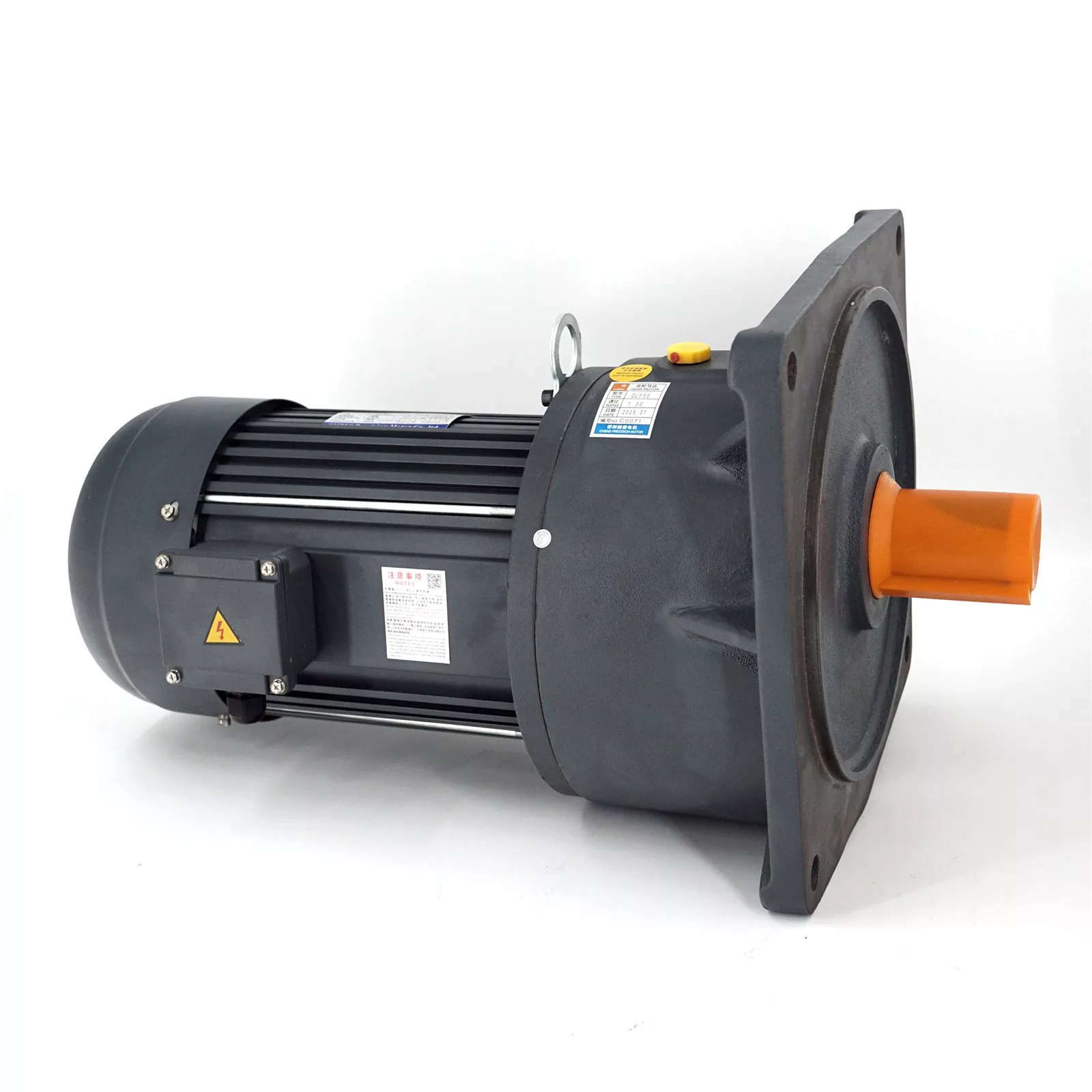
1. What Is a Cast Iron Housing Gear Motor?
A Cast Iron Housing Gear Motor is an integrated power transmission unit consisting of an electric motor and a reduction gearbox enclosed in a cast iron housing. The motor generates rotational power, while the gearbox reduces rotational speed and increases output torque to match the requirements of the driven equipment.
The cast iron housing serves as the structural foundation of the transmission system. Compared with lighter housing materials, cast iron offers excellent rigidity, mechanical strength, and vibration-damping characteristics. These properties make it particularly suitable for equipment exposed to substantial mechanical loads, frequent operation, and demanding working conditions.
Depending on the gearbox design and application requirements, different gear configurations can be incorporated into a cast iron housing gear motor to achieve specific speed ratios, torque outputs, and installation arrangements.
2. Why Is Cast Iron Housing Important?
The housing is more than an external protective shell. It directly influences the mechanical stability, heat management, and service reliability of a gear motor. A properly designed cast iron housing supports internal transmission components and helps maintain their alignment during operation.
Excellent Mechanical Strength
Industrial gear motors often operate under changing loads and mechanical stress. Cast iron provides a rigid supporting structure that helps protect internal gears, bearings, and other precision components. This structural stability is especially valuable in heavy-duty machinery and continuous production environments.
Effective Vibration Damping
Vibration can affect transmission accuracy, increase operating noise, and accelerate component wear. Cast iron has favorable vibration-damping properties, helping reduce the transmission of mechanical vibration through the housing. This contributes to smoother equipment operation when the motor and gearbox are correctly selected and installed.
Reliable Thermal Performance
Heat is naturally generated during motor operation and mechanical power transmission. The housing provides a surface for heat dissipation and supports thermal management. Appropriate ventilation, lubrication, installation space, and operating conditions remain important for maintaining a suitable working temperature.
Durability in Industrial Environments
A strong housing helps protect internal components from external mechanical impacts and everyday industrial wear. With suitable surface treatment, sealing, and maintenance, a cast iron gear motor can provide dependable service in many demanding industrial applications.
3. How Does a Cast Iron Housing Gear Motor Improve Operating Performance?
The main purpose of a gear motor is to deliver the appropriate rotational speed and torque to the driven machine. An integrated motor and gearbox simplify power transmission by combining two essential components into one compact assembly.
- Controlled Output Speed: The reduction gearbox adjusts motor speed to meet the operating requirements of different machines.
- Higher Output Torque: Speed reduction enables the transmission system to deliver greater output torque, subject to gearbox capacity and efficiency.
- Stable Power Transmission: A rigid housing supports the internal transmission structure and helps maintain mechanical alignment.
- Improved Equipment Integration: The integrated design simplifies installation and reduces the need for separate motor-to-gearbox connections.
- Convenient Maintenance: A properly selected gear motor can help simplify equipment maintenance and reduce unnecessary downtime.
For industrial users, these performance advantages can translate into smoother production processes, more consistent machine operation, and better utilization of mechanical equipment.
4. Cast Iron Housing Gear Motor vs. Aluminum Housing Gear Motor
Choosing the right housing material is an important part of gear motor selection. Cast iron and aluminum each offer different characteristics, and the best option depends on load requirements, installation conditions, equipment weight limitations, and operating environments.
| Comparison Factor | Cast Iron Housing | Aluminum Housing |
|---|---|---|
| Mechanical Strength | High structural rigidity | Generally lighter construction |
| Vibration Damping | Excellent damping characteristics | Generally lower damping |
| Weight | Relatively heavy | Lightweight |
| Heat Dissipation | Good thermal performance | Generally higher thermal conductivity |
| Typical Applications | Heavy-duty industrial machinery | Weight-sensitive equipment |
| Selection Priority | Rigidity and robust construction | Reduced equipment weight |
For applications involving substantial mechanical loads and demanding operating conditions, cast iron housing may offer advantages in structural stability and vibration damping. Aluminum housing, meanwhile, is often preferred when lightweight construction and heat dissipation are major priorities. Neither material is universally superior; application requirements should guide the final decision.
5. Where Are Cast Iron Housing Gear Motors Commonly Used?
Thanks to their robust construction and adaptable transmission performance, cast iron housing gear motors are suitable for a wide range of industrial equipment.
Conveyor and Material Handling Systems
Conveyor systems require consistent power transmission to move materials along production and transportation lines. Gear motors provide controlled operating speeds and the torque needed to drive conveyor rollers, belts, and related mechanisms.
Industrial Manufacturing Equipment
Production machinery often requires stable rotational power to support repetitive processing operations. Cast iron housing gear motors can be incorporated into equipment where mechanical rigidity and reliable transmission are important.
Packaging and Processing Machinery
Packaging lines, food processing equipment, and automated production systems depend on controlled movement and coordinated mechanical operation. Properly configured gear motors help maintain the required transmission speed and torque.
Mixing and Agitation Equipment
Industrial mixers and agitators may operate under changing material resistance. A suitable gear motor provides the required output torque and speed to support consistent mixing performance.
Agricultural and Construction Machinery
Some agricultural and construction equipment requires durable power transmission components capable of handling demanding working conditions. The strength of cast iron housing makes it a practical option for suitable heavy-duty applications.
6. How to Select the Right Cast Iron Housing Gear Motor
Choosing a gear motor involves more than comparing motor power or housing materials. Buyers should evaluate the complete transmission system to ensure compatibility with their machinery.
- Determine Required Output Torque: Calculate the load torque required by the driven equipment and allow for appropriate service factors.
- Confirm Output Speed: Identify the required rotational speed and select a suitable gearbox reduction ratio.
- Check Motor Power: Match the motor power and duty rating to the actual operating requirements.
- Evaluate Installation Conditions: Confirm mounting position, shaft dimensions, connection type, and available installation space.
- Consider Operating Environment: Assess ambient temperature, dust, moisture, vibration, and operating frequency.
- Review Maintenance Requirements: Check lubrication specifications, sealing arrangements, and access to service components.
Professional technical consultation can help buyers avoid mismatched specifications and select a transmission solution that balances performance, durability, and operating costs.
7. Why Choose Zhejiang Qiaobang Precision Machine Co., Ltd.?
As a precision machinery manufacturer, Zhejiang Qiaobang Precision Machine Co., Ltd. focuses on providing mechanical transmission products and solutions for industrial applications. Understanding the relationship between product structure, manufacturing precision, and operating performance is essential to delivering reliable machinery components.
When evaluating a gear motor supplier, industrial buyers should consider several important factors:
- Product Understanding: Knowledge of gear motor structures, transmission principles, and industrial application requirements.
- Manufacturing Precision: Attention to dimensional accuracy, component compatibility, and assembly quality.
- Application-Based Selection: Matching motor specifications and gearbox configurations to actual operating conditions.
- Quality Management: Consistent inspection and quality control throughout the manufacturing process.
- Customer Support: Clear technical communication and assistance with product selection and purchasing requirements.
For international buyers, working with an experienced precision machinery manufacturer can make product evaluation and equipment integration more efficient. Zhejiang Qiaobang Precision Machine Co., Ltd. aims to support customers seeking suitable mechanical transmission products for their industrial projects.
8. Conclusion: Is a Cast Iron Housing Gear Motor Worth Considering?
A Cast Iron Housing Gear Motor is a valuable transmission solution for industrial applications that prioritize structural rigidity, vibration damping, controlled output speed, and dependable torque delivery. Its integrated motor and gearbox design helps simplify mechanical power transmission, while its robust housing supports stable operation under suitable working conditions.
Whether used in conveyor systems, manufacturing machinery, packaging lines, or material handling equipment, selecting the right gear motor requires careful consideration of torque, speed, power, mounting configuration, and environmental conditions.
If you are looking for a suitable industrial gear motor or need assistance evaluating transmission specifications, Zhejiang Qiaobang Precision Machine Co., Ltd. is ready to discuss your requirements. Contact us today to learn more about our precision machinery products and explore reliable gear motor solutions for your business.