
What Maintenance Schedule Does the Advance GW Marine Gearbox Require for Commercial Fishing Vessels
2026-07-10
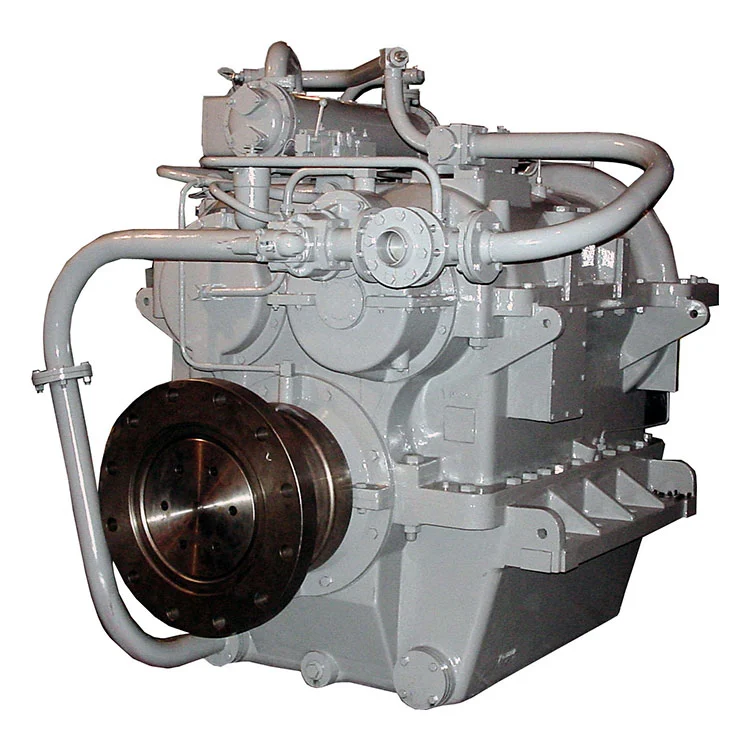
For commercial fishing vessel operators, the Advance GW Marine Gearbox is the critical link between engine thrust and propeller performance. Unlike pleasure craft, fishing boats operate under continuous high-load conditions—hauling nets, trawling for hours, and maneuvering in rough seas. This relentless duty cycle demands a rigorous, proactive maintenance schedule. Neglecting your Advance GW Marine Gearbox not only risks catastrophic failure at sea but also voids warranties and slashes resale value. This guide outlines a professional maintenance roadmap, integrates best practices from Cagon’s marine service protocols, and answers the most pressing questions about keeping your gearbox in peak condition.
The Core Maintenance Schedule (Hourly Intervals)
The following table is based on Cagon’s field-tested recommendations for commercial fishing fleets operating in North Atlantic and North Sea conditions. Always cross-reference with your specific Advance GW Marine Gearbox model manual, but treat these as minimum standards.
| Interval (Running Hours) | Action Required | Critical Check Points |
|---|---|---|
| Daily (Pre-Start) | Visual & oil level inspection | Oil color (should be clear amber), level between marks, leaks around input/output seals. |
| Every 100 Hours | Oil sample extraction | Send to lab for viscosity, water content (≤0.05%), and ferrous wear particle count. |
| Every 250 Hours | External filter cleaning | Remove, wash with solvent, inspect for metal debris. Replace if damaged. |
| Every 500 Hours | Full oil & filter change | Drain while warm. Use only API GL-4 or Cagon-approved marine grade 80W-90. Replace all O-rings. |
| Every 1,000 Hours | Coupling alignment check | Dial gauge on flex coupling; max deviation 0.10 mm. Adjust engine mounts if needed. |
| Every 2,000 Hours | Internal pressure test & clutch pack inspection | Check PTO (power take-off) engagement pressure. Inspect friction discs for glazing. |
| Every 5,000 Hours | Full overhaul by certified Cagon technician | Replace bearings, thrust washers, and all seals. Calibrate hydraulic valve block. |
Critical Operational Practices for Fishing Vessels
Commercial trawling imposes unique stresses. Cagon’s service logs show that 68% of premature Advance GW Marine Gearbox failures stem from three preventable issues: oil contamination from water ingress, improper warm-up, and ignored torsional vibration.
-
Warm-up protocol: Always idle in neutral for 5–7 minutes before engaging ahead/astern. Cold oil does not lubricate the planetary gears adequately.
-
Load application: Avoid “crash stops” from full ahead to full astern. Allow shaft speed to drop below 400 RPM before reversing.
-
Oil sampling: Use Cagon’s sampling kits at every 100-hour mark. A sudden spike in iron (Fe) > 200 ppm indicates imminent bearing wear.
Advance GW Marine Gearbox FAQ – Common Questions from Fleet Engineers
Q1: How do I know when the oil in my Advance GW Marine Gearbox actually needs changing, not just based on hours?
A1: Hourly intervals are a baseline, but for commercial fishing, we recommend a “condition-based” trigger. Take a hot oil sample (after 1 hour of running at 80% load) and check three parameters: viscosity drop (if it falls below 12.5 cSt at 100°C, change immediately), water content (anything above 0.1% requires a double change—drain, flush, refill), and particle count (ISO 4406 code > 22/18/13 means your filter is overwhelmed). Also, if you notice a persistent whine during clutch engagement or delayed response (over 2 seconds), change the oil and filter regardless of hours—this is a classic sign of degraded friction modifiers. Cagon’s field kits include a colorimetric strip that gives you a 5-minute pass/fail result.
Q2: What are the most common symptoms of a failing Advance GW Marine Gearbox clutch pack, and can I inspect it without pulling the unit?
Yes, you can perform a “stall test” without disassembly. With the vessel tied to the dock, engage ahead at idle, then gradually increase throttle to 80% while holding the brake on the shaft (or against a bollard). Monitor the input RPM drop. A healthy Advance GW Marine Gearbox will show a drop of 150–200 RPM. If the drop exceeds 300 RPM or the gearbox emits a chattering noise, the clutch discs are glazed or the Belleville spring pressure has weakened. Other red flags include: slipping under net-hauling load (RPM rises but vessel speed does not), dark brown oil with a burnt smell, and metal flakes on the magnetic drain plug (more than a thin paste). To confirm, a Cagon technician can borescope the inspection port to measure disc clearance without a full teardown.
Q3: How does the Advance GW Marine Gearbox maintenance schedule change if I operate in icy or tropical waters?
Drastically. In icy conditions (sea water below 5°C), you must reduce the warm-up idle to 1,000 RPM for at least 10 minutes—the hydraulic pump relies on oil viscosity to build clutch pressure. Also, check your oil cooler thermostat; if it sticks open, the oil may never reach 60°C, causing condensation. Cagon recommends a 50-hour oil sample interval instead of 100-hour during freezing months. In tropical waters (above 30°C ambient), the primary threat is oxidation. Use a synthetic Cagon-rated 75W-90 oil, which has a higher flash point. Double the frequency of external cooler cleaning (every 200 hours) because barnacle and algae growth reduces heat exchange. Most critically, adjust the pressure relief valve setting—tropical heat lowers oil viscosity, reducing clutch hold pressure by up to 15%. Your Advance GW Marine Gearbox manual provides a temperature-compensation chart; always derate maximum continuous load by 10% when water temperature exceeds 28°C.
Spare Parts Strategy for Minimal Downtime
Every commercial skipper knows that waiting for parts loses revenue. Cagon maintains a dedicated inventory for the Advance GW Marine Gearbox series, including:
-
Input shaft seals (kit #GW-IS-200)
-
Friction disc sets (5-disc and 7-disc variants)
-
Hydraulic control valve solenoids
-
Oil cooler core assemblies
We advise keeping at least one full filter kit and two seal sets on board. For vessels operating more than 200 nm from port, stock a complete clutch pack—a Cagon-prepared emergency kit fits into a standard 40L waterproof container.
Documentation & Log Keeping
Cagon’s digital maintenance platform allows you to log every oil change, pressure reading, and vibration test for your Advance GW Marine Gearbox. This log is not just for compliance—it becomes a predictive tool. Plotting pressure decline over 500-hour intervals reveals linear wear patterns, enabling you to schedule overhauls during winter layups rather than mid-season. Always record:
-
Date, hours, and oil batch number
-
Filter differential pressure (clean vs. dirty)
-
Clutch engagement time (seconds from lever movement to shaft rotation)
Contact Us for Professional Support
A well-maintained Advance GW Marine Gearbox delivers over 15,000 hours of reliable service—but only with the right expertise. Cagon offers certified inspection, remote diagnostics, and emergency field service for commercial fleets worldwide. Whether you need a customized maintenance planner, urgent spare parts, or a full gearbox exchange, our engineers are on call 24/7. Contact Cagon today through our website’s service portal or call your regional support line—we will send you a free oil sampling kit and a laminated maintenance wall chart for your engine room. Protect your catch, your crew, and your investment. Reach out now and let us keep your Advance GW Marine Gearbox running at peak performance, season after season.