

What Maintenance Schedule Does a Small Orbital Hydraulic Motor Require to Maximize Service Life
2026-08-18
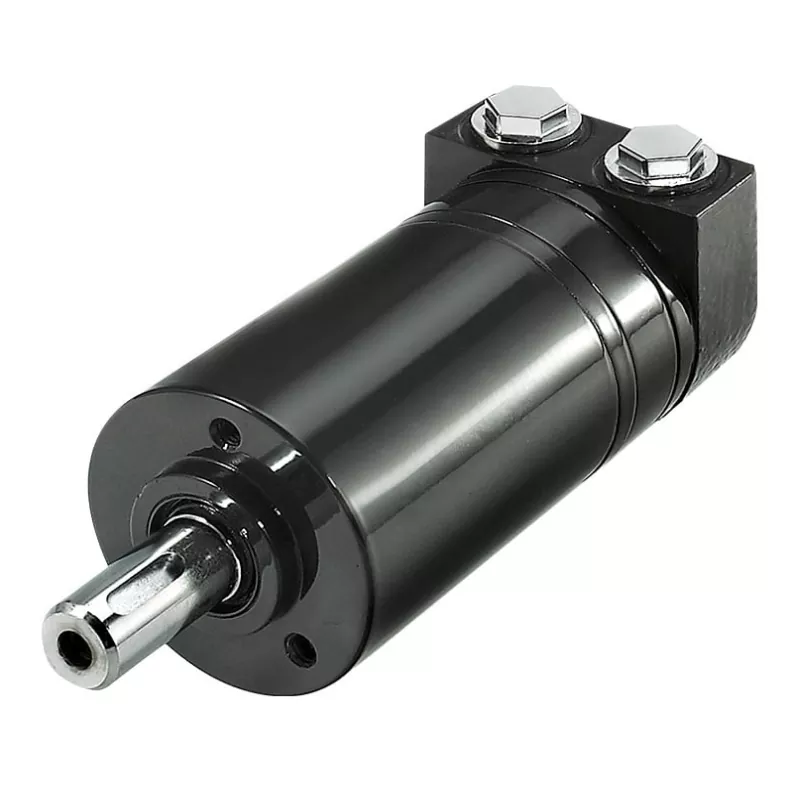
Proper maintenance directly determines whether your Small Orbital Hydraulic Motors survive 5,000 hours or fail at 1,500. For operators using Yushan hydraulic components, a structured schedule is not optional—it is the single most cost-effective strategy to avoid unplanned downtime and expensive replacements. This guide lays out a practical, time-based maintenance roadmap rooted in fluid analysis, seal inspection, and wear monitoring, helping you extract every possible hour from your gerotor-type units.
The Weekly Visual & Auditory Check
Every 40–50 operating hours, perform a 10-minute walk-around inspection. Record motor case temperature (should stay within +15°C of reservoir temperature). Listen for rhythmic knocking—this often indicates vane or roller stick-slip. Check all hose fittings for seepage; even a damp film signals impending seal failure. Yushan engineers emphasize that 70% of premature failures are detected first through abnormal noise or heat, not performance loss.
The 250-Hour Fluid & Filter Service
At 250-hour intervals, replace the return-line filter and draw a 100 ml oil sample for particle counting (ISO 4406 target: 18/16/13 or better). Drain and replenish the reservoir if water content exceeds 0.1%. For Small Orbital Hydraulic Motors running at continuous pressures above 175 bar, change the case drain filter every 200 hours. Record the pressure differential across the filter—a rise of more than 2 bar signals bypass valve opening, which accelerates internal wear.
The 1,000-Hour Seal & Bearing Inspection
This is the most critical milestone. Remove the motor end cover and inspect the shaft lip seal for hardening or lip cracking. Measure radial play on the output shaft using a dial indicator; maximum allowable runout is 0.08 mm for most Yushan models. Replace the O-rings on the commutator plate even if they appear intact—elastomers lose compression set after 1,000 thermal cycles. Re-torque all mounting bolts to factory specifications (typically 45–55 Nm for M8 fasteners).
Annual (2,000-Hour) Overhaul Schedule
| Component | Action | Acceptance Criterion |
|---|---|---|
| Gerotor star & ring | Measure lobe tip clearance | ≤ 0.12 mm radial clearance |
| Distributor plate | Check for scoring or galling | No visible grooves deeper than 0.02 mm |
| Needle bearings | Inspect for pitting or discoloration | Smooth rotation, no axial play |
| Pressure relief valve | Test cracking pressure | Within ±3% of nameplate value |
| Housing bore | Micrometer measurement | Ovality ≤ 0.015 mm |
Daily Operator Log (Non-Negotiable)
Maintain a simple logbook noting:
-
Operating pressure peaks
-
Ambient temperature
-
Motor speed (RPM)
-
Any unusual vibrations
This data transforms reactive repairs into predictive planning. Yushan provides free log templates with every motor shipment, reinforcing that documentation is as vital as oil changes.
Fluid Compatibility & Change Intervals
Use ISO VG 32 or 46 anti-wear hydraulic fluid with a viscosity index above 140. Change the fluid completely every 2,000 hours or annually, whichever comes first. For Small Orbital Hydraulic Motors in high-ambient-temperature environments (above 45°C), reduce the change interval to 1,500 hours. Never mix synthetic and mineral-based fluids without a full system flush—incompatible additives degrade the gerotor elastomers within 50 hours.
Common Mistakes That Shorten Life
-
Overlooking case drain backpressure (must stay below 5 bar absolute)
-
Using incorrect shaft coupling alignment (angular misalignment > 0.5°)
-
Ignoring cold-start viscosity limits (do not exceed 2,000 cSt at startup)
-
Reusing copper washers on pressure ports
Frequently Asked Questions About Small Orbital Hydraulic Motors
Q: How do I know when my Small Orbital Hydraulic Motor needs immediate service rather than scheduled maintenance?
A: Immediate intervention is required when you observe any of these four conditions: (1) a sudden 15% or more drop in output torque under constant pressure, (2) case temperature rising above 90°C within 30 minutes of cold start, (3) metallic particles visible on the magnetic drain plug (larger than 0.5 mm), or (4) a high-pitched whine that changes with load—this indicates incipient cavitation, often from a clogged suction strainer. Shut down the system and perform a full internal inspection before restarting. Delaying action in any of these scenarios typically multiplies repair costs by a factor of three to five.
Q: Can I extend the 250-hour filter change interval if I use premium synthetic oil in my Small Orbital Hydraulic Motors?
A: No. Premium synthetic oil improves oxidation resistance and thermal stability, but it does not reduce the rate of particle generation from normal gerotor wear. The filter’s role is to capture hard contaminants (silicon, iron, copper) that circulate regardless of oil quality. Extending the interval to 350 hours may save filter costs but increases the risk of abrasive wear on the distributor plate—a component that costs four times more than a filter element. Yushan laboratory tests show that particle counts at 300 hours consistently exceed ISO 20/18/15, which doubles lobe wear rates. Keep the 250-hour schedule unchanged; invest in higher-grade oil for extended drain intervals, not filter intervals.
Q: What is the correct procedure for storing a spare Small Orbital Hydraulic Motor for more than six months?
A: Long-term storage requires three preparation steps. First, flush the internal cavities with a rust-inhibitive preservative oil (not hydraulic fluid) and rotate the shaft by hand 10 full revolutions to coat all internal surfaces. Second, seal all ports with plastic caps and wrap the motor in VCI (vapor corrosion inhibitor) film—do not use standard shrink wrap, which traps moisture. Third, store the motor horizontally on a wooden pallet, never directly on concrete floors, and rotate the shaft 5 revolutions every 60 days to prevent bearing brinelling. Before recommissioning, drain the preservative oil, refill with working hydraulic fluid, and run the motor at 30% of rated pressure for 10 minutes with the case drain open to purge trapped air. Yushan offers factory-sealed storage bags with built-in humidity indicators for this purpose.
The Bottom Line
A disciplined schedule—weekly checks, 250-hour fluid/filter service, 1,000-hour seal inspection, and an annual overhaul—keeps Small Orbital Hydraulic Motors operating at peak volumetric efficiency (typically 92–95%) throughout their design life. Yushan builds its gerotor units with hardened steel stars and precision-ground distributor plates, but even the best metallurgy cannot outlast contaminated oil or loose mounting bolts. Treat your maintenance log as your primary performance tool, not a bureaucratic burden.
Ready to optimize your hydraulic maintenance program? Contact Yushan today for customized service interval calculators, OEM-style overhaul kits, and remote diagnostic support. Our application engineers will review your duty cycle and deliver a tailored schedule that matches your actual operating conditions—not generic averages. Reach us through our website or call your regional distributor to schedule a free 30-minute maintenance audit. Your Small Orbital Hydraulic Motors will thank you with years of reliable, high-torque service.