

What Is the Difference Between Hub and Mid-Drive Electric Motorcycle Motors?
2026-11-13
A fleet operator is comparing two electric motorcycles with the same battery capacity and the same rated power. One uses a hub motor built into the rear wheel. The other uses a mid-drive motor mounted at the frame with a belt final drive. On paper, the performance looks identical. On a test ride up a 12 percent grade with a 75 kilogram load, the hub motor version loses speed and the motor housing becomes too hot to touch, while the mid-drive version holds speed and stays within temperature limits. The difference is not the power rating. It is the motor layout, and the layout changes how the Electric Motorcycle Motors delivers torque, how much unsprung mass the suspension has to control, and how the heat is removed. This guide compares the two layouts on the factors that matter in real use.
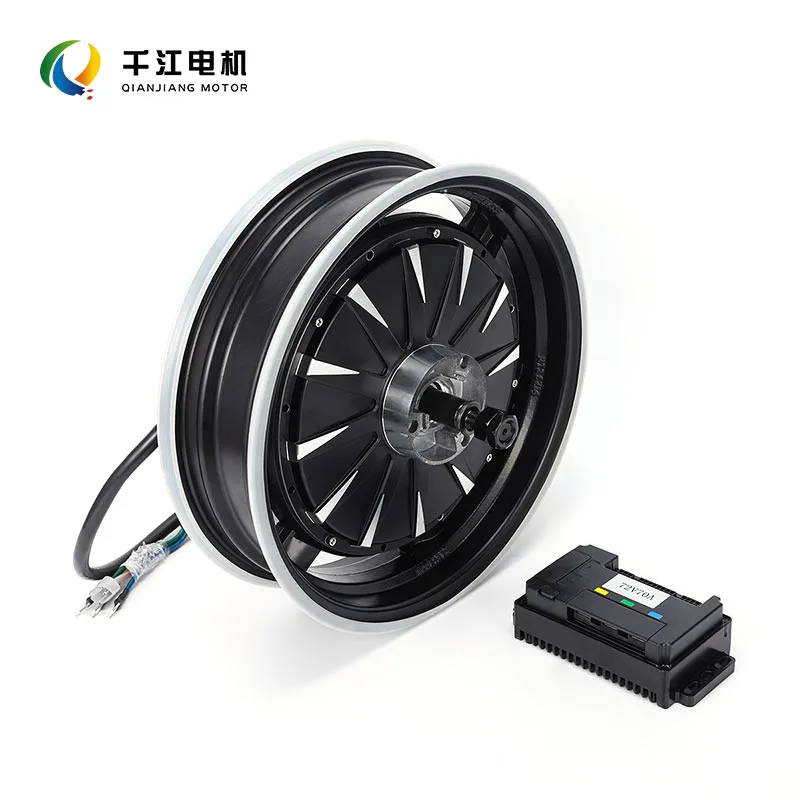
1. Why Does Motor Position Change Handling and Weight Distribution?
The motor position determines whether the motor mass is carried by the suspension or by the frame. A hub motor is part of the rear wheel assembly, so its mass is unsprung mass. The suspension must control that mass over every bump, and a heavy hub motor makes the rear wheel slower to respond. A mid-drive motor is mounted to the frame, so its mass is sprung mass. The suspension does not have to control it, and the center of gravity can be placed lower and closer to the middle of the motorcycle. In our factory, we build both layouts and we measure the unsprung mass on a corner weight scale. Ningbo Qianjiang Motor Co., Ltd. has been producing electric motorcycle motors for over 12 years.
The weight distribution also affects the front-to-rear balance. A hub motor adds mass at the rear axle, which can make the front end feel light under acceleration. A mid-drive motor keeps the mass near the center, which gives a more neutral balance and more consistent steering feel. For a city commuter at low speed, the difference is small. For a motorcycle that is ridden on uneven roads or at higher speed, the difference is noticeable.
2. What Advantages and Trade-Offs Does a Hub Motor Offer?
A hub motor offers a simple drivetrain. There is no chain, no belt, and no gearbox between the motor and the wheel. The motor drives the wheel directly, so the mechanical losses are low and the maintenance is minimal. The packaging is also simple, because the motor sits inside the wheel and does not take space in the frame. The trade-offs are the unsprung mass and the heat path. The motor is inside the wheel, so the heat must be conducted through the hub and the rim, and the cooling airflow is limited. Under a sustained climb, the winding temperature rises quickly. The table below summarizes the hub motor characteristics.
| Characteristic | Hub motor layout | Effect in service |
| Drivetrain | Direct drive, no chain or belt | Low mechanical loss, minimal maintenance |
| Unsprung mass | High (motor in wheel) | Slower suspension response, harsher ride on rough roads |
| Heat rejection | Limited (enclosed in wheel) | Winding temperature rises on sustained climbs |
| Packaging | Simple (no frame space used) | Leaves room for a larger battery |
| Torque at low speed | Moderate | Requires a larger motor for steep grades |
In our factory, the hub motor is the standard choice for city commuters and for delivery motorcycles that operate on flat routes. The direct drive and the low maintenance are valued by fleet operators who do not want to adjust a chain every week. Ningbo Qianjiang Motor Co., Ltd. supplies hub motors with a sealed connector and an integrated controller for these applications.
3. What Advantages and Trade-Offs Does a Mid-Drive Motor Offer?
A mid-drive motor drives the rear wheel through a belt or a chain and a reduction stage. The reduction stage multiplies the motor torque, so a smaller motor can deliver the same wheel torque as a larger hub motor. The motor is mounted on the frame, so the heat can be removed by a dedicated cooling path and the unsprung mass is low. The trade-offs are the mechanical losses in the belt or chain, the maintenance of the final drive, and the space required in the frame. The table below compares the two layouts on the parameters that matter for climbing and for sustained load.
| Parameter | Hub motor layout | Mid-drive layout |
| Wheel torque at low speed | Limited by motor size | Multiplied by reduction ratio |
| Unsprung mass | High | Low |
| Heat rejection | Limited | Good (frame mounted, air cooled) |
| Mechanical loss | Low | Moderate (belt or chain) |
| Maintenance | Minimal | Belt or chain adjustment and replacement |
| Frame space | None used | Requires mounting space |
Vehicle engineer's note: The mid-drive layout is the better choice when the route includes sustained grades or when the payload is high. The reduction stage allows a smaller and lighter motor to produce the wheel torque that a hub motor can only produce with a much larger stator. The lower unsprung mass also improves the ride and the tire contact on rough roads. In our factory, we recommend the mid-drive layout for cargo motorcycles and for motorcycles that operate in hilly regions. Ningbo Qianjiang Motor Co., Ltd. supplies mid-drive units with an integrated reduction gear and a belt final drive.
4. How Does Each Layout Handle Heat, Water, and Maintenance?
The heat path is the most important difference in sustained operation. A hub motor is enclosed in the wheel, and the only heat path is conduction through the axle and the rim. The airflow over the wheel helps, but the stator and the winding are inside a sealed housing. A mid-drive motor is mounted in the air stream behind the frame, and the housing can be finned. The winding temperature stays lower under the same load, which extends the insulation life and allows a higher continuous rating. For water, the hub motor must have a high ingress protection rating because it is submerged during water crossings and exposed to mud. The mid-drive motor is higher on the frame and is less exposed, but the belt or chain drive still requires maintenance. In our factory, the hub motors are rated IP67 and the mid-drive units are rated IP65 with a sealed connector. The table below summarizes the service differences.
| Service factor | Hub motor | Mid-drive motor |
| Ingress protection | IP67 (sealed wheel hub) | IP65 (frame mounted) |
| Continuous thermal margin | Lower | Higher |
| Final drive maintenance | None | Belt tension and replacement |
| Bearing service | Wheel bearing and motor bearing | Motor bearing and output shaft bearing |
| Typical service interval | 5,000 km inspection | 3,000 km belt check |
We recommend that the buyer match the ingress protection to the operating environment. A hub motor that operates in flooded streets needs the IP67 rating and a sealed connector. A mid-drive motor that operates in dust needs a sealed housing and a belt guard. Ningbo Qianjiang Motor Co., Ltd. provides the test report for the ingress protection and the thermal rating with each motor.
5. How Should Buyers Choose Between the Two Layouts?
The choice depends on the route, the payload, and the maintenance capability. A hub motor is the better choice for a flat city route, a light payload, and a fleet that does not have a workshop for belt maintenance. A mid-drive motor is the better choice for a hilly route, a heavy payload, and a fleet that can perform the belt inspection. The buyer should also consider the battery space. A hub motor leaves the frame free for a larger battery, which may extend the range. A mid-drive motor uses some frame space, which may reduce the battery volume. The buyer should compare the two layouts on the total cost of ownership, including the motor cost, the battery cost, and the maintenance cost over the service life.
We recommend that the buyer request a test ride on the actual route with the actual payload before making the decision. The test ride reveals the thermal behavior and the ride comfort that the specification sheet cannot show. Ningbo Qianjiang Motor Co., Ltd. provides demo units for fleet evaluation and can support the test ride with data logging.
Frequently Asked Questions About Hub and Mid-Drive Electric Motorcycle Motors
The difference between hub and mid-drive Electric Motorcycle Motors comes down to where the mass and the heat are placed. A hub motor places both in the wheel, which simplifies the drivetrain and reduces maintenance but increases unsprung mass and limits heat rejection. A mid-drive motor places both on the frame, which improves the ride, the climbing ability, and the thermal margin but adds a belt or chain final drive and requires frame space. The buyer should choose based on the route, the payload, and the maintenance capability, and should validate the choice with a test ride on the actual route. The specification sheet alone does not show the thermal behavior or the ride comfort that decide the real world result.