

What Causes Cavitation in an LPG Filling Pump With Motor and How to Fix It
2026-07-01
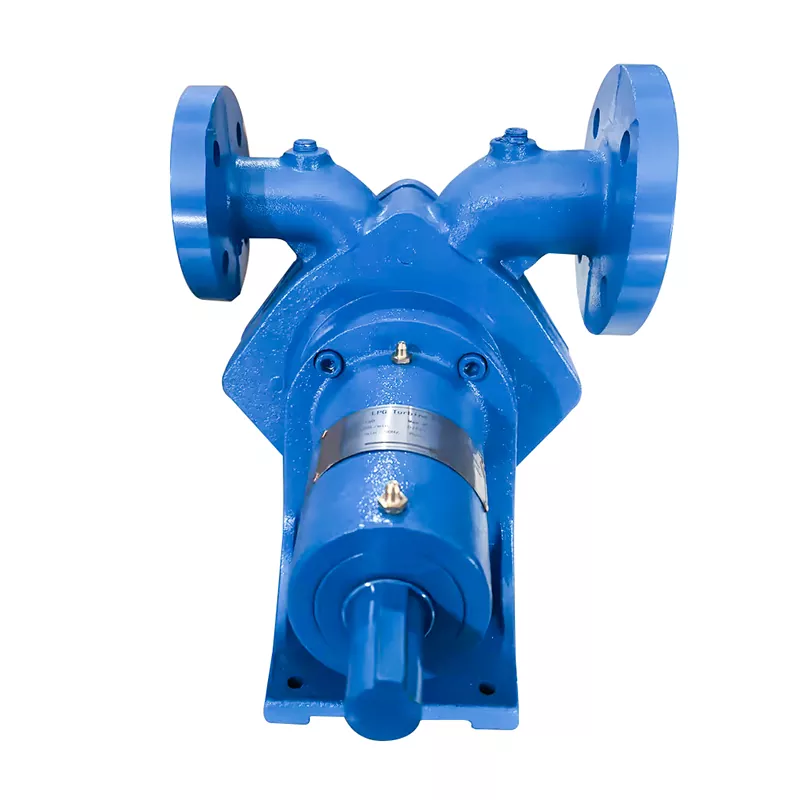
Cavitation is the silent killer of rotating equipment, and when it strikes a LPG Filling Pump With Motor, the damage is neither silent nor cheap. For plant engineers and maintenance leads, the tell-tale signs—rattling noises, erratic flow, and sudden pressure drops—are all too familiar. At Supertech, we have spent over two decades diagnosing and remedying cavitation in hundreds of filling stations. This guide breaks down the root causes and provides a step-by-step action plan to protect your LPG Filling Pump With Motor from premature failure.
The Science Behind the Damage
Cavitation occurs when the pressure at the pump suction drops below the vapour pressure of the LPG. This creates vapour bubbles that collapse violently as they move to the high-pressure discharge side. The resulting micro-jets erode the impeller, wear rings, and casing. Over time, this leads to:
-
Loss of differential pressure.
-
Bearing and seal failures.
-
Complete rotor seizure.
Primary Causes of Cavitation
| Cause Category | Specific Issue | How It Affects the LPG Filling Pump With Motor |
|---|---|---|
| Suction Conditions | Insufficient NPSHa (Net Positive Suction Head available) | LPG flashes into vapour before entering the impeller eye. |
| System Design | Undersized suction piping or clogged strainers | Creates excessive friction loss, dropping inlet pressure. |
| Fluid Properties | LPG temperature above design point | Higher temperature raises vapour pressure, reducing NPSHa. |
| Operational Errors | Running the pump at dead-head or far right on the curve | Increases recirculation turbulence, inducing localized cavitation. |
| Mechanical Wear | Worn impeller or diffuser vanes | Alters the internal flow path, promoting vortex formation. |
How to Fix Cavitation: A Professional Protocol
Follow this 5-step corrective plan to restore and safeguard your LPG Filling Pump With Motor:
-
Audit the Suction System
Measure the actual suction pressure at the pump flange during full-load operation. Compare it to the pump’s required NPSHr (from the curve). If NPSHa < NPSHr, you must increase the static head (raise the storage tank elevation) or lower the LPG temperature via a precooler. -
Check Strainers and Foot Valves
A partially blocked strainer is the most overlooked cause. Clean the suction strainer and verify that the mesh size does not exceed 0.5 mm for LPG service. Supertech recommends installing a differential pressure gauge across the strainer—if ΔP exceeds 0.3 bar, schedule immediate cleaning. -
Throttle the Discharge Valve (Temporary Fix)
Slightly closing the discharge valve moves the operating point back toward the BEP (Best Efficiency Point). This reduces the flow velocity and increases suction pressure, often silencing the cavitation within minutes. This is a temporary band-aid; permanent correction requires a system redesign. -
Upgrade to a Low-NPSH Impeller
Supertech offers retrofitted inducer stages for most LPG Filling Pump With Motor models. The inducer acts as a screw-type booster, raising the pressure at the main impeller eye by 15–20%, effectively solving chronic cavitation where tank elevation cannot be modified. -
Install a VFD with Pressure-Compensated Control
A Variable Frequency Drive (VFD) that modulates speed based on suction pressure can prevent cavitation during peak flow demands. Supertech’s intelligent controllers automatically reduce RPM when NPSHa drops, keeping the pump safely within its operating envelope.
Recommended Maintenance Schedule
| Action | Frequency | Responsible Party |
|---|---|---|
| Measure suction pressure and temperature | Daily (shift log) | Operator |
| Inspect and clean suction strainer | Weekly | Maintenance Technician |
| Check impeller clearance and wear ring gap | Every 6 months | Supertech Service Team |
| Perform vibration analysis (FFT) | Quarterly | Reliability Engineer |
| Full pump overhaul with inducer inspection | Annually | Certified Supertech Partner |
FAQ – Common Questions About Cavitation in an LPG Filling Pump With Motor
Q: Can cavitation damage occur even if the suction gauge shows positive pressure?
A: Yes. Positive gauge pressure does not guarantee cavitation-free operation. What matters is the margin between NPSHa and NPSHr. For LPG, you need a minimum margin of 0.5–1.0 bar above the vapour pressure at the given temperature. A positive reading of 1.0 bar might be perfectly safe at 10°C, but at 30°C, the vapour pressure rises to nearly 11 bar (absolute)—so your gauge reading could be dangerously close to the flash point. Always convert gauge readings to absolute and compare with the LPG vapour pressure curve.
Q: Is it safe to temporarily increase pump speed to overcome cavitation noise?
A: Absolutely not. Increasing speed worsens cavitation because NPSHr increases with the square of the speed. The noise may change pitch, but the implosion energy rises, accelerating impeller erosion by 3 to 5 times. The correct temporary action is to reduce speed (if VFD-equipped) or slightly close the discharge valve to lower flow and raise suction pressure. If you must maintain production, bypass a portion of the discharge flow back to the suction drum—but only through a properly sized bypass line with a control valve, never through the pump’s internal recirculation port.
Q: How do I know if the impeller is already damaged beyond repair, or just worn?
A: Perform a three-point check. First, measure the pump’s developed head at the rated flow—if it has dropped by more than 8–10% from the original curve, the impeller is likely eroded. Second, open the casing and inspect the vane edges; if you see rounded, pitted, or missing metal (especially on the leading edge), the impeller is compromised. Third, check the vibration spectrum—a distinct peak at vane-passing frequency (blade count × RPM) with harmonics indicates severe damage. Minor wear can be restored by re-profiling and balancing, but if the erosion exceeds 2 mm in depth, replacement is mandatory. Supertech provides free on-site impeller inspection and offers exchangeable spare impellers to minimize your downtime.
Final Word – Protect Your Asset Today
Cavitation is not a matter of "if" but "when" for any LPG Filling Pump With Motor operating under variable suction conditions. The difference between a costly emergency shutdown and a scheduled maintenance event lies in proactive monitoring and targeted upgrades. Supertech manufactures and supplies the most reliable LPG Filling Pump With Motor systems with integrated anti-cavitation features—from oversized inducers to real-time NPSH monitoring dashboards.
Contact Supertech now for a comprehensive site audit of your filling pump system. Our engineers will deliver a customized cavitation mitigation plan within 48 hours, complete with impeller sizing, piping recommendations, and retrofitting options. Call our service hotline or email us today—because every minute of unplanned downtime is a minute of lost revenue. Let Supertech keep your flow steady, your pressure stable, and your maintenance budget under control.