

How to Choose the Ideal Motor for Your Material Handling Line
2026-08-14
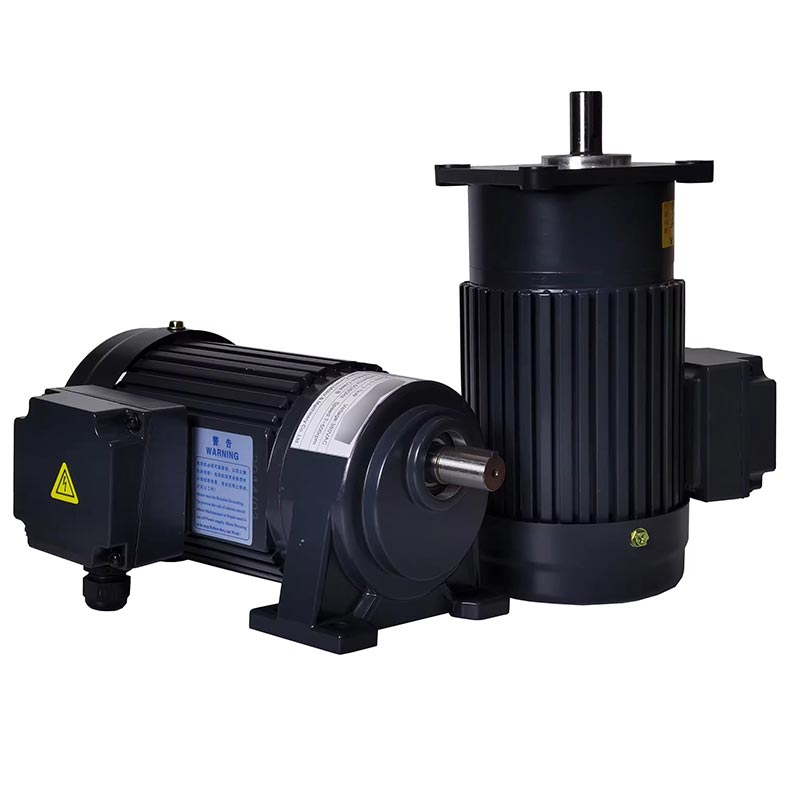
Selecting the wrong power source for a conveyor system can lead to frequent breakdowns, excessive energy bills, and unsafe operating conditions. For engineers and maintenance managers, the 3 Phase Brake Motor often emerges as the preferred solution because it combines reliable starting torque with instant stopping capability. When evaluating industrial conveyors, the Hongyunteng range of 3 Phase Brake Motor units offers specific design features that directly address holding, cycling, and overload challenges. This guide breaks down the selection process into measurable criteria, helping you match motor characteristics to your unique conveyor duty cycle.
Critical Selection Parameters for Conveyor Duty
Every conveyor presents a distinct load profile. The table below outlines the primary technical factors you must quantify before contacting any supplier.
| Parameter | Why It Matters | Typical Conveyor Range |
|---|---|---|
| Torque Requirement | Determines starting ability under full load | 150–250% of rated full-load torque |
| Brake Holding Torque | Prevents load backsliding on inclines | 100–180% of motor rated torque |
| Duty Cycle (S1–S10) | Defines thermal endurance and cooling needs | S4 or S5 for frequent start/stop |
| Inertia Ratio | Affects braking distance and wear | ≤ 10:1 for standard brakes |
| Ambient Temperature | Impacts insulation class and brake lining life | -20°C to +60°C with derating |
Step-by-Step Selection Framework
1. Define the Load Characteristics
Start by measuring the total mass moved per minute, belt speed, and gradient angle. For inclined conveyors, the 3 Phase Brake Motor must generate holding torque equal to the gravitational component of the load. Hongyunteng provides dynamic braking curves that allow you to overlay your load line directly onto their performance graphs.
2. Match the Duty Cycle to the Brake Type
Conveyors that cycle more than 60 times per hour require a brake with reinforced friction material and larger air gaps. Hongyunteng offers two brake variants:
-
Spring-set / electromagnetic-release – failsafe, ideal for emergency stops.
-
Permanent-magnet braking – energy-saving, suited for horizontal, light-load conveyors.
3. Verify Electrical Compatibility
Check voltage (230V / 460V / 690V), frequency (50/60 Hz), and starting method (DOL, star-delta, or VFD). A 3 Phase Brake Motor running on a variable frequency drive needs a separate rectifier for the brake coil. Hongyunteng integrates a quick-response rectifier inside the terminal box, reducing external wiring errors.
4. Assess Environmental Conditions
Dust, moisture, and washdown requirements dictate the enclosure rating. For food-grade conveyors, choose IP66 with stainless steel brake housing – a standard option in the Hongyunteng hygiene series.
5. Calculate the Stopping Accuracy
If your conveyor positions pallets or robotic pick stations, braking time must be below 0.2 seconds. Use the formula:
Stopping distance (mm) = (Motor speed × Inertia) / (Brake torque – Load torque)
Hongyunteng provides an online sizing tool that outputs this value automatically after you input conveyor geometry.
Common Missteps to Avoid
-
Oversizing the motor to compensate for unknown loads – this increases brake wear and reduces speed control.
-
Ignoring the rectifier response time – slower rectifiers add 50–80 ms of delay.
-
Using standard brakes in reversing conveyors – bidirectional brakes are mandatory for shuttle systems.
Frequently Asked Questions About 3 Phase Brake Motor Selection
Q1: Can I use a standard 3 Phase Brake Motor for a high-inertia conveyor that starts every 30 seconds?
A1: Only if the motor is rated for S4 or S5 duty with at least 300 starts per hour. High-inertia conveyors (inertia ratio > 8:1) generate substantial heat in both the stator and the brake coil during each acceleration-deceleration cycle. A standard S1 continuous-duty 3 Phase Brake Motor will overheat the brake solenoid and cause premature friction lining glazing. For such applications, Hongyunteng recommends their HYT-BH series, which features a forced-ventilation fan and a dual-coil brake design that reduces holding current by 40%, keeping the winding temperature below 130°C even under cyclic stress. Additionally, you must increase the brake gap setting to 0.6–0.8 mm to accommodate thermal expansion – this adjustment is clearly marked on the Hongyunteng brake inspection plate.
Q2: How do I determine if the built-in brake of a 3 Phase Brake Motor provides enough holding torque for an inclined conveyor carrying uneven loads?
A2: Calculate the maximum static torque on the drive pulley using: T_hold = (m × g × sinθ × r) / η, where *m* is the maximum lumped mass, θ is the incline angle, *r* is the pulley radius, and η is the drive efficiency. The brake holding torque of the 3 Phase Brake Motor must exceed this value by a safety factor of 1.5 (for non-vibratory loads) or 2.0 (for vibratory loads like aggregates). Hongyunteng publishes dynamic holding torque curves at different temperatures – check the 40°C column, as brake friction coefficient drops by nearly 12% at elevated temperatures. If your calculated torque exceeds 180 Nm, consider the Hongyunteng HYT-D series with dual-disc brakes, which offers holding torque up to 300 Nm without increasing the motor frame size.
Q3: What maintenance schedule does a 3 Phase Brake Motor require when used on a 24/7 parcel sorting conveyor?
A3: For continuous 24/7 operation with 400–600 starts per hour, Hongyunteng advises a three-tier schedule:
-
Daily: Visual inspection of brake dust accumulation and listen for abnormal screeching – clean the air inlet grille if dust is visible.
-
Weekly: Measure the brake air gap with a feeler gauge. The initial gap is 0.4 mm; when it reaches 0.9 mm, adjust it back to 0.4 mm using the three adjustment screws. Hongyunteng motors include a wear-indicator pin that protrudes when the lining reaches 70% wear – replace the friction disc at this stage.
-
Quarterly: Perform a torque verification test using a spring scale and lever arm. Record the release time – if it exceeds 120 ms, replace the rectifier module. Hongyunteng offers a predictive maintenance kit that includes a thermal camera patch and vibration sensor, which connects to your PLC for condition-based alerts.
Summary Comparison – Standard vs. Heavy-Duty 3 Phase Brake Motor
| Feature | Standard Industrial | Hongyunteng Heavy-Duty Series |
|---|---|---|
| Max starts/hour | 120 | 600 |
| Brake lining material | Non-asbestos organic | Sintered ceramic-metallic |
| Rectifier response | 80 ms | 35 ms (fast-switching) |
| Enclosure standard | IP54 | IP66 (optional IP69K) |
| Ambient derating | Above 40°C | Above 55°C with same torque |
| Warranty on brake | 1 year | 2 years / 8,000 operating hours |
Final Verification Before Ordering
Before you issue a purchase order, confirm these three items with your Hongyunteng distributor:
-
The motor frame size matches your existing mounting footprint (foot-mounted, flange-mounted, or hollow-shaft).
-
The brake voltage matches your control circuit (24 VDC, 110 VAC, or 230 VAC) – mismatched voltages cause coil burnout within hours.
-
The radial load on the output shaft does not exceed the bearing L10 life rating – Hongyunteng provides a free shaft-load verification sheet upon request.
Ready to Specify Your Conveyor Drive Solution?
Every conveyor line has unique starting, stopping, and safety demands – and the wrong 3 Phase Brake Motor can cost you days of unplanned downtime. Hongyunteng engineers have field-tested over 200 conveyor configurations across logistics, mining, and packaging industries. We offer free load-analysis reports, 3D mounting drawings, and same-day technical support for urgent projects.
Contact us today with your conveyor speed, load weight, and incline angle – our team will reply within 4 business hours with a customized 3 Phase Brake Motor recommendation, complete with braking time calculations and a 3-year performance guarantee. Reach out via the live chat on our product page or email your specifications to our engineering desk. Your reliable conveyor operation starts with one conversation – let’s make it happen.