

How to Choose Between BLDC And Stepper Motors For High-Precision Electronics?
2026-02-09
When selecting a DC Motor for high-precision electronics, understanding the distinctions between BLDC and stepper motors is crucial. Our experience shows that BLDC motors offer high efficiency and smooth rotation, which is ideal for applications demanding continuous operation and minimal noise. Stepper motors, on the other hand, provide precise position control, making them suitable for tasks that require repeatable steps without feedback systems. At Taicang EKcraft Electronics Co., Ltd., our engineering team evaluates each project's requirements before recommending the optimal motor type for specific electronics.
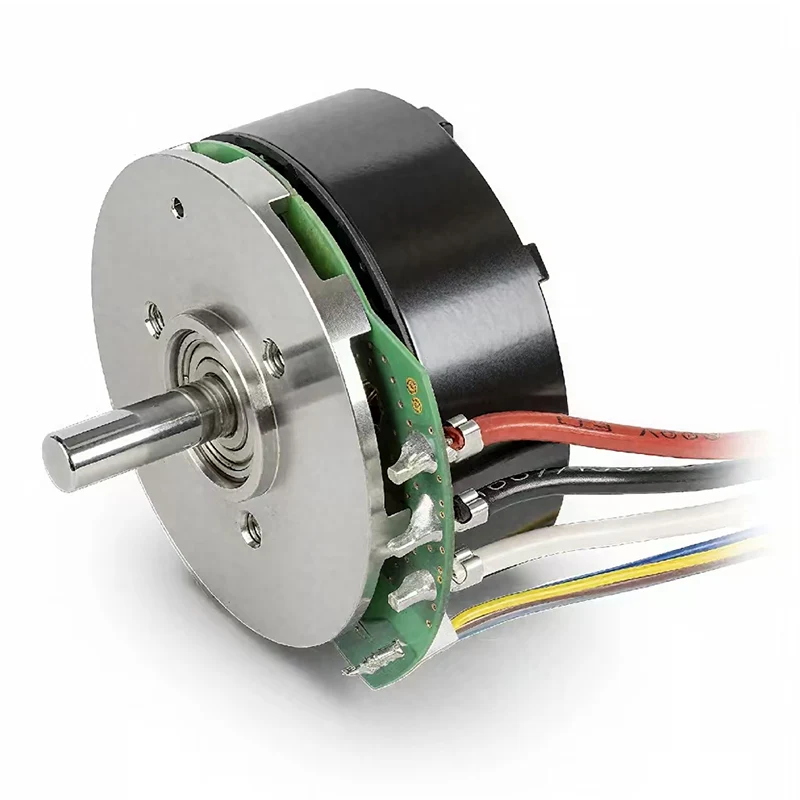
How Do Load Requirements Affect Motor Selection?
Load characteristics play a significant role in determining whether a BLDC or stepper motor is more appropriate. Our factory often deals with applications where torque needs vary across the operational range. BLDC motors maintain high torque at high speeds and are generally more energy-efficient, while stepper motors excel at low-speed torque with precise incremental movements. For our customers, we analyze the mechanical load profile to ensure that the selected motor will perform reliably under varying conditions.
| Motor Type | Torque Range (Nm) | Speed Range (RPM) | Efficiency (%) |
| BLDC Motor | 0.05 - 1.5 | 100 - 8000 | 85 - 92 |
| Stepper Motor | 0.01 - 2.0 | 10 - 1000 | 60 - 75 |
Which Factors Determine Accuracy and Precision Needs?
Precision requirements are often the deciding factor for DC Motor selection. Our team frequently measures the positional accuracy and repeatability necessary for high-end electronics. Stepper motors provide inherent step accuracy, often eliminating the need for encoders in simpler systems. BLDC motors, combined with our factory's encoder options, achieve smooth and accurate rotation but may require additional control circuitry. At Taicang EKcraft Electronics Co., Ltd., we offer customized BLDC solutions tailored to maintain microstep precision for advanced electronics applications.
What Are the Environmental Considerations for Motor Performance?
Environmental factors such as temperature, dust, and vibration significantly influence motor selection. Our DC Motor products are tested under various conditions to ensure reliability. BLDC motors perform well under continuous operation in moderate environments, while stepper motors are more sensitive to heat accumulation and require proper cooling strategies. Our engineers evaluate these conditions and provide recommendations to match each motor type with its operational environment, ensuring longevity and consistent performance for our clients.
How Can Integration and Control Systems Influence Your Choice?
Integration with electronics systems and control strategies affects whether a BLDC or stepper motor is preferable. Our factory has extensive experience in implementing drivers and controllers for both motor types. BLDC motors require electronic controllers to manage commutation, while stepper motors can often operate directly from digital control signals. For complex high-precision electronics, our engineers design integrated control solutions to maximize performance while minimizing electrical noise and response time, ensuring the product meets exact specifications.
| Parameter | BLDC Motor | Stepper Motor |
| Voltage (V) | 12-48 | 5-48 |
| Rated Current (A) | 0.5-10 | 0.2-6 |
| Weight (kg) | 0.2-1.8 | 0.15-2.2 |
| Mounting Type | Flange/Face | Flange/Face |
| Control Method | Closed-Loop PWM | Open-Loop/Driver |
How to Choose Between BLDC And Stepper Motors For High-Precision Electronics? FAQ
Q1: Can I use a BLDC motor for precise positioning without feedback?
A1: BLDC motors inherently require a feedback system for accurate positioning. Our factory integrates encoders with BLDC motors to achieve precise movement in high-precision electronics. Without encoders, stepper motors may provide better repeatable positioning due to their step increment characteristics.
Q2: Are stepper motors more energy-efficient than BLDC motors for continuous operation?
A2: Stepper motors generally consume more power in continuous operation because they draw current even when holding position. BLDC motors from our product line maintain high efficiency at continuous speeds, making them more suitable for long-running high-precision equipment where energy consumption is a concern.
Q3: How do I determine which motor offers better durability for demanding environments?
A3: Durability depends on load, temperature, and duty cycle. Our BLDC motors are designed with high-quality bearings and thermal management to withstand continuous operation, whereas stepper motors excel at low-speed precision tasks but may overheat under high duty cycles. We recommend evaluating environmental factors and consulting our engineers at Taicang EKcraft Electronics Co., Ltd. for optimal motor selection.
Conclusion: Which Motor Fits Your High-Precision Electronics?
Choosing between BLDC and stepper motors requires analyzing efficiency, torque, precision, environmental conditions, and control integration. Our experience demonstrates that stepper motors suit applications needing precise incremental movement without feedback, while BLDC motors excel in continuous, high-efficiency, and low-noise operation. At Taicang EKcraft Electronics Co., Ltd., our factory offers both motor types with customizable parameters to match exact project needs. By carefully considering the factors outlined above and consulting with our engineering team, you can select the DC Motor that ensures reliability, precision, and optimal performance for your high-precision electronics projects.
Contact our technical team today to discuss your application requirements and receive a tailored motor solution that meets your high-precision demands.