

How is the Enclosure of an Explosion Proof Squirrel Cage Motor Tested for Safety
2026-04-22
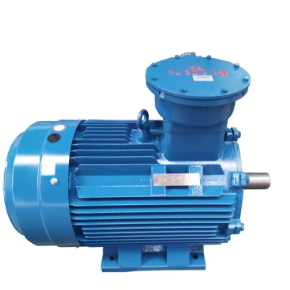
When selecting a Squirrel Cage Explosion Proof AC Motor Induction for hazardous environments, the enclosure’s integrity is the first line of defense against ignition. At Yinchi, we prioritize rigorous testing protocols that validate each motor’s ability to contain internal explosions and prevent external flammable atmospheres from being ignited. Understanding these tests helps engineers and procurement specialists make certified, reliable choices.
The Core Safety Standard: Explosion Containment
The fundamental principle behind an explosion proof enclosure is not to prevent internal explosions, but to withstand them and cool escaping gases so they cannot ignite surrounding hazards. Testing verifies two critical outcomes: structural strength and flame path gap control.
| Test Type | Purpose | Acceptance Criteria |
|---|---|---|
| Static Pressure Test | Verify enclosure can withstand maximum internal pressure without deformation or rupture | No visible damage or permanent deformation at 1.5x maximum calculated explosion pressure |
| Dynamic Explosion Test | Simulate actual internal ignition of specified gas or dust mixtures | Flame path gaps (flanges, joints) must cool escaping gases below auto-ignition temperature |
| Thermal Endurance Test | Ensure surface temperatures remain below ignition point of surrounding atmosphere | Maximum external temperature ≤ 80% of lowest auto-ignition temperature of classified gas |
| Ingress Protection (IP) Test | Confirm dust and water tightness under high pressure | Minimum IP66 rating maintained after mechanical impact and aging |
Step-by-Step Enclosure Testing Procedure
Step 1 – Flame Path Verification
The machined joints between the motor housing, end brackets, and terminal box are measured with precision gauges. For a Squirrel Cage Explosion Proof AC Motor Induction, maximum gap width typically ranges from 0.0015 to 0.006 inches depending on the gas group (e.g., IIB vs. IIC). Yinchi uses CNC-machined flanges to ensure repeatable tolerances.
Step 2 – Hydrostatic Pressure Test
The enclosure is filled with water and pressurized to 1.5 times the calculated explosion pressure (often 1.5 MPa or higher). This eliminates air compressibility risks. Any leak or permanent deformation results in rejection.
Step 3 – Explosion Test Cell Validation
The fully assembled motor is placed inside a sealed test chamber filled with a specific explosive gas mixture (e.g., 14% ethylene in air for IIB or 21% hydrogen for IIC). An internal spark plug ignites a controlled gas mixture inside the enclosure. External flame or sustained combustion is prohibited. Yinchi motors undergo at least 10 consecutive explosion cycles without failure.
Step 4 – Temperature Rise Test
Thermocouples are attached to the enclosure surface while the motor runs under locked-rotor and full-load conditions. The maximum surface temperature (T-code, e.g., T4 ≤135°C) must be recorded and certified.
Squirrel Cage Explosion Proof AC Motor Induction – FAQ
Q1: What happens if the flame path gap on a Squirrel Cage Explosion Proof AC Motor Induction is too wide during testing?
A: If the flame path gap exceeds certified limits, hot combustion gases can escape without sufficient cooling. These gases may ignite surrounding flammable atmospheres. During a dynamic explosion test, any external ignition—even a momentary flash—causes immediate failure. Manufacturers like Yinchi must recut flanges or replace components and retest from the hydrostatic stage. Certified gaps are measured to 0.0001-inch accuracy using laser micrometers.
Q2: How often should the enclosure of an installed explosion proof squirrel cage motor be retested for safety?
A: Re-testing is not typically performed on-site because enclosure integrity is destroyed by disassembly. Instead, visual inspections for corrosion, impact damage, and gap condition are required every 6–12 months per NEC 500 and IEC 60079-17. Full re-certification is only required after major repair or modification. Yinchi recommends sending the motor to an authorized repair facility for a full hydrostatic and flame path inspection every 5 years or after any severe mechanical shock.
Q3: Can a Squirrel Cage Explosion Proof AC Motor Induction pass the explosion test if the terminal box is not identical to the main housing?
A: No. The terminal box is considered part of the explosion proof enclosure. During certification, the entire assembly—main housing, terminal box, cable entry glands, and shaft seals—is tested as a single unit. A weaker terminal box with larger flame gaps or thinner walls will cause test failure. Yinchi designs integrated terminal boxes using the same flame path machining standards and thickness calculations (minimum 3/8-inch cast iron for Group IIB applications) as the main motor body.
Why Testing Integrity Matters for Your Facility
Non-compliant enclosures lead to catastrophic failures. In one industry case, a motor with an incorrectly recertified flame path allowed external ignition of a petrochemical vapor cloud. Yinchi ensures each Squirrel Cage Explosion Proof AC Motor Induction ships with a full test report traceable to recognized standards such as ATEX, IECEx, or UL 674.
Final Checklist Before Installation
-
Verify the nameplate shows T-code and gas group matching your classified area.
-
Confirm the test certificate includes dynamic explosion test results.
-
Inspect all flame path surfaces for nicks or corrosion before mounting.
Contact Us
Need certified Squirrel Cage Explosion Proof AC Motor Induction enclosures for your hazardous location? Yinchi provides full test documentation, custom voltages, and fast global delivery. Contact us today for a compliance review and quote tailored to your zone or division requirements.