

How Does the Enclosure Design Impact the Performance of a Squirrel Cage Explosion Proof AC Motor
2026-04-16
The Squirrel Cage Explosion Proof AC Motor Induction is a cornerstone of heavy industrial operations, from oil refineries to chemical processing plants. Its reliability depends heavily on one often‑overlooked element: the enclosure design. At Yinchi, we engineer enclosures that do more than contain sparks—they actively enhance motor performance, safety, and longevity. Below is a professional breakdown of how enclosure features directly affect key performance indicators.
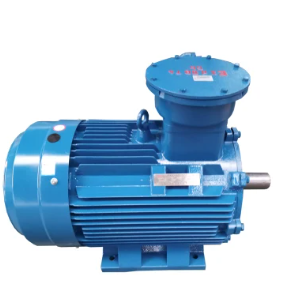
Key Performance Impacts of Enclosure Design
| Enclosure Feature | Performance Impact | Benefit for Squirrel Cage Explosion Proof AC Motor Induction |
|---|---|---|
| Flame path joints | Quenches escaping hot gases | Prevents external ignition without raising internal temperature |
| Wall thickness & material | Absorbs shock waves from internal explosion | Maintains structural integrity under fault conditions |
| Sealing (IP rating) | Blocks dust, moisture, corrosive agents | Reduces bearing wear and insulation breakdown |
| Cooling fin geometry | Maximizes heat dissipation surface | Enables continuous operation even in high ambient heat |
| Terminal box design | Isolates electrical connections | Simplifies safe maintenance and reduces arc flash risks |
How Enclosure Design Affects Thermal Performance
A Squirrel Cage Explosion Proof AC Motor Induction generates heat from copper and iron losses. In a standard motor, open ventilation removes heat. In an explosion proof motor, the enclosure is sealed—so heat has no easy escape. Poor enclosure design leads to:
-
Higher winding temperatures – accelerates insulation aging
-
Reduced efficiency – increased rotor resistance lowers torque
-
Shortened bearing life – grease degrades faster
Advanced enclosures from Yinchi integrate external cooling ribs and optional forced ventilation covers. These features lower internal temperature by 15–20°C compared to basic designs, directly extending motor life.
Three Critical FAQs on Squirrel Cage Explosion Proof AC Motor Induction Enclosures
Q1: Can an explosion proof enclosure be fully airtight and still cool the motor effectively?
A1: No, a truly airtight enclosure would cause rapid overheating. Certified explosion proof designs are not airtight; they use precisely machined flame paths (gaps of 0.0015 to 0.003 inches) that allow internal pressure to escape safely while cooling the motor through conduction to external fins. Yinchi optimizes these gap dimensions to balance safety with heat dissipation, ensuring continuous duty operation even at full load.
Q2: Does a heavier enclosure always mean a better explosion proof motor?
A2: Not necessarily. While wall thickness must meet standards (e.g., UL 1203 or IEC 60079‑1), excessive weight adds cost and installation difficulty without performance gains. The key is material quality—high‑grade cast iron or aluminum alloy with uniform density. Yinchi uses finite element analysis to design minimum safe thickness, reducing weight by up to 18% compared to conventional castings while exceeding pressure test requirements.
Q3: How does enclosure design affect motor efficiency and power factor in a Squirrel Cage Explosion Proof AC Motor Induction?
A3: Indirectly but significantly. A well‑designed enclosure prevents contamination (dust, oil mist, moisture) from entering the stator core. Contaminated laminations increase eddy current losses, dropping efficiency by 2–4%. Similarly, corrosion on rotor bars raises slip and reduces power factor. Yinchi enclosures feature double‑sealed end shields and corrosion‑resistant coatings that maintain clean magnetic circuits, preserving efficiency above IE3 levels over five years of continuous operation.
Practical Selection Guide
| Application Environment | Recommended Enclosure Feature from Yinchi | Performance Outcome |
|---|---|---|
| Offshore platform (salt spray) | Stainless steel hardware + epoxy coating | Zero rust after 10,000 hours salt fog test |
| Grain silo (dust) | Labyrinth seals + IP66 rating | No dust ingress after 6 months |
| Chemical plant (vapor) | Copper‑free aluminum alloy | Prevents galvanic corrosion |
| High ambient temperature (50°C+) | Extended cooling ribs + finned fan cover | Same output power without derating |
Conclusion
The enclosure is not just a protective shell for a Squirrel Cage Explosion Proof AC Motor Induction—it is an active component that determines thermal limits, contamination resistance, and long‑term efficiency. Yinchi designs every enclosure with computational fluid dynamics and explosion pressure modeling, resulting in motors that run cooler, last longer, and operate safely in Zone 1 and Zone 2 hazardous areas.
Need a custom enclosure solution for your hazardous location? Contact us today to discuss your application requirements or request a thermal simulation report for your specific operating conditions.