
How Does the Design of a Hydraulic Motor Influence Its Efficiency?
2025-12-09
Understanding how the structural design of a hydraulic system shapes its output is essential for engineers and equipment operators who rely on stable performance. In many industrial settings, a well engineered Motor can determine whether a machine delivers consistent torque, reduces energy losses, and maintains long service life. With decades of development, design features have become the core indicator of operational behavior and efficiency. At Saifu Vietnam Company Limited, we work closely with technical teams who evaluate real-world applications and help match design characteristics to field requirements. As a supplier, we take responsibility for describing each element clearly so users can make informed choices supported by reliable data from our factory.
Why Does Internal Geometry Play a Central Role in Efficiency?
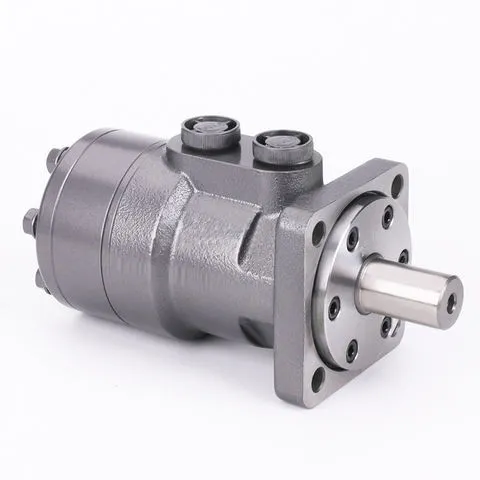
The internal geometry of a Motor directly affects how fluid energy is converted into rotational output. When chambers, ports, and internal flow paths are shaped to reduce turbulence, the system requires less input energy to achieve the same load output. Our engineering team has observed that smoother passages and uniform clearances help reduce heat accumulation and create more predictable performance curves. This is especially important for equipment operating under variable loads where flow stability determines operational smoothness. At Saifu Vietnam Company Limited, product development focuses on building consistent internal geometry that maintains efficiency even during pressure fluctuations.
| Design Element | Influence on Efficiency | Typical Engineering Considerations |
| Flow Channels | Lower resistance and heat buildup | Smooth transitions and reduced dead zones |
| Rotor Profile | Improved torque consistency | Even pressure distribution |
| Chamber Clearance | Less internal leakage | Tight machining tolerances |
How Do Materials and Surface Treatments Improve Operational Stability?
Material selection determines how a Motor delivers force under high stress. When high grade alloys are used with surface treatments designed to reduce friction, efficiency increases through lower wear rates and reduced internal leakage. Our focus on machining quality ensures that contact surfaces maintain stability across long duty cycles. Engineers often prefer hardened components for heavy duty tasks because they minimize dimensional changes during rapid temperature swings. Saifu Vietnam Company Limited integrates multiple finishing processes that give components higher durability while keeping energy losses minimal. These design choices allow our equipment users to work in demanding sectors without performance drift.
| Material Type | Main Advantage | Application Scenario |
| Alloy Steel | High structural rigidity | High pressure hydraulic systems |
| Surface Hardened Metal | Wear resistance | Continuous duty machinery |
| Corrosion Resistant Coatings | Extended lifespan | Outdoor and marine environments |
What Impact Does the Port Design Have on Flow Management?
Port configuration plays a major role in managing flow direction and volume. A Motor becomes more efficient when fluid enters and exits smoothly without abrupt pressure changes. Our design strategy integrates balanced port sizing that reduces cavitation and prevents micro turbulence. This allows operators to maintain higher accuracy when controlling motion in precision dependent equipment. At Saifu, our technicians validate port shapes using simulation data and practical testing to verify that each design delivers consistent fluid behavior. For industries requiring fast response motion, stable flow patterns become the key factor in minimizing energy waste.
How Does Load Matching Support Energy Optimization?
Proper load matching ensures the Motor runs within its optimal efficiency range. Oversized designs consume extra energy, while undersized ones generate excess heat and premature wear. Our specialists often recommend reviewing torque curves and displacement values to match system requirements more accurately. Equipment that operates with predictable loads benefits from optimized displacement, allowing the system to deliver torque without unnecessary pressure buildup. When users select the right configuration from our factory, they experience lower operating costs and longer component life because the design aligns closely with real world demands.
FAQ: How Does the Design of a Hydraulic Motor Influence Its Efficiency?
Q1: Why does displacement selection matter when evaluating design efficiency?
Displacement influences how much fluid volume is required to generate torque. When displacement aligns with load needs, internal losses drop significantly. Our engineering team often guides customers to choose a configuration that balances torque output and energy consumption for steady field performance.
Q2: How do sealing structures affect operating behavior?
Sealing components prevent internal leakage, which is a common cause of reduced efficiency. When seals are designed with optimized materials and dimensions, pressure remains stable and energy output is more predictable. Our product line incorporates advanced sealing structures that maintain reliability across long duty cycles.
Q3: What role does heat management play in maintaining design efficiency?
Excess heat increases viscosity changes and internal friction. When a Motor integrates heat reducing features such as smooth flow paths and high grade materials, the system maintains stable performance even in harsh conditions. Our development process emphasizes heat control because it has a direct impact on long term efficiency.
Conclusion
A well engineered hydraulic system depends heavily on design factors that influence efficiency, durability, and operational behavior. Each structural element, from internal geometry to port configuration, affects how power is transmitted through the Motor across different working conditions. With experience gained from industrial field applications, our team continues to refine design standards that help users achieve higher output stability. If you need technical support or wish to source dependable components, contact us today to learn how our factory can support your long term operational goals.