

How Does an Induction Motor Support Reliable Operation in Mining Equipment?
2026-11-25
Why Does Motor Reliability Matter in Mining Operations?
An Induction Motor provides the mechanical power behind many essential mining processes, from moving bulk material along conveyor belts to driving pumps, ventilation fans and material-handling systems. In a mine, unexpected motor downtime can interrupt an entire production sequence. A failed conveyor drive may stop material transfer, while an unreliable pump can affect drainage and site operations. Motor selection therefore needs to account for the actual load, operating hours and environmental conditions rather than rated power alone.
Mining equipment rarely operates under one constant load. A conveyor may start with material already on the belt, a crusher can experience sudden changes in feed conditions, and a ventilation fan may run for extended periods with limited opportunities for shutdown. These applications place different demands on starting torque, thermal capacity, speed stability and mechanical strength. Selecting a suitable motor helps reduce avoidable electrical and mechanical stress throughout the drive system.
For mining equipment manufacturers and maintenance contractors, reliability also affects maintenance planning. A motor that matches the driven machine can operate within its intended thermal and mechanical limits. An undersized unit may overheat during sustained loading, while an oversized motor can increase initial cost and may operate inefficiently under a light load. Suzhou Zishengya Hardware Electrical Machinery Co., Ltd. manufactures single-phase and three-phase motors for industrial applications, with product options designed around different power and installation requirements.
Reliable operation is not determined by the motor alone. The coupling, gearbox, driven equipment, electrical supply, protection devices, foundation and alignment all influence service performance. A practical selection process considers the complete drive train and the conditions expected at the mine site.
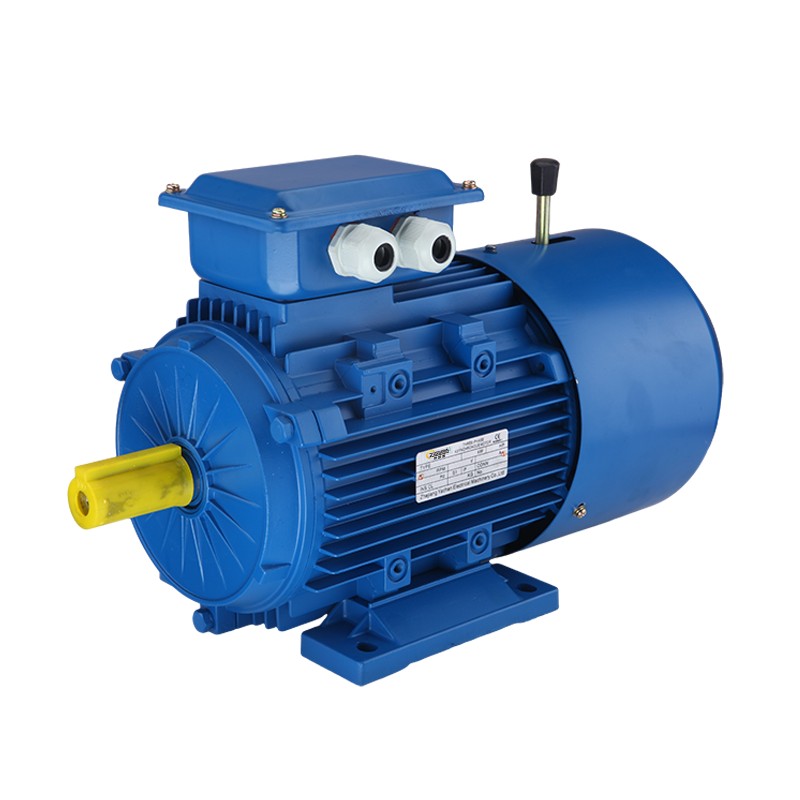
Which Motor Characteristics Help Mining Machines Handle Heavy Loads?
Starting torque is an important consideration for equipment that must overcome static friction or begin moving under load. Belt conveyors, crushers and certain material-handling machines may require substantial torque during acceleration. The required starting performance depends on the driven machine, belt loading, gearbox ratio, starting method and supply capacity. Buyers should obtain the load torque curve and starting requirements from the equipment designer before confirming a motor rating.
Rated power indicates the mechanical output available at the shaft under specified operating conditions. It should be selected with reference to the machine's absorbed power, service factor where applicable, operating cycle and expected load variation. A motor should not be chosen simply by matching a nominal kilowatt figure from an older installation. Changes in conveyor length, material density, throughput, pulley diameter or pump operating point can alter the actual power requirement.
Speed is closely related to the number of poles and supply frequency. A two-pole motor generally runs faster than a four-pole or six-pole motor on the same frequency supply. Lower-speed configurations may suit certain pumps, conveyors or machines where the required speed can be achieved without excessive gearbox reduction. The final speed must be checked against the driven equipment's operating range and the transmission arrangement.
Thermal performance is another major factor. Long operating hours, high ambient temperatures, restricted ventilation and frequent starts can increase winding temperature. The selected insulation system, cooling arrangement and duty rating must therefore suit the site's operating profile. Continuous-duty applications should be specified differently from machines that run intermittently or experience repeated start-stop cycles.
Our selection review should begin with the driven equipment's power demand, starting torque, speed, duty cycle and supply conditions. These details help identify a suitable frame, pole configuration and electrical rating before installation dimensions are finalised.
| Selection parameter | Published product information | Mining application consideration |
| Motor type | Single-phase and three-phase asynchronous motor options | Three-phase configurations are commonly evaluated for industrial drive systems |
| Power range | 1/10 HP to 20 HP on the company overview; broader model ranges may require confirmation | Match output to the actual machine load and starting conditions |
| Frame range | 48 to 250 frames | Check shaft height, mounting dimensions and available installation space |
| Number of poles | 2, 4, 6 and 8 poles | Choose the required speed for the gearbox or direct-drive arrangement |
| Efficiency classes | IE2, IE3 and IE4 options are listed | Confirm the efficiency class for the exact model and applicable market rules |
| Standards | NEMA and IEC motor product families | Match the motor standard to the equipment design and replacement requirements |
These figures describe the manufacturer's published product portfolio, not one universal mining motor configuration. The final data sheet should identify the exact model, rated output, voltage, frequency, current, speed, efficiency, torque characteristics and mounting dimensions. A buyer should not combine values from separate model families when preparing a technical comparison.
How Do Enclosure, Cooling and Construction Affect Performance Underground?
Mining environments can expose electrical equipment to airborne dust, moisture, vibration, temperature changes and restricted airflow. The degree of exposure varies between an underground installation, a surface processing plant, a washdown area and an outdoor conveyor station. The motor enclosure must therefore be selected according to the actual location rather than assuming that all mining equipment faces identical conditions.
Ingress protection is one of the details to verify. An IP rating describes protection against access to hazardous parts and the ingress of solid objects and water under defined test conditions. It does not, by itself, establish suitability for every dusty, wet or corrosive mining environment. Buyers should check the exact IP code on the model data sheet and consider whether additional protection is needed for the installation location.
Cooling is equally important because motor losses generate heat during operation. A fan-cooled design relies on adequate airflow around the frame and cooling surfaces. If dust accumulates on cooling fins or blocks the fan cover, heat dissipation can deteriorate. Installation clearances, cleaning access and the ambient temperature should be considered during layout planning. Where the motor is driven by a variable frequency drive, the cooling arrangement must also be checked at reduced speeds because a shaft-mounted fan may provide less airflow.
Mechanical construction affects the motor's ability to operate consistently under load. Shaft alignment, bearing condition, rotor balance, foundation stiffness and coupling installation all influence vibration. Excessive vibration can accelerate bearing wear, loosen fasteners and damage connected equipment. A sound installation should include a suitable base, correct alignment tolerances and a maintenance plan that monitors vibration trends rather than waiting for a noticeable failure.
For applications with variable speed, the motor and drive must be treated as a matched system. The frequency range, torque demand, cooling performance, insulation stress and control settings should be checked together. A standard motor should not be assumed suitable for every inverter duty simply because it can be connected to a variable frequency drive.
Our published product range includes different motor families and frame configurations. Options such as enclosure, cooling method, insulation class and mounting arrangement must be confirmed against the selected model. Where a project specifies IP protection, an ambient temperature limit or a particular duty rating, the purchase specification should state the requirement explicitly.
What Should Buyers Verify for Mining Safety and Electrical Compatibility?
Electrical compatibility begins with the available site supply. Rated voltage and frequency must match the motor nameplate and the electrical system. Buyers should also verify phase configuration, full-load current, starting current, control method and the capacity of the upstream switchgear. Voltage drop along long cable runs can affect starting performance, especially where equipment is located far from the power distribution point.
Protection settings need to reflect the motor and driven load. Overload protection helps prevent sustained overcurrent from causing excessive winding temperature, while short-circuit protection is intended to interrupt fault current. Phase-loss, phase-imbalance, under-voltage and over-temperature monitoring may also be appropriate depending on the installation. Protection devices should be coordinated with the motor nameplate data, starting method and local electrical requirements.
Mining sites may include hazardous areas where flammable gas or combustible dust can be present. In those locations, the motor must carry the appropriate explosion-protection marking and certification for the specific zone, gas or dust group and temperature class. A general industrial motor, even one with a robust enclosure, must not be treated as explosion-proof unless its exact model documentation confirms the required approval. The site classification and applicable regulations should be established by qualified personnel before equipment is ordered.
Mechanical and environmental requirements should be documented alongside electrical values. These may include mounting position, shaft dimensions, coupling type, ambient temperature, altitude, vibration exposure, corrosion protection and cable entry arrangement. If the motor is installed on a mobile or vibrating machine, the mounting and bearing arrangement may need additional review.
Suzhou Zishengya Hardware Electrical Machinery Co., Ltd. offers motor families built around NEMA and IEC product requirements. For a mining project, buyers should request the exact model documentation and confirm whether the proposed configuration meets the relevant electrical, mechanical and hazardous-area requirements. A general product category or efficiency statement is not a substitute for model-specific certification.
| Document or technical detail | What should be checked | Procurement purpose |
| Nameplate and data sheet | Power, voltage, frequency, current, speed and efficiency | Confirms electrical and mechanical compatibility |
| Starting information | Starting current, starting torque and permitted starts per hour | Checks whether the motor can accelerate the machine safely |
| Enclosure and protection | IP rating and any required hazardous-area marking | Matches the motor to the site environment and safety classification |
| Mounting drawing | Frame, shaft, foot or flange dimensions | Reduces installation and replacement problems |
| Thermal and duty data | Insulation class, cooling method, duty rating and ambient limits | Supports operation within specified temperature limits |
| Quality documents | Inspection records, test reports and applicable certificates | Provides traceability and evidence for project acceptance |
How Can Maintenance Teams Extend Motor Service Life in a Mine?
Preventive maintenance is most effective when it is based on operating conditions and measurable trends. Routine checks should include unusual noise, vibration, bearing temperature, current balance, cooling airflow and signs of moisture or dust accumulation. A gradual change in these readings can indicate a developing problem before it causes an unplanned shutdown.
Bearing maintenance deserves particular attention. Incorrect lubrication, contamination, excessive belt tension, shaft misalignment and electrical bearing currents can all shorten bearing life. Maintenance teams should follow the bearing manufacturer's lubrication interval and grease specification rather than applying more lubricant as a precaution. Over-greasing can increase temperature and damage seals.
Electrical inspections should include terminal tightness, cable condition, grounding continuity and signs of overheating. Insulation resistance testing may be useful during planned maintenance or after a period of storage, but test procedures must follow the manufacturer's instructions and applicable electrical safety practices. Before testing or opening an electrical enclosure, equipment must be isolated and verified de-energised under the site's lockout and tagout procedure.
Dust management is especially important in crushing, screening and conveying areas. Deposits around the fan cover, cooling passages and terminal box can contribute to overheating or interfere with inspection. Cleaning methods should avoid forcing moisture or conductive debris into the motor. In wet or washdown locations, maintenance staff should also inspect seals, cable glands and enclosure surfaces for damage.
Our factory can review the requested motor configuration against the supplied operating details, but service life depends on the complete installation and maintenance conditions. A useful maintenance record should include operating hours, load profile, start frequency, vibration readings, bearing work, insulation test results and any protection trips. This information helps maintenance teams distinguish normal wear from recurring application or installation problems.
How Should Mining Equipment Manufacturers Specify a Motor?
A complete request for quotation should identify the driven machine and explain how it operates. For a conveyor, this includes belt speed, length, material load, starting condition and gearbox details. For a pump, it includes flow, head, fluid characteristics and operating point. For a fan, it includes airflow, pressure, speed range and expected control method. These application details are more useful than a request that states only a power rating.
The technical enquiry should also state the supply voltage and frequency, required efficiency class, number of poles, mounting arrangement, shaft dimensions, enclosure rating and duty cycle. If the motor will operate with a variable frequency drive, the required speed range and torque profile should be included. If it will be installed in a classified hazardous area, the site classification and required certification must be supplied before model selection.
Buyers should compare suppliers on more than price and headline efficiency. Relevant points include the completeness of the technical data sheet, consistency of model identification, availability of dimensional drawings, inspection documentation, spare parts support and clarity around customisation. The supplier should be able to identify which specifications are standard and which require a special configuration.
For projects involving replacement motors, provide photographs of the nameplate, mounting arrangement and shaft connection where available. These details can help identify differences between an existing unit and a proposed replacement. However, a nameplate photograph alone may not reveal the driven machine's present load or any changes made to the installation, so operating data should also be checked.
To discuss a motor for a mining conveyor, pump, fan or other industrial machine, contact our team with the equipment details, supply conditions, installation environment and required documentation. We can help review the available product options and clarify the model-specific information needed for a suitable quotation.
Frequently Asked Questions
What motor features are most important for a mining conveyor?
A mining conveyor drive needs a motor with sufficient rated power and starting torque for the belt, material load, gearbox and starting method. The buyer should also check the permitted starts per hour, duty rating, thermal capacity, enclosure protection, mounting dimensions and compatibility with the control system. Long conveyors and loaded starts may require a detailed drive calculation rather than selection by motor power alone.
Can a standard industrial motor be installed in an underground mine?
Not automatically. The correct motor depends on the underground location, site risk assessment and applicable mining regulations. If flammable gas or combustible dust may be present, the equipment may need a specific explosion-protection design and certification for the classified area. An ordinary industrial enclosure or a high IP rating does not establish explosion protection. The exact model marking and certification must be checked against the site's hazardous-area classification.
How can a maintenance team identify early signs of motor failure?
Common warning signs include rising bearing temperature, increased vibration, unusual noise, repeated overload trips, abnormal current readings, reduced cooling airflow and visible contamination or moisture. Tracking these indicators over time is more useful than relying on a single inspection. When readings change, the team should check the motor, coupling, gearbox, driven equipment, electrical supply and protection settings to identify the underlying cause before returning the machine to service.
Conclusion
Reliable mining equipment depends on matching motor performance to the real demands of the machine and the site. Rated power, starting torque, speed, duty cycle, enclosure protection, cooling, mounting and electrical compatibility all contribute to dependable operation. Equally important are correct installation, coordinated protection and a maintenance programme that detects developing faults before they interrupt production.
Suzhou Zishengya Hardware Electrical Machinery Co., Ltd. provides single-phase and three-phase motor options across NEMA and IEC product families, with multiple frame sizes, pole configurations and efficiency classes. For a project-specific selection, contact our team with your load data, supply details, operating environment and certification requirements so that the appropriate model and documentation can be reviewed.