
How Does a Linear Drive Motor Differ from a Traditional Rotary Motor
2026-10-13
In modern motion control, selecting the right drive technology determines system accuracy, speed, and long-term cost. A Linear drive motor from SEA MOTION delivers direct thrust without mechanical conversion, while a traditional rotary motor relies on gears, belts, or screws to produce linear movement. Understanding these differences helps engineers optimize performance across automation, CNC, and semiconductor equipment.
Core Structural Differences
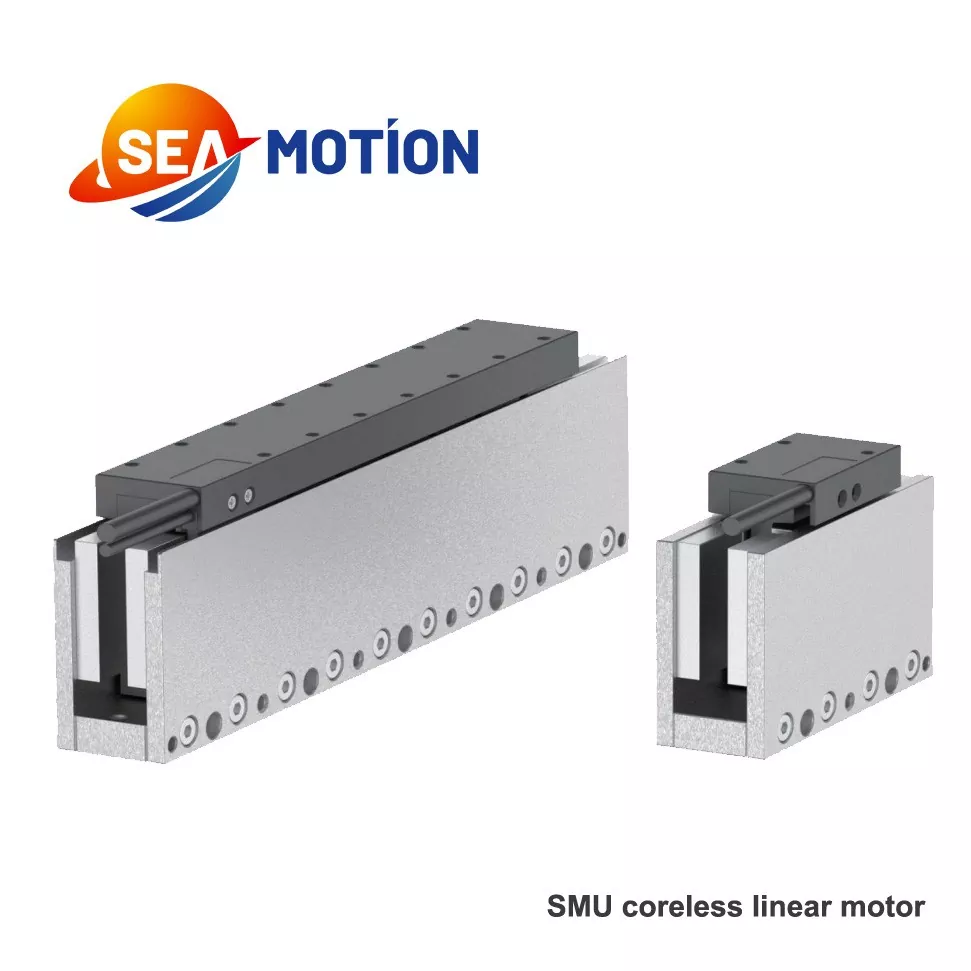
A Linear drive motor is essentially a rotary motor unrolled flat. The stator becomes a track, and the mover travels along it. A traditional rotary motor generates torque around a shaft, requiring mechanical transmission to create linear motion. This fundamental design change eliminates backlash, wear, and energy loss.
| Feature | Linear drive motor | Traditional Rotary Motor |
|---|---|---|
| Motion Output | Direct linear thrust | Rotary torque converted to linear |
| Transmission | None (direct drive) | Ballscrew, belt, rack and pinion |
| Backlash | Zero | Present in mechanical components |
| Acceleration | Very high | Limited by transmission inertia |
| Maintenance | Low (no wear parts) | Higher (lubrication, part replacement) |
| Precision | Sub-micron achievable | Dependent on mechanical accuracy |
| Speed | Up to 10 m/s+ | Typically lower due to screw limits |
| Cost | Higher initial investment | Lower initial cost |
Performance Advantages of a Linear drive motor
-
Zero mechanical contact between mover and stator reduces friction and wear.
-
Higher dynamic response due to lower moving mass and no compliance.
-
Improved positioning accuracy with direct feedback systems.
-
Cleaner operation ideal for cleanrooms and medical devices.
-
Longer service life with fewer replacement parts.
When a Traditional Rotary Motor Still Makes Sense
-
Cost-sensitive applications with moderate precision needs.
-
Long stroke requirements where linear motor tracks become expensive.
-
Environments where dust or debris affects exposed linear tracks.
-
Simple velocity control without high dynamic demands.
SEA MOTION designs Linear drive motor solutions for applications requiring extreme precision, high speed, and reliability. Our direct-drive technology removes mechanical losses and delivers consistent performance over millions of cycles.
Linear drive motor FAQ
Q: What is the main difference between a linear drive motor and a rotary motor?
A: A Linear drive motor produces direct linear motion without any mechanical transmission, while a rotary motor creates rotation that must be converted into linear movement using screws, belts, or gears. This means the Linear drive motor eliminates backlash, reduces wear, and achieves higher acceleration and positioning accuracy compared to traditional rotary systems.
Q: When should I choose a Linear drive motor over a rotary motor?
A: Choose a Linear drive motor when your application demands high precision, fast acceleration, zero backlash, and low maintenance. Industries like semiconductor manufacturing, precision CNC, and automated inspection benefit most. If your application has a long stroke, low budget, or dusty environment, a traditional rotary motor with a mechanical transmission may be more practical.
Q: Does a Linear drive motor require special maintenance?
A: A Linear drive motor requires less maintenance than a rotary motor because it has no gears, belts, or screws to lubricate or replace. However, the linear track and encoder must be kept clean, and the cooling system should be checked periodically. SEA MOTION provides detailed maintenance guidelines to ensure long-term reliability.
Conclusion
A Linear drive motor replaces mechanical transmission with direct electromagnetic thrust, delivering superior speed, accuracy, and uptime. While traditional rotary motors remain suitable for simpler tasks, high-performance systems increasingly rely on SEA MOTION linear drive technology for a competitive edge.
Contact us today to discuss your motion control requirements and discover how SEA MOTION can customize a Linear drive motor solution for your application.