
How Do You Properly Align the Advance GC Marine Gearbox with the Propeller Shaft
2026-07-30
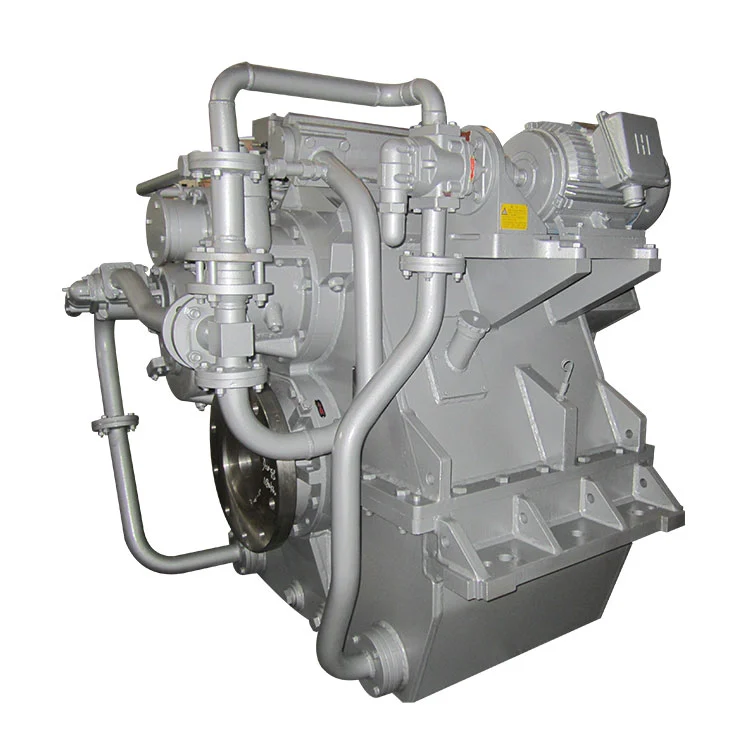
Proper shaft alignment remains one of the most critical yet frequently overlooked procedures in marine propulsion maintenance. When dealing with the Advance GC Marine Gearbox, incorrect alignment directly translates to premature bearing wear, coupling fatigue, excessive vibration, and catastrophic gear tooth failure. Unlike general industrial gearboxes, marine propulsion systems operate under constantly changing hull deflection, thermal expansion, and dynamic propeller loads. This makes the alignment process for the Advance GC Marine Gearbox a precision engineering task that demands methodical execution.
Why Alignment Accuracy Matters for Marine Transmissions
Misalignment in the Advance GC Marine Gearbox creates reaction forces that travel through the output shaft into the gear train. Even a 0.05 mm radial offset can reduce bearing lifespan by over 60%. The Advance GC Marine Gearbox features hardened helical gears with specific tooth contact patterns—any angular misalignment distorts these patterns, leading to pitting and spalling within 500 operating hours. Vibration readings above 4.5 mm/s (RMS) typically indicate that the Advance GC Marine Gearbox requires immediate shaft realignment before proceeding with further diagnostics.
| Alignment Parameter | Acceptable Tolerance (Cold) | Acceptable Tolerance (Warm Operating) | Measurement Tool |
|---|---|---|---|
| Radial Offset (Coupling) | ≤ 0.05 mm | ≤ 0.08 mm | Dial Gauge / Laser |
| Angular Offset | ≤ 0.03 mm per 100 mm | ≤ 0.05 mm per 100 mm | Feeler Gauge / Laser |
| Axial Gap (Coupling) | 3.0 – 5.0 mm | 2.5 – 4.5 mm | Depth Micrometer |
| Shaft Runout (Max) | 0.02 mm | 0.03 mm | Dial Indicator |
| Face Parallelism | ≤ 0.04 mm | ≤ 0.06 mm | Digital Protractor |
Step-by-Step Alignment Procedure for the Advance GC Marine Gearbox
Step 1 – Foundation Inspection
Before touching any bolts, verify that the Advance GC Marine Gearbox foundation plate is flat within 0.10 mm per meter using a precision straightedge. All mounting pads must be free from paint, rust, or burrs. Cagon recommends using machined steel shims only—never use multiple soft shims stacked together, as they compress unevenly under load.
Step 2 – Rough Alignment
Install the coupling halves onto both the Advance GC Marine Gearbox output shaft and the propeller shaft. Insert a feeler gauge at four points (12, 3, 6, 9 o'clock) to establish baseline angularity. Adjust the gearbox feet with jacking screws until the gap variation falls within 0.10 mm across all quadrants.
Step 3 – Precision Laser Alignment
Mount a laser alignment system (e.g., SKF or Pruftechnik) on both shafts. The Advance GC Marine Gearbox requires a minimum of two full shaft rotations to capture true centerline deviation. Record the vertical and horizontal offsets at the coupling center. Cagon's field data shows that laser alignment reduces installation time by 40% compared to dial gauge methods while achieving double the repeatability.
Step 4 – Thermal Growth Compensation
Marine gearboxes expand axially as oil temperature rises from ambient (20°C) to operating (75–85°C). For the Advance GC Marine Gearbox, calculate thermal growth using the coefficient of 0.012 mm per meter per °C. Set the cold alignment 0.15–0.20 mm lower at the gearbox end to allow for upward thermal expansion during full-load operation.
Step 5 – Final Bolt Torquing
Tighten foundation bolts in a cross-pattern sequence, increasing torque in three stages (50%, 75%, 100%). Recheck alignment after each stage. The Advance GC Marine Gearbox typically uses M30–M36 holding-down bolts with a final torque of 850–1,100 Nm, depending on the frame size. Cagon strongly advises rechecking alignment 24 hours after the vessel returns to water, as hull relaxation often shifts the propeller shaft bearing supports.
Common Mistakes and Verification Checks
-
Mistake #1: Aligning only at the coupling while ignoring intermediate shaft bearings—this induces bending moments.
-
Mistake #2: Using hydraulic jacks to force the Advance GC Marine Gearbox into position; always use adjusting screws.
-
Mistake #3: Performing alignment with the propeller shaft supported by the stern tube only—always include the intermediate bearing.
-
Verification: After final torquing, rotate both shafts together by hand. The Advance GC Marine Gearbox should turn freely without tight spots. Measure coupling bolt hole alignment—if holes do not line up perfectly, angular error remains.
Advance GC Marine Gearbox – FAQ
Q: How often should I re-align the Advance GC Marine Gearbox after initial installation?
A: Cagon recommends a full alignment check every 1,000 operating hours or immediately after any grounding, heavy propeller strike, or bearing replacement. Additionally, re-align the Advance GC Marine Gearbox whenever the vessel undergoes dry-docking and block support changes, as the hull's natural sag alters shaft centerlines. For vessels operating in shallow or debris-prone waters, reduce the interval to 500 hours. Always document cold and hot alignment readings in a dedicated logbook to track gradual shifts over time.
Q: What vibration limits indicate that the Advance GC Marine Gearbox is misaligned rather than having an internal fault?
A: For the Advance GC Marine Gearbox, vibration velocity exceeding 5.0 mm/s (RMS) at the output bearing housing—when measured at shaft rotational frequency (1x RPM)—strongly points to misalignment. Internal gear faults typically appear at gear mesh frequencies (tooth count × RPM) with sidebands. If vibration drops by more than 40% after loosening and re-torquing coupling bolts, the root cause is alignment, not gear wear. Cagon's service team uses a 4-channel FFT analyzer to distinguish between these sources. Always perform a phase analysis: 180° out-of-phase readings across the coupling confirm angular misalignment.
Q: Can I use the same alignment settings for the Advance GC Marine Gearbox when the vessel is loaded versus ballasted?
A: No. The Advance GC Marine Gearbox experiences different shaft deflections under loaded versus ballasted conditions because the propeller immersion depth changes the hydrodynamic thrust and bending moment on the shaft. Cagon advises taking two separate alignment measurements—one with the vessel at full-load draft and one at ballast draft. Set the final cold alignment to a compromise value that keeps both conditions within tolerance. Typically, for the Advance GC Marine Gearbox, the vertical offset changes by 0.10–0.15 mm between these two states, so you must target the middle of the allowable window.
Monitoring and Documentation
A professional alignment record for the Advance GC Marine Gearbox must include ambient temperature, oil temperature, shaft RPM during measurement, and both vertical/horizontal offset values at each bearing pedestal. Cagon provides a standardized alignment report template that includes a pass/fail checklist for every critical parameter. Digital records allow trend analysis—if you observe the Advance GC Marine Gearbox drifting consistently in one direction over three successive checks, inspect the foundation epoxy grout or the thrust bearing housing for loosening.
Final Recommendation
Aligning the Advance GC Marine Gearbox is not a one-time event—it is a continuous condition-monitoring discipline. Invest in a good laser alignment tool, train at least two engineers on the procedure, and never bypass the thermal growth calculation. Cagon has witnessed countless premature gearbox overhauls that traced back to alignment errors under 0.10 mm—errors that a simple 45-minute laser check would have prevented.
Need expert guidance on your Advance GC Marine Gearbox alignment?
Contact the Cagon technical support team today for on-site assistance, alignment training, or a remote diagnostic review. Our marine engineers are available 24/7 to help you maximize the service life of your propulsion system. Reach us through our website or call your regional Cagon service center—we respond to all alignment inquiries within 4 business hours.