

How Do You Calculate the Torque of a 3 Phase Induction Motor
2026-06-22
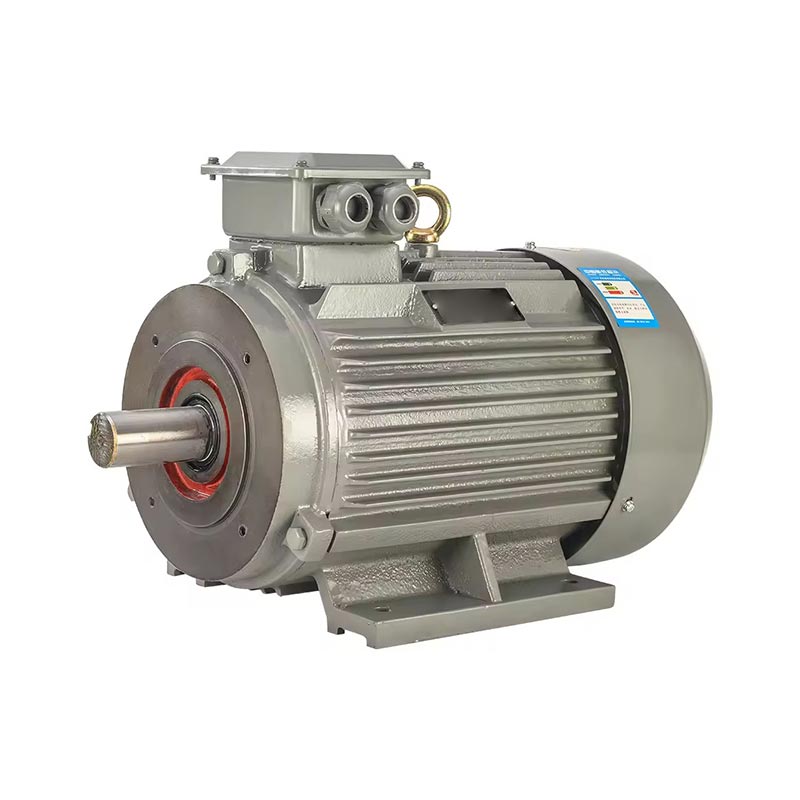
Understanding torque calculation is essential for specifying, operating, and troubleshooting industrial motors. For engineers and maintenance teams, the torque output of a 3 Phase Induction Motor directly affects pump sizing, conveyor speed, and energy efficiency. At Hongyunteng, we specialize in manufacturing high-performance 3 Phase Induction Motor solutions for global heavy-duty applications. This guide breaks down the torque formula, practical estimation methods, and real-world factors that influence performance—so you can select and operate your motor with confidence.
The Core Formula: Torque from Rotor Input
The mechanical torque developed by a 3 Phase Induction Motor is derived from the air-gap power transferred from stator to rotor. The fundamental equation is:
T = (P_ag × 60) / (2π × N_s)
Where:
-
T = developed torque (N·m)
-
P_ag = air-gap power (watts)
-
N_s = synchronous speed (RPM) = (120 × f) / P (poles)
For rotor circuit parameters, the torque equation becomes:
T = (3 × V_th² × R₂ / s) / [ω_s × ((R_th + R₂/s)² + (X_th + X₂)²)]
This exact form is used by Hongyunteng engineers during motor design validation to match load curves for compressors, crushers, and cranes.
Practical Torque Estimation Methods
| Method | Data Required | Accuracy | Best For |
|---|---|---|---|
| Nameplate slip method | Rated speed, rated power, synchronous speed | ±5% | Field quick checks |
| Equivalent circuit | Stator/Rotor resistance, leakage reactances | ±2% | Design and selection |
| Dynamometer load test | Shaft speed, applied load torque | ±1% | Factory acceptance |
| Current-based estimation | Line current, power factor, voltage | ±8% | Remote monitoring |
For most site engineers, the slip method is the fastest:
T = (P_rated × 60) / (2π × N_r)
where N_r is the actual running speed at full load.
Example: A Hongyunteng 55 kW 3 Phase Induction Motor with 4 poles (N_s = 1500 RPM) runs at 1455 RPM at full load.
T = (55,000 × 60) / (2π × 1455) ≈ 361 N·m.
Factors That Alter Real-World Torque
-
Voltage dip: A 10% drop reduces starting torque by ~19% (torque ∝ V²).
-
Rotor resistance: Higher resistance increases starting torque but reduces efficiency.
-
Saturation: Deep bar rotors shift torque peak toward lower slip—critical for high-inertia loads.
-
Temperature: Hot windings raise resistance, lowering breakdown torque by 3–5% per 25°C rise.
Hongyunteng designs its 3 Phase Induction Motor range with Class F insulation and optimized rotor bars to maintain stable torque across ±10% voltage fluctuations.
3 Phase Induction Motor FAQ – Common Professional Questions
Q1: Why does my 3 Phase Induction Motor show lower torque at 50 Hz than at 60 Hz, even with a VFD?
A: Torque is proportional to (V/f)². At 50 Hz, if the VFD maintains a constant V/f ratio, the flux remains constant, but the synchronous speed drops (from 1800 to 1500 RPM for a 4-pole motor). The available torque at the same slip frequency is actually similar in the constant-torque region. However, below 50 Hz, cooling reduces, and above 50 Hz (field weakening), torque drops sharply. Hongyunteng provides VFD-compatible 3 Phase Induction Motor models with extended speed-torque curves to help you select the right base frequency for your application.
Q2: How can I estimate breakdown (maximum) torque without a test bench?
A: Breakdown torque typically occurs at slip = R₂ / X₂. A practical rule: for NEMA Design B motors, breakdown torque is 200–250% of full-load torque. You can calculate it using the Thevenin equivalent circuit: T_max = (3 × V_th²) / (2 × ω_s × (R_th + √(R_th² + (X_th + X₂)²))). For field use, check the motor nameplate for "pull-out torque" or multiply rated torque by the service factor (e.g., SF 1.15 suggests ~215% breakdown). Hongyunteng publishes verified breakdown torque data for every 3 Phase Induction Motor in our technical datasheets.
Q3: Does slip always increase linearly with load torque in a 3 Phase Induction Motor?
A: Not linearly—it’s approximately linear only up to 70–80% of full load. Beyond that, the magnetizing reactance changes due to saturation, and the rotor resistance increases with temperature, causing the slip-torque curve to bend. For accurate prediction, use the Kloss formula: T/T_max = 2 / (s/s_max + s_max/s). This formula is highly reliable for Design B motors. Hongyunteng recommends logging actual slip at three load points (25%, 50%, 100%) to establish a site-specific curve for your critical machinery.
Best Practices for Torque Verification
-
Always measure actual running speed with a tachometer—nameplate slip is nominal.
-
Correct for supply voltage—use average of three phases.
-
Account for gear/belt losses—add 3–5% if measuring at driven equipment.
-
Compare calculated torque with load requirements (pump affinity, conveyor breakaway).
Why Choose Hongyunteng for Your Motor Needs?
Every Hongyunteng 3 Phase Induction Motor undergoes full-load torque testing on a dynamometer before shipment. Our IE3 and IE4 premium-efficiency ranges offer predictable torque characteristics, low rotor inertia, and high overload capacity—backed by 2-year warranty and global technical support.
Ready to size your next motor or troubleshoot an existing one?
Contact us today with your load profile and speed requirements—our application engineers will provide a torque curve analysis and selection proposal within 24 hours. Visit our website or email [email protected] for a free consultation. Your reliable power starts with Hongyunteng.