

How Do High Torque Radial Piston Motors Compare to Electric Motors in Industrial Applications
2026-03-04
When selecting prime movers for heavy industrial applications, engineers often debate whether a High Torque Radial Piston Motor or an electric motor delivers better performance. At Xinhong, we specialize in hydraulic drive solutions, and understanding these differences is critical for optimizing machinery efficiency, durability, and total cost of ownership.
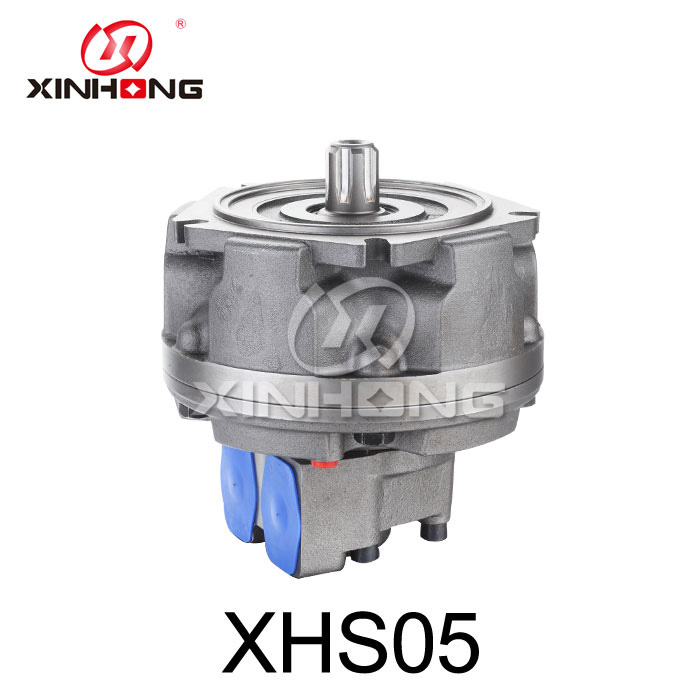
Core Performance Comparison
The fundamental difference lies in how each technology generates torque. A High Torque Radial Piston Motor produces maximum torque instantly at zero RPM without requiring a gearbox, while electric motors typically need external reduction to achieve comparable rotational force.
| Parameter | High Torque Radial Piston Motor | Electric Motor (AC/DC) |
|---|---|---|
| Torque Density | Very High (compact size) | Moderate (requires gearbox) |
| Starting Torque | 95-100% of max at 0 RPM | 150-200% of rated (with VFD) |
| Overload Capacity | Excellent (up to 300% peak) | Limited (thermal damage risk) |
| Speed Range | 0 to 500 RPM typical | 0 to 3600+ RPM typical |
| Environmental Resistance | High (dust, water, vibration) | Sensitive (requires enclosures) |
| Maintenance Interval | 8,000-10,000 hours | 15,000-20,000 hours |
Application Suitability
Xinhong has observed that High Torque Radial Piston Motor systems dominate in specific sectors. Industries requiring sustained high torque in harsh conditions—such as mining conveyors, marine winches, and plastic injection molding machines—consistently choose hydraulic radial piston technology.
Electric motors excel in high-speed, continuous motion applications like fans and pumps. However, for direct drive of heavy loads where shock absorption is critical, the hydraulic motor’s fluid-based power transmission protects the entire drivetrain from mechanical shock, reducing maintenance costs significantly.
Efficiency and Control Considerations
While electric motors boast higher energy efficiency at prime mover level (90-95%), a complete High Torque Radial Piston Motor system often proves more efficient for the total work cycle. Hydraulic systems allow for infinitely variable speed control and can distribute power to multiple actuators from a single power source, eliminating energy losses from mechanical gearing and braking systems.
FAQ: High Torque Radial Piston Motor
Q: What makes a High Torque Radial Piston Motor better for heavy loads than an electric motor?
A: The High Torque Radial Piston Motor design utilizes multiple pistons arranged radially around an eccentric shaft. This configuration allows for massive displacement in a compact form factor. Unlike electric motors that require gear reductions to multiply torque—which introduces mechanical losses and wear points—the radial piston motor delivers high torque directly to the load. Additionally, hydraulic motors can be stalled under load without damage, whereas electric motors risk overheating and insulation failure.
Q: How do the maintenance requirements compare between these two motor types?
A: Maintenance differs fundamentally due to their operating principles. A High Torque Radial Piston Motor requires periodic hydraulic fluid changes, seal inspections, and monitoring for internal leakage, typically on an 8,000 to 10,000-hour schedule. Electric motors demand bearing lubrication, insulation testing, and VFD maintenance. However, the hydraulic motor has a distinct advantage in contaminated environments; electric motors are vulnerable to dust, moisture, and vibration, which drastically shorten their lifespan, while radial piston motors thrive in these conditions.
Q: Can a High Torque Radial Piston Motor match the precision control of a modern electric servo system?
A: Modern hydraulic systems equipped with proportional valves and closed-loop controls allow High Torque Radial Piston Motor solutions to achieve precision within fractions of a millimeter. While electric servos excel in high-speed, point-to-point positioning, hydraulic motors provide superior force control. For applications requiring holding heavy loads under gravity or maintaining constant torque during stall conditions, the radial piston motor offers natural compliance and smoothness that electric systems struggle to replicate without complex software and regenerative circuitry.
Contact Us for Expert Guidance
Choosing between these technologies depends on your specific load cycles, environmental factors, and power infrastructure. At Xinhong, our engineering team helps clients integrate the optimal High Torque Radial Piston Motor solution for their industrial applications. Contact us today for a detailed application analysis and discover how Xinhong hydraulic technology can enhance your machinery's performance and reliability.