

How Do End Covers Protect Hub Motor Internal Components?
2026-10-23
A repair technician opens two Hub Motors that have been in service for the same period. Both are from e-bikes used for daily commuting in a coastal city. The first motor has a dry interior, clean bearings, and no signs of corrosion. The second motor has rust on the stator laminations, emulsified grease in the bearings, and a failed Hall sensor. The technician compares the end covers. The first motor has a double-lip gasket, a sealed bearing pocket, and a drainage channel. The second motor has a single O-ring, an open bearing pocket, and no drainage. The difference is not the motor size or the power rating. It is the end cover design. This guide explains how end covers protect the internal components of hub motors.
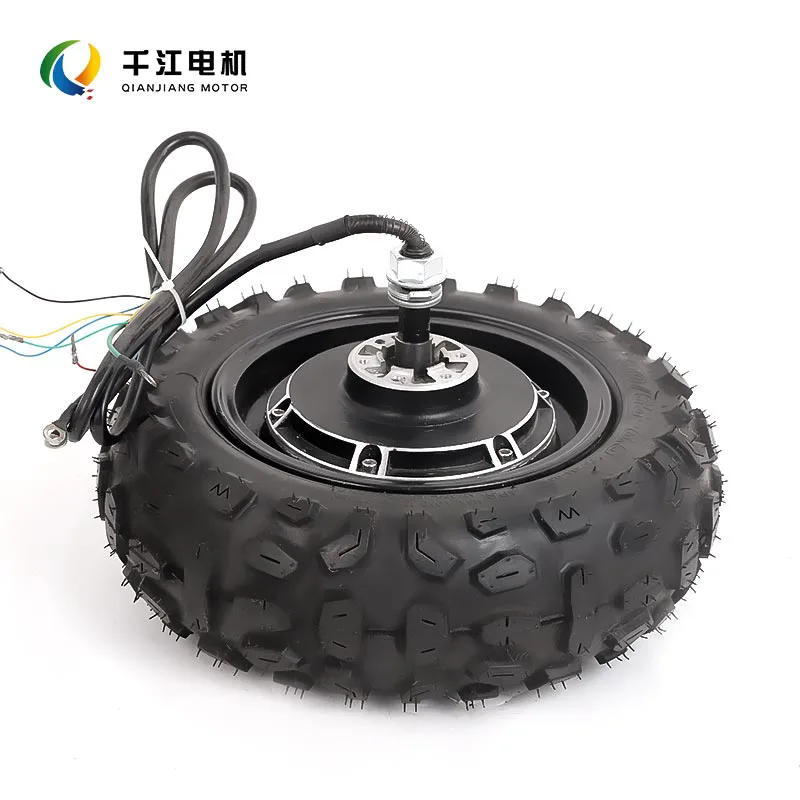
1. What Are the Paths That Water and Dust Use to Enter a Hub Motor?
A Hub Motors has three primary entry paths for water and dust. The first is the interface between the end cover and the motor housing. The second is the bearing seat, where the axle passes through the end cover. The third is the cable exit, where the phase wires and sensor wires leave the motor. The end cover is the primary barrier for the first two paths. The table below shows the entry paths and the protection provided by the end cover.
| Entry path | Location | End cover protection |
| Cover-to-housing interface | Perimeter of the end cover | Gasket or O-ring seal |
| Bearing seat | Axle opening in the end cover | Sealed bearing pocket and lip seal |
| Cable exit | Slot or hole in the end cover or housing | Grommet or sealed cable gland |
| Cover fasteners | Screw holes around the perimeter | Captive screws with sealing washers |
In our factory, we design Hub Motors with end covers that address all four entry paths. The cover-to-housing interface uses a molded gasket that is compressed by the fasteners. The bearing seat uses a sealed bearing pocket with a lip seal. The cable exit uses a molded grommet that grips the cable and seals against the cover. Ningbo Qianjiang Motor Co., Ltd. has been manufacturing hub motors for over 12 years.
2. How Does the Gasket Design Affect the Sealing Performance?
The gasket is the primary seal between the end cover and the motor housing. The gasket must compress uniformly around the entire perimeter to create a continuous barrier. The gasket material must resist compression set, water absorption, and temperature cycling. The most common materials are nitrile (NBR), EPDM, and silicone. The table below compares the properties of these gasket materials.
| Gasket material | Water resistance | Compression set | Temperature range | Typical application |
| NBR (nitrile) | Good | Moderate | -30°C to +100°C | Standard e-bike motors |
| EPDM | Excellent | Low | -40°C to +120°C | Wet and coastal environments |
| Silicone | Good | Very low | -50°C to +200°C | High-temperature applications |
Repair technician's note: The most common cause of water ingress is a gasket that has taken a permanent set. When the end cover is removed for repair and reinstalled with the same gasket, the gasket may not seal properly because it has already been compressed. In our factory, we recommend replacing the gasket every time the end cover is removed. We also recommend using a gasket with a molded rib that concentrates the compression force at the sealing line. This design provides a more reliable seal with lower fastener torque.
3. How Does the Bearing Seat Protect the Bearings From Contamination?
The bearing seat is the most critical area of the end cover. The bearing is pressed into the seat, and the axle passes through the bearing. If the seat is not sealed, water and dust can enter the bearing and cause corrosion and wear. The end cover protects the bearing in two ways. First, the bearing pocket is machined to a precise tolerance so that the bearing outer ring fits tightly and there is no gap for contaminants to pass. Second, a lip seal is installed outboard of the bearing to wipe the axle and block contaminants. The table below shows the bearing seat specifications for our hub motors.
| Specification | Standard model | Sealed model |
| Bearing pocket tolerance | H7 | H6 |
| Lip seal type | Single lip | Double lip with dust excluder |
| Seal material | NBR | NBR with PTFE lip |
| Axle surface finish | Ra 0.8 µm | Ra 0.4 µm |
| Ingress protection | IP54 | IP65 |
In our factory, we manufacture Hub Motors with both standard and sealed bearing seats. The sealed model uses a double-lip seal with a dust excluder that provides IP65 protection. The axle is ground to Ra 0.4 µm to provide a smooth surface for the lip seal. Ningbo Qianjiang Motor Co., Ltd. recommends the sealed model for e-bikes used in wet, dusty, or coastal environments.
4. How Does the Cable Exit and Fastener Design Affect Long-Term Protection?
The cable exit and the fasteners are often overlooked, but they are common entry points for water. The cable exit must be sealed with a grommet that grips the cable and compresses against the end cover. The grommet must be sized to the cable diameter and must be made from a flexible material that maintains its seal over time. The fasteners must be tightened to the correct torque and must have sealing washers to prevent water from entering through the screw holes. The table below shows the cable exit and fastener specifications for our hub motors.
| Component | Specification | Protection contribution |
| Cable grommet | Molded EPDM, sized to cable OD | Seals the cable exit against water and dust |
| Fastener type | Stainless steel M5 captive screws | Prevents loss and corrosion |
| Fastener washer | Bonded sealing washer | Seals the screw hole |
| Fastener torque | 6 – 8 Nm | Ensures uniform gasket compression |
| Drainage channel | Molded channel at the lowest point | Allows water to escape if ingress occurs |
In our factory, we use a molded EPDM grommet for the cable exit. The grommet is sized to the cable diameter and is compressed against the end cover by a plastic retainer. We also use stainless steel captive screws with bonded sealing washers. The end cover has a molded drainage channel at the lowest point to allow any water that enters to escape before it reaches the bearings. Ningbo Qianjiang Motor Co., Ltd. provides a sealing kit with replacement gaskets, grommets, and sealing washers for all of our hub motors.
Frequently Asked Questions About Hub Motor End Covers
Summary for Repair Technicians and Fleet Maintainers
The end covers of a Hub Motors are the primary barrier against water and dust. The gasket seals the cover-to-housing interface. The bearing seat and lip seal protect the bearings. The grommet seals the cable exit. The fasteners and drainage channel complete the protection system. The difference between a motor that lasts three years and one that fails in one year is often the end cover design and the maintenance of the sealing components. By replacing the gasket when the cover is removed and by inspecting the seals annually, repair technicians can extend the life of the motor. Ningbo Qianjiang Motor Co., Ltd. has been manufacturing Hub Motors for over 12 years and provides full sealing kits and technical support for our customers.
Ningbo Qianjiang Motor Co., Ltd. manufactures Hub Motors with IP54 and IP65 end cover sealing, double-lip bearing seals, and molded cable grommets. We provide replacement sealing kits, bearing kits, and maintenance guides for all of our products.