

How Do Electric Bike Motors Handle Off-Road Riding Conditions?
2026-11-17
Off-road riding places different demands on a drive system than ordinary urban commuting. Loose gravel, muddy tracks, uneven ground, steep climbs, and frequent changes in traction all affect how an electric vehicle accelerates and maintains movement. Electric Bike Motors must deliver suitable torque at changing speeds while working with the battery, controller, tyres, and braking system. For manufacturers and buyers, choosing a motor for off-road use is therefore not simply a matter of selecting the highest wattage. The motor needs to match the vehicle's weight, wheel configuration, expected terrain, and operating duty.
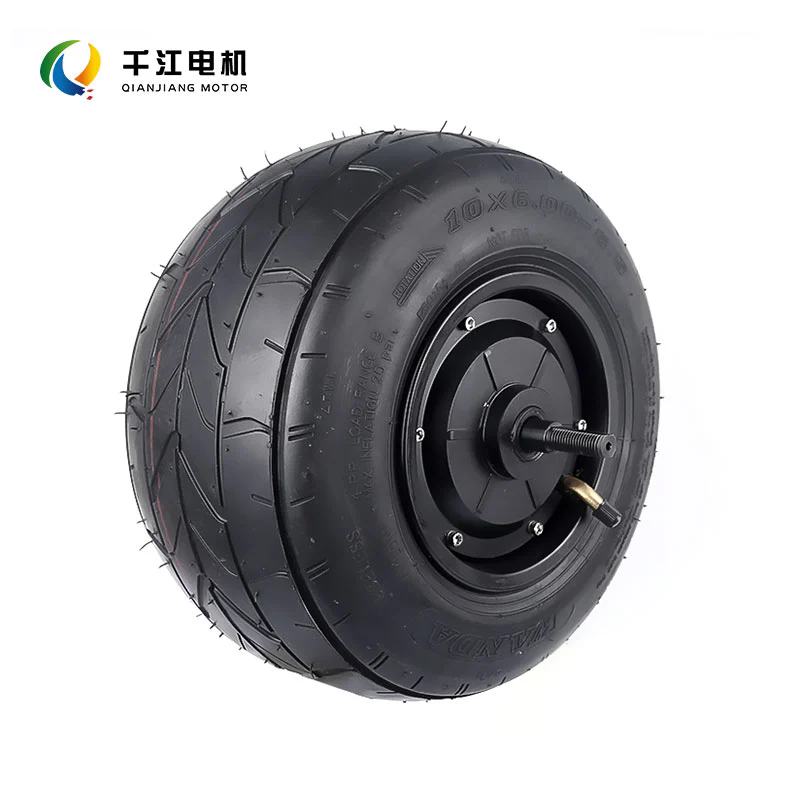
Ningbo Qianjiang Motor Co., Ltd. offers motor configurations with rated power from 1000W to 4000W, rated torque from 30 to 70 N·m, and 48V, 60V, and 72V DC voltage options. The range also includes Hall sensors, road and off-road tyre compatibility, and standard IP56 protection, with IP67 available for high-end customised configurations. Understanding how these specifications relate to real riding conditions helps buyers assess whether a particular configuration is suitable for trail riding, recreational use, or other demanding applications.
What Makes Off-Road Riding More Demanding for an Electric Motor?
Off-road terrain is rarely consistent. A vehicle may move from hard-packed earth to loose gravel, cross shallow ruts, climb a slope, and then travel through a muddy section within the same ride. Each surface changes rolling resistance and tyre grip. The motor must respond to these changing loads without being assessed solely by its rated power figure.
On a paved road, the tyre generally has a more predictable contact surface. On gravel or loose soil, the available traction can vary considerably. If the motor delivers torque too aggressively, the driven wheel may spin instead of moving the vehicle forward. If the available torque is insufficient, the vehicle may struggle to climb or accelerate when carrying a rider and additional equipment. A suitable setup therefore needs balanced torque delivery and controller calibration, not simply a larger motor.
Several terrain conditions influence motor selection:
- Loose gravel and sand: These surfaces can increase rolling resistance and reduce predictable tyre grip. Smooth power delivery helps the rider manage acceleration.
- Muddy tracks: Mud can increase resistance and expose the motor, connectors, and wiring to moisture and dirt.
- Rocky trails: Uneven surfaces create repeated changes in wheel load and can transmit vibration and impact forces through the vehicle structure.
- Steep gradients: Climbing requires sufficient tractive force at the wheel, making torque and controller current particularly important.
- Repeated acceleration: Technical trails often involve slowing down, changing direction, and accelerating again, which places varying demands on the electrical drive system.
These conditions also make the complete vehicle design important. Tyre tread, tyre pressure, suspension, ground clearance, frame strength, and braking capability all influence off-road performance. A motor cannot compensate for unsuitable tyres or a poorly designed chassis. Buyers should assess the drive system as part of the complete vehicle rather than treating the motor as an independent solution.
How Do Torque, Power, and Motor Construction Affect Trail Performance?
Torque is one of the most relevant specifications when an electric vehicle needs to climb, move through loose ground, or accelerate under load. Measured in newton-metres, torque represents rotational force. It helps the wheel overcome resistance and move the vehicle forward. For off-road applications, the available torque at the required operating speed matters more than an isolated maximum figure.
Qianjiang's product range lists rated torque from 30 to 70 N·m and rated power from 1000W to 4000W. These figures provide a starting point for comparing configurations, but buyers should confirm the rated operating point and whether any separately stated peak torque is available only for a limited period.
Power and torque describe related but different characteristics. Mechanical power depends on torque and rotational speed. A motor may provide useful torque at a lower speed for climbing, while another configuration may be more appropriate for maintaining movement at a higher speed. Neither specification should be evaluated without considering the terrain and the vehicle's intended operating range.
For example, a heavy electric vehicle travelling up a steep trail needs enough wheel force to overcome gravity and rolling resistance. A vehicle used mainly on open dirt tracks may place more emphasis on maintaining speed over a wider operating range. In both cases, the battery and controller must be capable of supporting the required motor output.
The internal construction also influences how the motor operates. The described Qianjiang configuration includes a stator with silicon steel laminations and three-phase enamelled windings, together with a rotor containing permanent magnets. When the controller supplies the stator windings with appropriately switched current, a rotating magnetic field is generated. Its interaction with the rotor magnets produces rotational movement.
Hall position sensors provide rotor position signals to the controller. The controller uses these signals to coordinate phase switching and manage motor operation. This is particularly relevant when the vehicle starts or moves at lower speeds on uneven ground. Correct sensor wiring and controller compatibility help the drive system operate as intended.
The main construction features include the following:
- Stator assembly: Includes the fixed shaft, silicon steel laminations, three-phase windings, and Hall position sensors.
- Rotor assembly: Uses a housing and permanent magnets to generate rotation through interaction with the stator's magnetic field.
- Bearings: Sealed bearings at both ends support the rotating assembly.
- Sealing components: End caps and sealing rings form part of the motor's protection against dust and moisture.
- Wiring: Three-phase power cables are identified as U, V, and W, with five Hall signal wires in the described configuration.
For Qianjiang, these construction details are relevant when buyers assess a motor for a vehicle that operates outside paved-road conditions. Our technical review should consider not only the rated torque and power, but also the controller, cable routing, mounting arrangement, and exposure to dust, water, and vibration. Off-road suitability depends on how the motor is integrated into the vehicle and maintained during use.
How Do Protection, Wiring, and Heat Management Matter on Rough Terrain?
Off-road riding exposes electrical components to environmental conditions that are less predictable than those encountered during ordinary commuting. Water spray, wet soil, dust, mud, and repeated vibration can affect the motor housing and the surrounding electrical connections. Protection ratings are therefore important when comparing motors for outdoor use.
The product specification lists IP56 as the standard protection rating, with IP67 available for high-end customised configurations. Buyers should distinguish between these options and confirm the rating of the exact model being supplied. A customised IP67 configuration should not be assumed to be included in every standard product.
An IP rating describes specific protection characteristics under defined test conditions. It should not be interpreted as a guarantee that a complete vehicle can be submerged, pressure-washed, or operated without maintenance. The motor's cable entries, connectors, seals, and installation position also influence the protection of the assembled system.
For vehicles expected to operate on muddy trails or in wet environments, buyers should confirm the following details before ordering:
- The protection rating of the selected motor model.
- The sealing arrangement around the end caps and cable outlets.
- The connector type and its environmental protection level.
- The routing and securing method for power and sensor cables.
- Whether the intended cleaning method is compatible with the motor and electrical connections.
- The inspection and maintenance procedures recommended for the application.
Wiring deserves particular attention on rough terrain. Repeated movement and vibration can place stress on cables if they are not properly secured. A damaged connector or loose electrical connection may cause intermittent operation, sensor errors, or unexpected loss of drive. Our installation checks should therefore include cable clearance, strain relief, connector locking, and protection from contact with moving or sharp vehicle components.
Heat management is another consideration. Climbing slowly through difficult terrain can place a sustained load on the motor. High current demand can increase electrical losses and raise winding temperature. A motor that performs well during a short acceleration test may behave differently during a long climb or repeated heavy-load operation.
Buyers should ask for the rated operating conditions and clarify whether the quoted power is intended for continuous use or a particular duty cycle. The stated efficiency of at least 80 percent provides a useful product reference, but actual efficiency depends on speed, torque, temperature, and electrical operating conditions. Our selection assessment should reflect the expected route and duration of use rather than relying on a single efficiency figure.
Off-road reliability also depends on regular inspection. After riding through mud, water, or dusty conditions, users should check the cable connections, mounting hardware, seals, and surrounding components. Any unusual noise, vibration, or temperature increase should be investigated rather than ignored. A maintenance routine based on the vehicle's operating environment can help identify problems before they affect normal operation.
Which Motor Specifications Are Suitable for Different Off-Road Applications?
There is no single motor configuration that suits every off-road vehicle. A lightweight recreational model, a passenger-carrying vehicle, and a utility vehicle used on uneven working ground have different requirements. The right selection depends on vehicle mass, payload, wheel dimensions, terrain, target speed, and the time spent operating under load.
The available specifications provide several starting points for evaluating a suitable configuration.
| Specification | Available Details | Off-Road Selection Consideration |
| Motor size | 10 inches / 11 inches | Check compatibility with the vehicle's wheel and installation design. |
| Rated voltage | 48V / 60V / 72V DC | Match the battery and controller voltage range. |
| Rated power | 1000W–4000W | Consider vehicle mass, target speed, and operating duty. |
| Rated torque | 30–70 N·m | Evaluate starting, climbing, and loaded operation. |
| Speed | 200–1500 RPM | Confirm the required motor speed and wheel configuration. |
| Efficiency | At least 80% | Check the test conditions and expected operating point. |
| Sensor | Hall sensor | Verify controller compatibility and signal wiring. |
| Protection rating | Standard IP56; up to IP67 for high-end custom configurations | Specify the required protection level for the operating environment. |
| Compatible tyres | Off-road tyres / road tyres | Match tyre type and dimensions to the vehicle platform. |
| Brake type | Disc brake / electronic brake | Confirm the mechanical and electrical brake interfaces. |
| Stator size | 115 × 90 | Confirm the measurement units and technical drawing. |
| Certification information | CE / UL listed in product information | Request documents applicable to the exact model and configuration. |
For frequent climbing or passenger-carrying applications, the suggested starting configuration is 72V with 1500W to 2000W rated power. This range can be considered when a vehicle needs additional output under load. However, buyers should still check the rated torque at the relevant motor speed, controller current, battery capability, and thermal performance during continuous climbing.
For recreational or higher-speed riding, the product guidance identifies 72V and above with rated power of 3000W or more. Such applications require careful attention to the complete vehicle system. Higher output can place greater demands on the battery, controller, wiring, tyres, frame, and brakes. A higher wattage rating should not be treated as a substitute for vehicle-level validation.
The choice of tyre is equally important. Off-road tyres are generally selected for their tread pattern and ability to work on loose or uneven surfaces, while road tyres are designed around different contact and rolling requirements. The motor must be matched to the intended tyre and wheel arrangement. Buyers should confirm wheel dimensions and installation details instead of assuming that every motor size fits every off-road platform.
Before requesting a quotation, buyers should prepare a practical application brief. The following information makes technical evaluation more accurate:
- Vehicle type and intended off-road use.
- Battery voltage and available current.
- Vehicle weight and maximum payload.
- Wheel size and tyre type.
- Typical terrain, including gravel, mud, sand, or steep tracks.
- Required climbing ability and target operating speed.
- Controller voltage, current limits, and control method.
- Required protection rating and expected exposure to water and dust.
- Mounting dimensions, axle details, and brake interface.
Buyers should also confirm the meaning of each performance figure. The 200–1500 RPM range does not directly establish road speed because wheel circumference and drive configuration affect the final result. Similarly, the listed stator size of 115 × 90 should be checked against a dimensioned drawing because the measurement units are not specified in the product information. CE and UL documentation should also be verified against the exact model being purchased.
How Can Buyers Improve Off-Road Motor Reliability Through Correct Integration?
Even a suitable motor can experience problems if it is installed in a vehicle that does not meet its mechanical or electrical requirements. Off-road applications make integration especially important because rough surfaces can create vibration, changing loads, and repeated impacts. A reliable installation should protect the motor while allowing it to operate within its specified electrical and thermal limits.
Start by checking the mounting arrangement. Axle diameter, mounting width, fixing positions, brake interfaces, and available installation space should all be confirmed before production. The motor must be secured correctly so that repeated vibration does not loosen mounting hardware or place unnecessary stress on the housing and cables.
Next, verify the electrical system. The battery voltage must match the motor and controller, while the controller's current limits should be suitable for the required torque and power. The Hall sensor connection and U, V, and W phase wiring should follow the relevant wiring diagram. Incorrect phase or sensor connections can lead to poor starting, abnormal vibration, or excessive heat.
Our factory can review project requirements covering voltage, rated power, torque, wheel dimensions, brake type, and environmental conditions. Ningbo Qianjiang Motor Co., Ltd. also describes support for product design, prototype development, small-batch production, mass production, and customised motor solutions. For a vehicle manufacturer, this type of technical discussion is useful before confirming the final configuration.
Maintenance planning should reflect how the vehicle is used. A recreational vehicle used occasionally on dry trails may have different inspection needs from a utility vehicle that operates daily in wet or dusty conditions. After demanding rides, inspect cable connections, mounting points, seals, and bearings for signs of damage or unusual wear. Follow the manufacturer's maintenance guidance and avoid cleaning methods that exceed the protection capability of the assembled system.
Regenerative braking should also be assessed at system level. The motor may operate as a generator during compatible braking or deceleration conditions, but energy recovery depends on the controller, battery acceptance capability, and vehicle configuration. Buyers who require this function should confirm the controller and battery support it rather than assume that the motor alone provides a complete regenerative braking solution.
A dependable off-road setup comes from matching the motor to the vehicle and the terrain. Torque, rated power, voltage, speed, protection, wiring, mounting, and maintenance all contribute to the result. By sharing accurate operating information at the enquiry stage, buyers can reduce configuration errors and make a more informed decision about the motor required for their application.
What Should Buyers Remember When Choosing a Motor for Off-Road Riding?
Off-road performance depends on more than rated wattage. Torque is important for climbing and moving under load, while power and rotational speed influence the ability to sustain output across the required operating range. Protection, Hall sensor compatibility, wiring, mounting dimensions, and thermal conditions are equally relevant when a vehicle operates on gravel, mud, uneven ground, or steep trails.
Ningbo Qianjiang Motor Co., Ltd. offers configurations with 48V, 60V, and 72V DC rated voltage, 1000W to 4000W rated power, and 30 to 70 N·m rated torque. Our team welcomes enquiries from vehicle manufacturers, distributors, and project buyers looking for a suitable off-road drive configuration. Contact our factory with your vehicle type, battery specifications, wheel dimensions, payload, terrain, and required protection level to discuss the available options and request detailed technical information for your project.
What Do Buyers Commonly Ask About Off-Road Motor Applications?
How much motor torque is suitable for an off-road electric vehicle?
The required torque depends on vehicle weight, payload, wheel radius, terrain, and climbing requirements. A vehicle that frequently climbs steep trails or carries a passenger generally needs more available wheel force than a lightweight vehicle used on level dirt tracks. The listed product range provides rated torque from 30 to 70 N·m, but buyers should confirm the torque available at the required RPM and whether the figure is rated or peak output. Controller current and tyre grip must also be considered.
Is IP56 protection sufficient for riding on muddy and wet trails?
IP56 is the listed standard protection level for the product range and may be suitable for applications that require protection against dust ingress and water jets under the rating's test conditions. It does not mean that the motor can be submerged or cleaned with unrestricted high-pressure water. For projects requiring a higher protection level, IP67 is available as a high-end customised configuration. Buyers should confirm the exact model rating and check the protection of connectors, cable entries, and the complete vehicle installation.
What should be checked when installing a motor on an off-road electric vehicle?
Check the mounting dimensions, axle and fixing details, wheel and tyre compatibility, brake interface, battery voltage, controller current limits, and Hall sensor wiring. The motor should be securely installed, and cables should be routed away from moving parts, sharp edges, and areas exposed to repeated impacts. Buyers should also confirm the required torque and speed range, operating duty, and environmental protection level before approving the installation. Correct integration helps the motor operate within its intended electrical, mechanical, and thermal limits.