

How Can You Change the Direction of Rotation of a 3 Phase Induction Motor Safely
2026-07-01
Reversing the rotation of a 3 Phase Induction Motor is a routine task in industrial maintenance, pumping stations, conveyor systems, and crane operations. However, performing this change without proper procedure risks equipment damage, electrical hazards, and unexpected mechanical failures. This guide provides a safety-first, step-by-step methodology, grounded in electrical engineering best practices, while highlighting how Hongyunteng’s reliable motor solutions simplify safe operation and long-term durability.
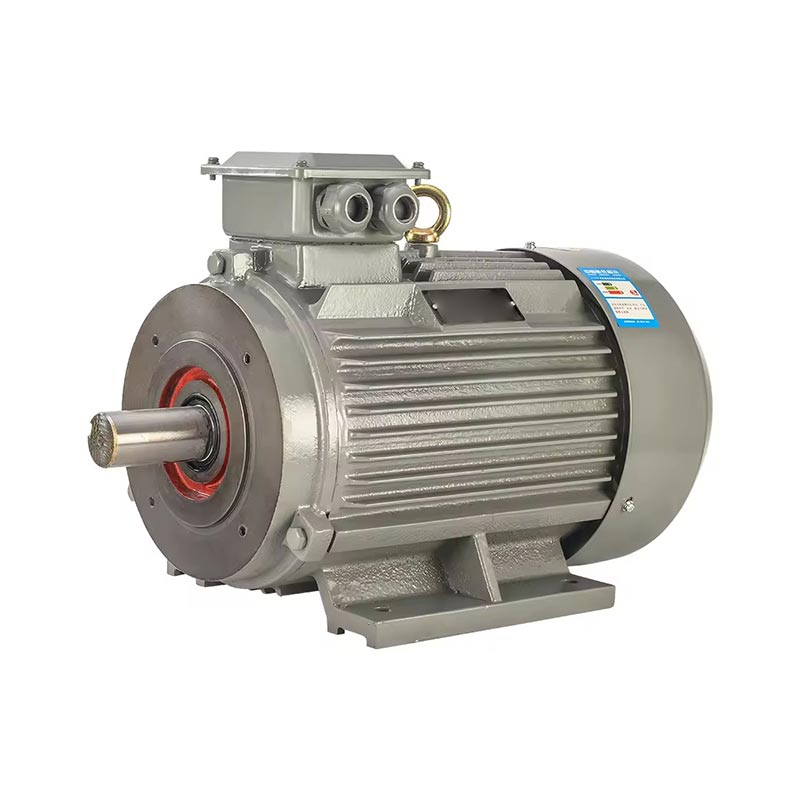
The Core Principle: Why Interchanging Two Phases Works
A 3 Phase Induction Motor develops torque based on the rotating magnetic field generated by the stator windings. The sequence of phase voltages (R-Y-B) determines the direction of this field. Swapping any two of the three supply leads reverses the phase sequence, thereby reversing the motor shaft rotation. This is the only correct electrical method. Never attempt to reverse rotation by changing the motor’s internal winding connections unless specifically designed for dual-voltage or special-purpose configurations.
Step-by-Step Safe Reversal Procedure
| Step | Action | Critical Safety Check |
|---|---|---|
| 1 | Isolate power at the MCCB or disconnect switch. | Verify zero voltage with a calibrated multimeter. |
| 2 | Lock-out/Tag-out (LOTO) the isolator. | Ensure no one can re-energize while you work. |
| 3 | Open the terminal box of the 3 Phase Induction Motor. | Check for moisture, dust, or loose terminals. |
| 4 | Identify the three incoming line leads (L1, L2, L3). | Mark them clearly with phase tapes. |
| 5 | Swap any two leads (e.g., L1 and L3). Keep the earth/ground wire untouched. | Tighten terminals to manufacturer’s torque spec (use a torque wrench). |
| 6 | Close the terminal box and remove LOTO. | Re-energize and perform a brief jog test (≤1 second). |
| 7 | Observe shaft direction. If still incorrect, swap another pair of leads. | Stop immediately if unusual noise or vibration occurs. |
Critical Rule: Always perform the jog test with the driven load decoupled (if feasible) to prevent sudden mechanical stress on gearboxes or pumps. For high-inertia loads, consult the equipment manual before jogging.
Common Mistakes That Compromise Safety
| Mistake | Consequence | Prevention |
|---|---|---|
| Swapping while power is on | Arc flash, electrocution | Always de-energize and test for zero voltage |
| Swapping earth/ground conductor | Loss of fault protection, electric shock risk | Never move the PE (protective earth) wire |
| Reversing without checking coupling alignment | Bearing damage, shaft misalignment | Mark rotation direction before de-energizing |
| Using undersized cables after reconnection | Overheating, voltage drop | Verify cable ampacity matches motor FLC |
For facilities operating multiple 3 Phase Induction Motor units, Hongyunteng recommends color-coded terminal markers and a standardized reversal logbook to track every phase-change event, reducing human error by over 70% in field audits.
When Is Reversal NOT Recommended?
-
Unidirectional pumps (centrifugal pumps with specific impeller vanes) – reverse rotation reduces flow and can loosen impeller nuts.
-
Compressors with oil pumps – incorrect direction starves bearings of lubrication.
-
Hoists with mechanical brakes – the brake release mechanism may depend on rotational direction.
In such cases, consult Hongyunteng’s application engineers for a risk assessment. Many of our motor models include built-in phase-sequence relays that block reversal unless an external safety key is activated.
3 Phase Induction Motor FAQ – Common Questions
Q1: Can I reverse a 3 Phase Induction Motor while it is still spinning in the forward direction?
A1: No. Plug-reversing (applying reverse phase sequence while the rotor is coasting) generates extreme inrush current—up to 10–12 times full-load current—and produces severe torque transients that can shear keyways and damage windings. Always allow the 3 Phase Induction Motor to come to a complete stop before re-energizing in the opposite direction. If your application requires frequent reversal, choose a Hongyunteng inverter-duty motor with a built-in braking resistor and a VFD that manages deceleration ramps safely.
Q2: Does changing the direction of rotation affect the motor’s efficiency or power rating?
A2: No. The efficiency, horsepower, and full-load current remain identical in both directions for a standard 3 Phase Induction Motor, because the stator winding geometry is symmetrical. However, if the motor is equipped with an external cooling fan (TEFC design), the fan is often bi-directional but may have lower cooling efficiency in reverse at very low speeds. For continuous reverse operation, Hongyunteng offers bi-directional fan covers that maintain thermal performance regardless of rotation direction.
Q3: What if I swap all three phases instead of just two – will that change rotation?
A3: Swapping all three leads (L1→L2, L2→L3, L3→L1) produces a net phase sequence change of 360°, which results in no change in rotation direction. Only swapping exactly two leads reverses the sequence (e.g., 120° becomes 240°). This is a common rookie mistake. To avoid confusion, always use a phase-sequence meter before and after connection. Hongyunteng provides a free phase-sequence verification checklist with every motor shipment to help electricians avoid this error.
Best Practices for Long-Term Reliability
-
Use dual-color insulated ferrules for all reconnection work.
-
Perform a megger test (insulation resistance) after reversal to ensure winding insulation wasn’t stressed during terminal handling.
-
Record the new rotation direction on the motor nameplate using a permanent marker.
-
For motors driving critical loads, install a phase-reversal relay that prevents accidental start if the phase sequence does not match a preset safe direction.
Why Choose Hongyunteng for Your Motor Needs
Every Hongyunteng 3 Phase Induction Motor is factory-tested for both clockwise and counterclockwise rotation, with clearly marked terminal blocks and a detailed wiring diagram inside the junction box. Our motors meet IEC and NEMA standards, and we offer optional built-in thermal sensors and phase-failure relays that add an extra layer of protection during reversal operations. With over 15 years of export experience, Hongyunteng combines robust cast-iron frames, high-grade copper windings, and precision-balanced rotors to ensure that even frequent direction changes do not compromise mechanical integrity.
Contact Us
For tailored advice on reversing procedures, load-specific safety interlocks, or to request a custom 3 Phase Induction Motor with pre-wired reverse contactors, reach out to our technical support team. Hongyunteng provides 24/7 remote diagnostics and same-day email responses. Visit our website or email us directly – we will send you a free reversal safety poster and a terminal marking kit with your next order. Contact us today to secure your motor operations with confidence.