

How Can a D Series Solid Shaft Helical Standard AC Gear Motor Improve Industrial Transmission Efficiency?
2026-10-21
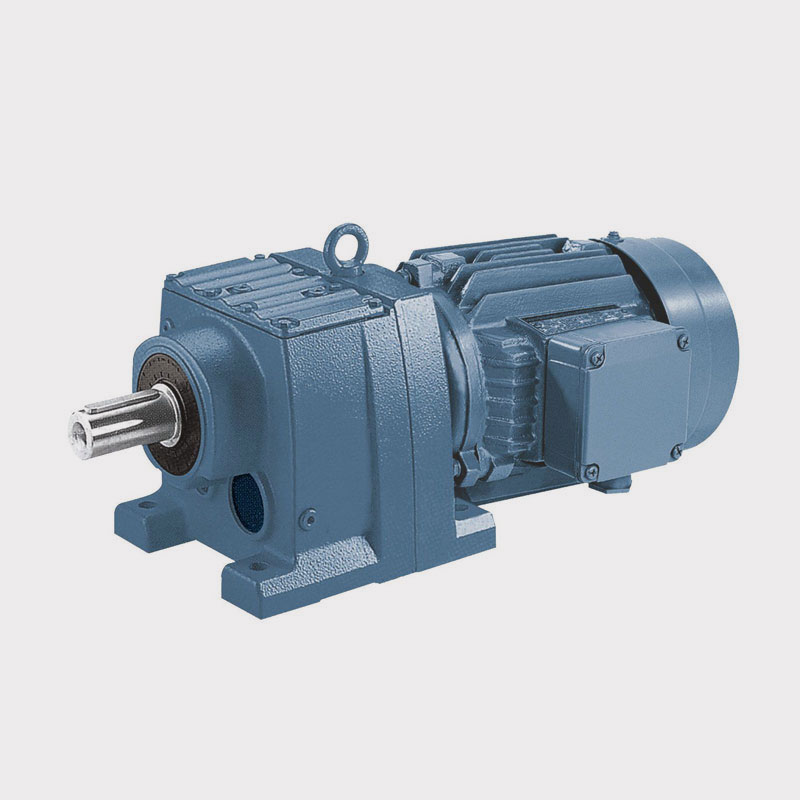
In modern industrial production, stable power transmission is essential for maintaining productivity, controlling operating costs, and ensuring consistent equipment performance. A D Series Solid Shaft Helical Standard AC Gear Motor combines an AC motor with a helical gear reducer to deliver controlled speed and increased output torque for industrial machinery. With a solid output shaft and a practical transmission design, it can support a wide range of mechanical drive requirements.
For manufacturers seeking reliable power transmission solutions, Zhejiang Donghai Reducer Co., Ltd. provides industrial gear motor products designed for machinery manufacturing, material handling, and other demanding applications. Understanding the operating principles, benefits, and selection criteria of a D Series gear motor helps buyers identify a suitable solution for their equipment and production goals.
1. What Makes a D Series Solid Shaft Helical Standard AC Gear Motor Different?
A gear motor integrates an electric motor and a reduction gearbox into one drive unit. The motor generates rotational power, while the gearbox reduces rotational speed and increases output torque according to the selected gear ratio.
The D Series configuration uses helical gears, whose angled teeth engage progressively during rotation. This design supports smooth power transmission and can help reduce operating noise compared with less suitable gear arrangements.
The solid output shaft provides a direct mechanical connection to compatible driven equipment, such as conveyor rollers, sprockets, pulleys, or other transmission components.
Key Product Characteristics
-
Helical gear transmission: Supports smooth engagement and efficient transfer of mechanical power.
-
Solid output shaft: Provides a robust connection point for compatible driven machinery.
-
AC motor drive: Offers a practical power source for industrial equipment designed for alternating-current operation.
-
Integrated construction: Combines the motor and reducer into a coordinated drive assembly.
-
Flexible application potential: Can be selected for different load, speed, and installation requirements, depending on the available model configuration.
These characteristics make the D Series a practical option for equipment manufacturers who need dependable mechanical transmission without designing a separate motor-and-reducer assembly from scratch.
2. Why Is This Gear Motor Important for Industrial Equipment?
Selecting an appropriate gear motor directly affects how machinery starts, runs, and handles its workload. An undersized unit may struggle under load, while an incorrectly selected gear ratio can produce an unsuitable output speed.
A properly matched D Series Solid Shaft Helical Standard AC Gear Motor can deliver several operational benefits.
Improved Speed and Torque Matching
Industrial machines often require lower rotational speeds and higher torque than a standard motor can provide directly. The reduction gearbox adjusts the relationship between input speed and output speed, helping the driven machine operate within its intended range.
For example, a conveyor system may require steady movement rather than high-speed rotation. Choosing an appropriate reduction ratio helps match the motor output to the conveyor's operating requirements.
Smooth and Consistent Operation
Helical gears engage progressively, supporting stable power transmission and helping reduce mechanical noise and vibration when the unit is correctly selected, installed, and maintained.
Consistent operation is particularly valuable in automated production lines, where irregular movement may affect product positioning, material flow, and overall process efficiency.
Better Equipment Integration
The solid shaft allows the gear motor to connect with compatible transmission components. Selecting the appropriate shaft dimensions, mounting arrangement, and coupling can simplify mechanical integration and reduce unnecessary installation adjustments.
Potential for Lower Operating Costs
Efficient transmission, appropriate motor sizing, and routine maintenance can help control energy consumption and maintenance expenses over the equipment's service life. Actual savings depend on operating conditions, motor efficiency, loading, and maintenance practices.
3. Where Can a D Series Solid Shaft Helical Standard AC Gear Motor Be Used?
The D Series design is suitable for a variety of industrial transmission applications, subject to the selected model's torque, power, speed, and load ratings.
| Industry or Equipment | Typical Application | Operational Benefit |
|---|---|---|
| Conveyor systems | Belt and roller conveyors | Controlled material movement |
| Packaging machinery | Feeding and conveying mechanisms | Consistent drive performance |
| Machinery manufacturing | Mechanical drive assemblies | Reliable rotational power |
| Logistics equipment | Material transfer systems | Stable operation under suitable loads |
| Metallurgical equipment | Auxiliary transmission mechanisms | Adaptable power transmission |
| Chemical processing | Compatible mixers and conveying equipment | Controlled mechanical movement |
When selecting a gear motor for chemical processing or other demanding environments, buyers should also assess corrosion protection, sealing, temperature conditions, and any applicable safety requirements.
4. How Should Buyers Select the Right Gear Motor?
Choosing the correct model requires more than comparing purchase prices or motor power. Buyers should evaluate the complete operating requirements of the driven machine.
Essential Selection Factors
1. Required output torque
Calculate the torque needed to drive the equipment, including starting loads and expected operating variations. The selected unit must remain within its rated limits.
2. Output speed and gear ratio
Determine the required output speed and compare it with the motor's rated speed. The reduction ratio should provide the necessary speed while meeting torque requirements.
3. Motor power and electrical supply
Confirm the required power, voltage, frequency, phase, and starting method. These specifications must be compatible with the site's electrical system and control equipment.
4. Shaft and mounting dimensions
Check the solid shaft diameter, keyway requirements, mounting position, flange or foot configuration, and available installation space.
5. Operating environment
Consider ambient temperature, dust, moisture, duty cycle, and load characteristics. Confirm the appropriate protection rating and lubrication requirements for the intended application.
6. Maintenance and service support
Review maintenance intervals, spare-part availability, technical documentation, and supplier support before making a purchasing decision.
Providing these details during the quotation process helps the supplier recommend a configuration that better matches the actual operating conditions.
5. How Does the D Series Compare with a Standard AC Motor?
A standard AC motor and a geared AC motor serve related but different purposes. The main distinction is whether the application requires direct motor speed or a reduced output speed with increased torque.
| Comparison Factor | Standard AC Motor | D Series Geared AC Motor |
|---|---|---|
| Transmission structure | Motor only | Motor integrated with a gear reducer |
| Output speed | Generally closer to motor speed | Reduced according to gear ratio |
| Output torque | Depends on motor characteristics | Increased through speed reduction, subject to losses and ratings |
| Shaft connection | Depends on motor design | Solid gearbox output shaft |
| Typical use | Fans, pumps, and direct-drive equipment | Conveyors, industrial machinery, and reduction-drive applications |
A geared motor is not automatically the best choice for every machine. Direct-drive equipment may not need speed reduction, while applications requiring controlled low-speed movement often benefit from a suitable gear motor.
6. What Maintenance Practices Help Extend Service Life?
Even a well-designed gear motor requires correct installation and regular inspection. A preventive maintenance plan helps identify potential problems before they cause unexpected downtime.
Recommended practices include:
-
Inspect mounting bolts, couplings, and shaft connections regularly.
-
Use the specified lubricant and follow the manufacturer's maintenance schedule.
-
Monitor unusual noise, vibration, temperature increases, or oil leakage.
-
Avoid continuous operation beyond rated torque and power limits.
-
Maintain suitable ventilation and keep cooling surfaces clean.
-
Verify shaft alignment and check for excessive radial or axial loads.
Maintenance requirements vary by model and working conditions. Always follow the manufacturer's instructions for lubrication, installation, and inspection.
7. Why Choose Zhejiang Donghai Reducer Co., Ltd.?
For industrial buyers, selecting a gear motor supplier is about more than purchasing a transmission component. Product suitability, technical communication, configuration options, and after-sales support all contribute to a successful procurement decision.
Zhejiang Donghai Reducer Co., Ltd. offers gear motor and reducer solutions for industrial transmission applications. Buyers evaluating a D Series Solid Shaft Helical Standard AC Gear Motor should communicate their required output speed, torque, motor power, mounting arrangement, and operating environment to support accurate model selection.
When comparing suppliers, consider the following:
-
Whether the proposed model meets the application's technical requirements.
-
Whether drawings and product specifications are available for engineering review.
-
Whether installation guidance and maintenance documentation can be provided.
-
Whether the supplier can support the required quantity, delivery schedule, and applicable customization needs.
Matching the product to the application from the beginning can help reduce installation issues and improve long-term equipment reliability.
Conclusion: Find the Right Gear Motor for Your Application
A D Series Solid Shaft Helical Standard AC Gear Motor can provide a practical combination of speed reduction, torque transmission, and mechanical integration for a wide range of industrial applications. Its value depends on choosing the correct specifications and maintaining the unit according to the manufacturer's recommendations.
Whether you are upgrading an existing production line or developing new industrial equipment, Zhejiang Donghai Reducer Co., Ltd. can help you explore suitable gear motor and reducer solutions.
Looking for a reliable gear motor for your machinery? Contact us with your application details, required output speed, torque, motor power, and installation dimensions. Our team can help you evaluate a suitable transmission solution for your industrial requirements.