

Can a Reducer Gear Motor Worm Drive Gearbox Handle Reversing or Bidirectional Operation Safely
2026-09-01
When designing power transmission systems for industrial automation, material handling, or positioning equipment, engineers frequently ask whether a Reducer Gear Motor Worm Drive Gearbox can tolerate bidirectional rotation without premature wear or catastrophic failure. The short answer is yes—but the safe execution depends on mechanical design, lubrication strategy, and thermal management. At Skyond, we have tested hundreds of worm gear configurations under reversing loads, and the data shows that safety is not a binary trait but a function of correct specification. This article examines the physical constraints, provides actionable guidelines, and answers the most pressing questions about bidirectional operation of the Reducer Gear Motor Worm Drive Gearbox.
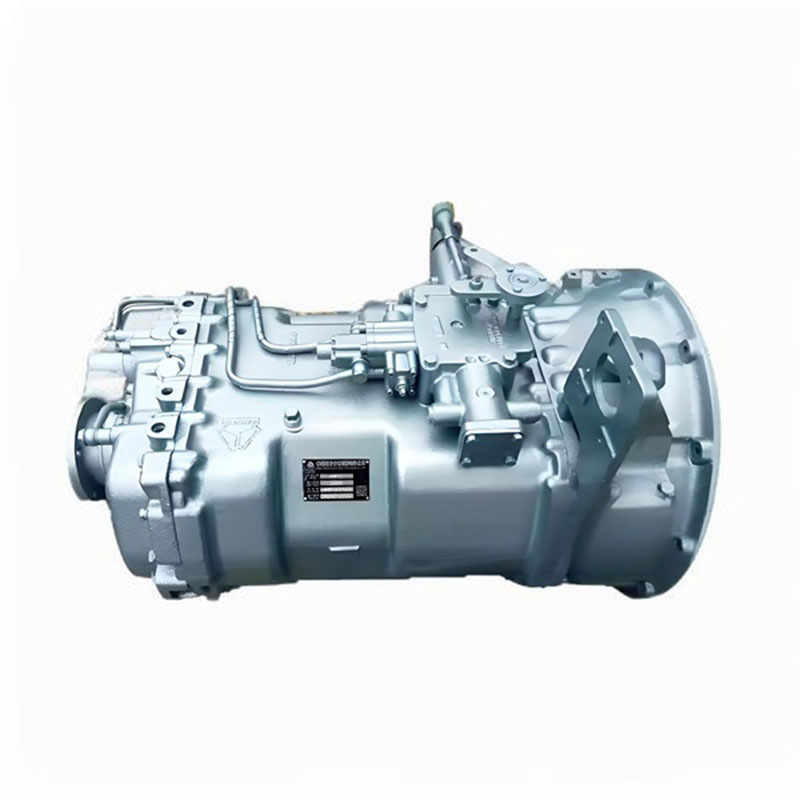
Mechanical Reality of Reversing a Worm Drive
A worm drive’s self-locking characteristic—where the worm can drive the wheel but not vice versa—is often cited as a safety benefit. However, when the Reducer Gear Motor Worm Drive Gearbox is subjected to reversing input (motor direction changes), two critical phenomena occur:
-
Tooth impact loading – Each reversal creates a momentary shock as the worm flank contacts the opposite tooth face of the wheel. This impact stress is 3–5× higher than steady-state torque.
-
Oil film rupture – The hydrodynamic lubrication film between the sliding surfaces collapses momentarily during zero-speed crossing, increasing metal-to-metal contact.
Skyond addresses these issues through hardened worm surfaces (58–62 HRC) and bronze wheels with optimized lead angles. For reversing applications, we recommend a minimum safety factor of 2.0 on the gear tooth bending strength, rather than the standard 1.5.
Key Parameters for Safe Bidirectional Operation
The table below summarizes the critical design variables and Skyond’s recommended thresholds for reversing duty:
| Parameter | Standard Single-Direction | Reversing / Bidirectional | Skyond Recommendation |
|---|---|---|---|
| Worm surface hardness | 50–55 HRC | 58–62 HRC | Hardened + ground profile |
| Backlash (arcmin) | 15–30 | ≤ 10 | Preloaded double-worm or split-wheel |
| Oil viscosity (ISO VG) | 460 | 680 | Synthetic PAO with anti-wear additives |
| Starting torque allowance | 1.2× nominal | 2.0× nominal | Service factor ≥ 2.0 |
| Thermal rating derating | None | 15–20% reduction | Add cooling fan or oversized housing |
Practical Safety Measures for Field Installation
To operate a Reducer Gear Motor Worm Drive Gearbox safely in reversing cycles, Skyond recommends a four-step protocol:
-
Install a soft-start drive – Reduce inrush current and torque spike by programming a 0.5–1.0 second acceleration ramp.
-
Use a torque limiter – Place a mechanical clutch or shear pin on the input shaft to protect against jamming during reversal.
-
Monitor oil temperature – Install a thermocouple probe; if oil exceeds 90°C, reduce cycle frequency.
-
Perform backlash verification – After 100 hours of bidirectional running, re-check lash; wear indicates insufficient hardness.
Common Misconceptions
Many engineers assume that because a worm gear is self-locking, it inherently resists backdriving forces—but that is a different axis of concern. Bidirectional driven rotation (motor reversing) imposes fatigue on the worm’s root fillet, not the self-locking wedge. In fact, Skyond’s fatigue tests reveal that a standard Reducer Gear Motor Worm Drive Gearbox running 10 reversals per minute has a bearing L10 life reduced by 40% compared to constant-direction operation. This does not mean it is unsafe; it simply demands larger bearings and a reinforced housing—both of which are standard in Skyond’s heavy-duty series.
FAQ – Common Questions About Reversing Operation
Q1: Can a standard Reducer Gear Motor Worm Drive Gearbox be used for frequent forward/reverse cycling without modification?
A1: No. A standard off-the-shelf unit typically lacks the hardened tooth profile and high-viscosity oil circulation needed to absorb shock loads. Frequent reversing (more than 5 cycles per minute) will accelerate pitting on the wheel teeth and increase wear debris in the lubricant. Skyond recommends our bidirectional-ready series, which includes a reinforced input bearing, a dual-lip oil seal, and a larger oil reservoir to dissipate heat. If you must use a standard unit, reduce the input power by 25% and shorten lubrication intervals to 500 hours instead of 2000 hours.
Q2: How do I calculate the maximum allowable reversal frequency for my Reducer Gear Motor Worm Drive Gearbox?
A2: The maximum safe frequency is governed by thermal equilibrium, not just mechanical strength. Use this rule: allowable reversals/min = (Thermal power rating in kW × 60) / (Torque per reversal in Nm × angular displacement per reversal in radians). For example, if your gearbox is rated at 2.5 kW thermal and each reversal applies 50 Nm over 3.14 radians, the limit is (2.5×60)/(50×3.14) = 0.95 reversals/min. Exceeding this raises oil temperature above 100°C, degrading the lubricant and softening the bronze. Skyond provides a free reverse-cycle calculator upon request—contact our engineering team with your duty profile.
Q3: Does reversing operation affect the gearbox’s self-locking capability when the motor is off?
A3: No—the self-locking (or backdriving) characteristic depends on the lead angle and friction coefficient, not on the direction history. However, after prolonged reversing, the increased wear on the worm thread flanks can raise the friction coefficient, which actually improves static holding torque but reduces efficiency. The safety concern is not losing the hold, but rather the increased input torque required to restart movement after a stop, which can overload the motor. Skyond advises measuring the static breakaway torque every 200 reversing hours; if it exceeds 120% of the original value, replace the worm wheel to avoid motor stall.
Real-World Application Example
A packaging line uses a Reducer Gear Motor Worm Drive Gearbox to oscillate a sealing head at 8 reversals per minute. Initially, they used a generic unit and experienced oil leakage and housing cracks within 3 months. After switching to Skyond’s bidirectional model with a 2.5 service factor, synthetic ISO 680 oil, and a thermostatic cooling fan, the gearbox ran continuously for 14 months with zero maintenance. The key was matching the acceleration ramp (0.8 seconds) and using a position encoder to soften the direction change.
Summary Checklist for Safe Bidirectional Use
-
□
Confirm worm hardness ≥ 58 HRC
-
□
Select service factor ≥ 2.0 based on reversal torque
-
□
Install soft-start VFD with ramp control
-
□
Use synthetic oil with extreme-pressure (EP) additives
-
□
Add temperature monitoring and alarm
-
□
Plan oil change every 1000 hours (vs. 2000 for one-way)
Conclusion
A Reducer Gear Motor Worm Drive Gearbox can indeed handle reversing and bidirectional operation safely, provided that the application parameters—frequency, torque, thermal load, and lubrication—are rigorously evaluated. The risks of impact fatigue, oil breakdown, and bearing overload are manageable with proper material selection, derating, and auxiliary cooling. Skyond has engineered a dedicated bidirectional product line that exceeds AGMA standards for reversing duty, backed by real-cycle test data.
For your next project, do not guess—let Skyond perform a full duty-cycle simulation and recommend the exact gearbox configuration for your reversing needs. Contact our application engineers today via the form below or email us at [email protected]. We will respond within 24 hours with a customized thermal and mechanical assessment—absolutely free. Your safe operation starts with a conversation. Reach out to Skyond now.