

Are You Choosing the Right AC Asynchronous Motor for Long-Term Industrial Performance?
2026-03-04
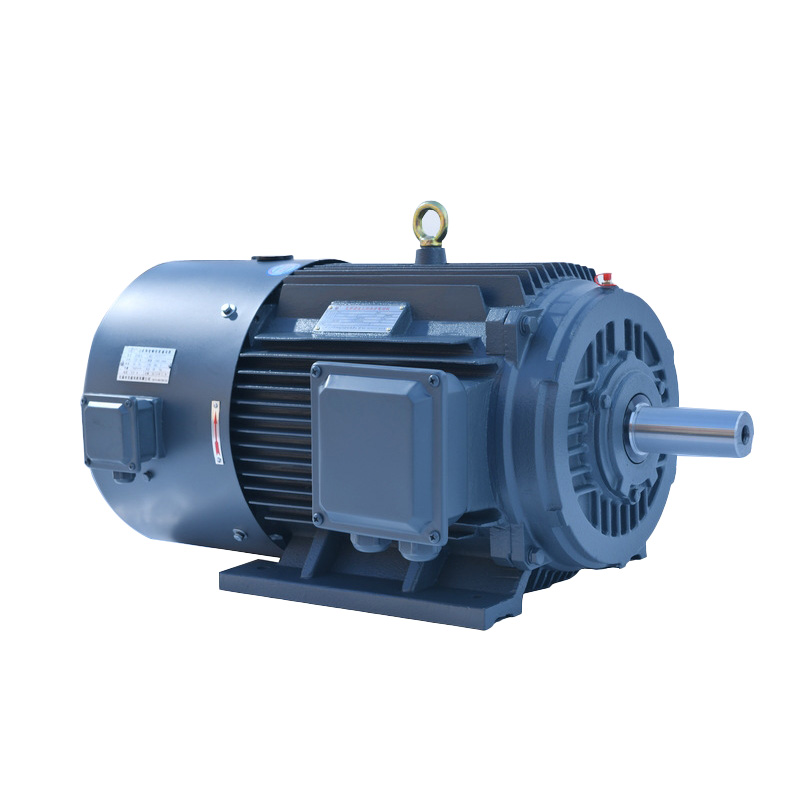
When I first began working closely with industrial drive systems, I noticed that many factories struggled with rising energy bills and unstable equipment output. Over time, Shandong Yinchi Environmental Protection Equipment Co., Ltd. gradually expanded its motor technology portfolio to address these exact issues, and I had the opportunity to see how a well-designed AC Asynchronous Motor can directly influence operational stability. Instead of focusing only on horsepower or price, I learned to evaluate efficiency, durability, and adaptability together. That shift in perspective changed the way I recommend and apply every AC Asynchronous Motor solution.
Why Does Equipment Downtime Often Trace Back to Motor Selection?
In many industrial facilities, motor failure is not caused by overload alone. I have seen common root causes that include improper enclosure ratings, mismatched torque characteristics, and inconsistent voltage supply. When we select a high-quality AC Asynchronous Motor designed for variable load environments, the failure rate drops significantly.
- Improper insulation class leading to overheating
- Inadequate bearing protection in dusty environments
- Incorrect torque curve for startup-heavy machinery
- Unstable power compatibility with local grids
- Low-grade rotor balancing causing vibration
I always remind clients that a motor is not a standalone component. It is the heart of the drive system, and the wrong match can quietly reduce the lifespan of the entire production line.
How Does an AC Asynchronous Motor Improve Energy Efficiency in Real Production Scenarios?
Energy consumption is one of the biggest concerns raised by plant managers. In my experience, upgrading to a modern AC Asynchronous Motor with optimized stator design and high-efficiency laminations can significantly reduce operating costs. The difference becomes especially noticeable in continuous-duty applications such as fans, blowers, conveyors, and pumps.
| Performance Factor | Traditional Motor | Optimized AC Asynchronous Motor |
| Energy Efficiency Level | Standard IE1–IE2 | High IE3–IE4 |
| Heat Generation | Higher | Reduced |
| Maintenance Frequency | Frequent inspections | Extended intervals |
| Operational Stability | Moderate | High consistency |
When I analyze total cost of ownership, I focus not only on purchase price but also on electricity savings over several years. A well-built AC Asynchronous Motor often pays for itself faster than expected.
What Makes Structural Design So Important for Harsh Environments?
Many industrial environments expose motors to dust, moisture, and temperature fluctuations. I have worked with facilities in cement processing, environmental treatment systems, and bulk material handling where environmental stress is unavoidable. Structural integrity makes a clear difference.
- IP-rated enclosures protect internal windings
- High-grade copper windings improve conductivity
- Precision-balanced rotors reduce vibration
- Advanced cooling systems prevent thermal overload
- Durable bearings support continuous-duty operation
A properly engineered AC Asynchronous Motor is built to maintain performance stability even under fluctuating load conditions. I have seen how reduced vibration alone can extend gearbox and coupling lifespan, which ultimately protects the entire drive chain.
How Does Versatility Help Across Different Industrial Applications?
One of the reasons I consistently recommend the AC Asynchronous Motor platform is its adaptability. Whether I am dealing with wastewater treatment fans, belt conveyors, crushers, or air handling systems, the same fundamental motor principle can be tailored through configuration changes.
| Application | Operational Requirement | Motor Adaptation |
| Industrial Fans | Continuous speed stability | Optimized airflow cooling |
| Conveyors | High starting torque | Torque-adjusted rotor design |
| Pumps | Energy efficiency | High-efficiency stator core |
| Dust Collection Systems | Dust resistance | Sealed housing structure |
Instead of redesigning the entire mechanical structure, we adjust voltage, mounting type, insulation class, and cooling configuration. That flexibility is why the AC Asynchronous Motor remains one of the most reliable drive solutions worldwide.
Why Should Buyers Look Beyond Initial Cost?
I often hear procurement teams focus solely on price per unit. However, I have observed that cheaper motors frequently lead to higher hidden costs, including downtime, emergency replacement, and energy waste. When we evaluate lifecycle value, quality materials and strict manufacturing processes become decisive factors.
From precise rotor alignment to rigorous testing before shipment, a professionally manufactured AC Asynchronous Motor reduces operational uncertainty. Reliability is not a marketing phrase; it is the outcome of careful engineering and consistent quality control.
Are You Ready to Upgrade Your Motor System with Confidence?
If you are evaluating options for a new installation or considering replacing aging motors, I encourage you to assess efficiency class, structural durability, and long-term service support rather than focusing on short-term savings. A properly selected AC Asynchronous Motor can transform operational consistency, reduce energy consumption, and protect critical equipment assets.
I would be glad to discuss your application requirements in detail and recommend a configuration that aligns with your production goals. If you want technical specifications, customized solutions, or pricing details, please contact us today and send your inquiry. Our team is ready to help you make a confident and informed decision.