

Top 10 Medical DC Motors for Precision Healthcare Devices
2026-11-16
When precision means the difference between a successful biopsy and a near miss, the heartbeat of medical robotics often comes down to something easily overlooked: the humble DC motor. In the advancing world of healthcare devices—from surgical robots to portable ventilators—motion control demands inch-perfect accuracy, silent operation, and ironclad reliability. But not all motors are built for the pressures of clinical environments. That’s why we’ve sifted through the noise to bring you a curated list of top performers quietly powering the next generation of patient care. Among them, you’ll find Retek making a strong case with compact drive solutions that refuse to compromise on torque or efficiency. Ready to meet the micro-machines reshaping modern medicine?
Why DC Motors Dominate Precision Medical Devices
When a surgeon guides a robotic arm to within a fraction of a millimeter, the motor whispering inside has likely been the same trusted design for decades. Direct current motors, especially brushless variants, have carved out a surprisingly stubborn niche in medical technology. Their secret isn't one dramatic breakthrough, but a quiet mastery of speed control and instantaneous response. In devices like infusion pumps and surgical robots, a motor must not only start and stop with hair-trigger precision but also hold its position against external forces without jitter. DC motors excel here because their torque curves are inherently linear—double the voltage and you get a proportional, predictable kick of movement, letting engineers fine-tune motion profiles that save tissue and veins from abrupt mechanical surprises.
The dominance also comes down to packaging and power hygiene. Operating theatres and diagnostic labs are electromagnetic minefields where stray interference can distort sensor readings or disrupt wireless monitors. Brushless DC motors generate significantly less electrical noise than their AC counterparts, and their compact build lets designers nestle them into impossibly tight spaces like the hinges of a wearable insulin patch or the tip of a steerable catheter. This density comes without sacrificing reliability; a well-made DC motor can hum along continuously for years inside a ventilator, needing only a bearing change during its entire service life. That kind of endurance removes a psychological burden from clinicians, who rarely have to think about the hidden mechanics keeping their tools alive.
Perhaps the most underrated advantage is how intuitively DC motors interface with modern fail-safe systems. In a life-critical syringe pump, the motor driver constantly monitors back-EMF to sense if the plunger hits an unexpected blockage, triggering an instant stall without complex encoders. This direct feedback loop, built into the physics of the motor itself, slashes software complexity and certification timelines. Combined with the fact that battery-powered DC motors keep running even when facility power wobbles during a storm, it's clear why this century-old technology still outpaces newer alternatives where millimeters and milliseconds mean everything.
Key Features That Define a Reliable Medical DC Motor
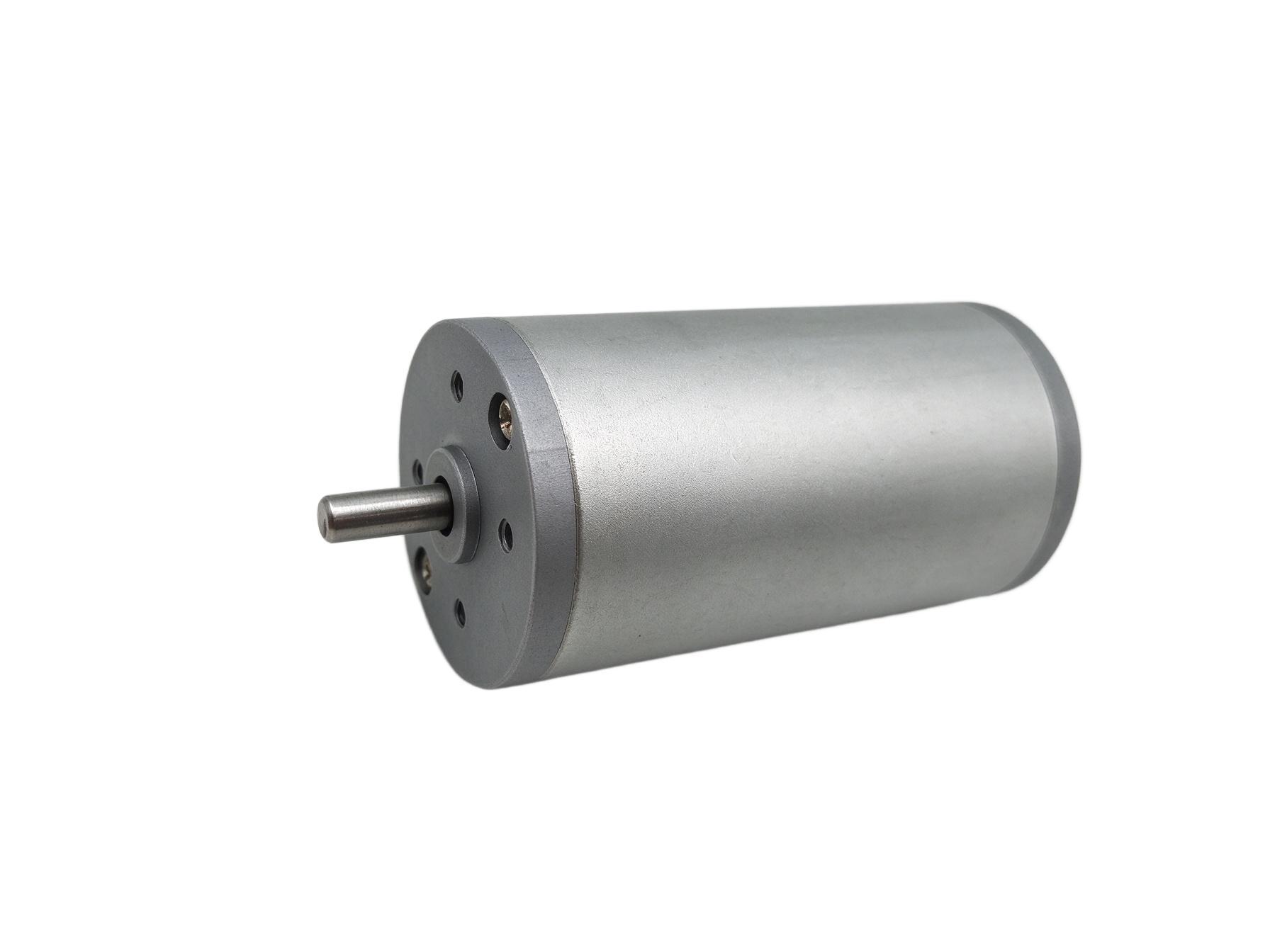
A truly dependable medical DC motor begins with ironclad precision and repeatability. In infusion pumps or surgical robots, even microsecond delays or fractional-degree misalignments can cascade into dangerous dosing errors—so torque ripple is engineered down to virtually nothing. Closed-loop feedback systems, often with hall sensors or optical encoders, monitor rotor position in real time and correct for load changes before a single missed step can occur. This isn’t just about tight tolerances; it’s about guaranteeing that every movement matches the surgeon’s input or the therapy protocol without drift, day after day.
Durability under harsh sterilization cycles separates a disposable motor from one built for critical care environments. Autoclave steam, hydrogen peroxide plasma, and aggressive chemical disinfectants easily degrade standard seals and winding insulation, but a medical-grade motor uses specialized encapsulation—Parylene coatings or overmolded engineering resins—that fend off moisture ingress and corrosion. Bearings are pre-loaded to eliminate play and filled with lubricants stable at extreme temperatures, while rotor shafts often come from stainless steel or ceramic blends that won’t pit or shed particles. These motors survive hundreds of cycles without a whisper of degraded torque, keeping the focus on patient safety rather than component replacement.
Quiet operation and minimal electromagnetic interference are non-negotiable inside an MRI suite or an operating theatre packed with sensitive neuro-monitoring equipment. A reliable motor achieves this through skewed magnets, sinusoidal commutation, and tightly wound stator laminations that suppress high-frequency noise both audibly and electrically. Combined with shielded housing and compliant grounding paths, it won’t introduce image artifacts or false alarms on nearby monitors. That silent, invisible compatibility—coexisting with life-saving electronics—is what transforms a commodity actuator into a trusted partner in a medical device design.
Application Spotlight: Where These Motors Shine
These motors truly come into their own in settings that demand both precision and endurance. In medical robotics, for instance, their whisper-quiet operation and sub-millimeter accuracy allow surgeons to perform delicate procedures with confidence, while the compact footprint easily integrates into tight instrument designs.
You'll also find them excelling in high-end camera gimbals and drone stabilization systems. The instantaneous torque response keeps footage smooth even during rapid panning, and the minimal cogging torque means no jarring micro-movements — a critical factor when shooting in 8K or navigating gusty outdoor conditions.
Industrial automation is another natural fit. From pick-and-place machines to collaborative robots, the motors deliver consistent velocity control over millions of cycles, resisting heat buildup that would sideline less robust alternatives. Maintenance teams appreciate the sealed construction that laughs off dust and light coolant spray.
Brushless vs. Brushed: Choosing the Right Motor for Your Device
The gap between brushless and brushed motors isn’t just about efficiency numbers on a spec sheet—it’s about how the tool or device actually feels in your hands. Brushed motors rely on physical contact between carbon brushes and a spinning commutator, which creates constant friction. That friction steals power as heat, wears down brushes over time, and often gives you a steady but uninspiring hum. You’ll notice it in a cordless drill that gets warm after ten minutes or an RC car that stutters at low speeds. The simplicity of that design has a certain raw appeal, especially when you don’t want to overcomplicate a repair or a one‑off project.
Brushless motors, on the other hand, replace that mechanical dance with an electronic controller that switches the current without ever touching the rotor. The difference is immediate: the tool runs cooler, spins up faster, and adjusts its power output on the fly. In practice, that means a cordless impact driver doesn’t just last longer on a single charge—it sinks screws more consistently without bogging down on dense material. The absence of brush dust also means fewer maintenance headaches in sealed environments. What sometimes gets overlooked is the way torque delivery can be tuned through software, letting manufacturers shape performance curves for specific tasks rather than settling for a one-size-fits-all motor character.
Choosing between them comes down to the kind of experience you actually want. If you’re tinkering with a weekend hobby build or need a backup tool that lives in a drawer for months, a brushed motor’s upfront affordability and straightforward rebuildability can still make sense. For gear that gets used daily—think professional lawn equipment, high‑end robotics, or a drone where every gram of thrust matters—the brushless option pays for itself in reduced downtime and finer control. It’s rarely about picking the “best” motor in isolation; it’s about matching the motor’s personality to the rhythm of your work.
The Silent Workforce: Noise and Vibration Control in Medical Motors
In the hushed corridors of a hospital, where every beep and hum can influence patient recovery, the motors driving critical devices like ventilators and infusion pumps must operate as near-silent partners. Noise isn't just a nuisance here; it's a clinical factor—elevated sound levels can disrupt sleep, raise stress hormones, and even affect wound healing. Modern medical motors tackle this through precision-balanced rotors, optimized magnetic circuits, and fluid-film bearings that replace traditional ball bearings, slashing high-frequency whine and low-frequency rumble alike. The result is a motor that whispers rather than shouts, maintaining a sound profile below the ambient noise of a quiet room.
Vibration control is equally non-negotiable, as even micro-oscillations can degrade sensitive procedures. Surgical robots rely on absolute steadiness to place sutures within sub-millimeter accuracy, and imaging equipment demands stability to prevent blurring. Engineers combat unwanted motion by using skewed stator slots, adaptive damping materials, and real-time feedback loops that cancel resonant frequencies before they build. In some designs, the motor housing itself becomes a tuned mass damper, absorbing vibration energy that would otherwise travel into the device frame. This dual focus on acoustics and dynamics ensures that the motor’s presence is virtually imperceptible to both patient and practitioner.
What makes this silent workforce truly remarkable is its ability to preserve power density while dialing down disturbances. Gone are the days when quiet operation meant oversized, underpowered units—today's compact coreless motors and slotless designs deliver high torque without the cogging effects that generate noise. Material science plays a quiet role too: composite rotors and laser-welded laminations reduce mechanical energy loss, and encapsulating windings in thermally conductive epoxies not only dampen sound but improve heat dissipation. In portable oxygen concentrators or wearable drug delivery pumps, this means patients can go about their lives accompanied by a gentle, almost forgotten hum, the sound of technology that respects the healing power of silence.
Future-Ready: Innovations Driving Medical DC Motor Design
The next generation of medical DC motors isn't just about incremental torque gains or marginal efficiency bumps. It's about rethinking motion from the inside out, blending material science breakthroughs with intelligent control to create motors that anticipate clinical demands. Designers are now integrating ultra-thin, high-energy magnets and low-outgassing winding insulation, pushing power density to levels that let surgical handpieces become smaller without sacrificing the tactile feedback surgeons rely on.
What quietly sets forward-looking designs apart is how they manage heat and noise while operating in critical-care environments. Advanced thermal modeling has led to rotors with curved internal air channels that self-cool under load, reducing the need for bulky external heat sinks. At the same time, asymmetrical slot geometries and precision-balanced armatures cut audible whine to near silence, making ventilator motors fade into the background of an ICU where every beep matters.
Beyond mechanical improvements, the real shift is in native connectivity. Miniaturized onboard sensors now stream real-time performance data—current ripple, vibration signatures, temperature transients—straight to predictive maintenance algorithms. This capability means a motor in a prosthetic limb or a mobile imaging scanner can flag its own wear patterns before a failure disrupts patient care, turning the humble DC motor into a proactive participant in clinical safety protocols.
FAQ
Medical DC motors are purpose-built for use in equipment like infusion pumps, surgical handpieces, and respirators. The key difference lies in stricter material selection, precision control, and the ability to survive repeated sterilization. Standard motors might handle a conveyor belt just fine, but they won’t meet the biocompatibility, low outgassing, or whisper-quiet operation that a hospital environment demands.
You look at torque density first—surgeons need power in a small, light package that won’t cause hand fatigue during long procedures. Speed stability under variable load is non-negotiable, because any fluctuation can ruin the feel of the cut. Low vibration and minimal heat generation are equally critical, as both affect tactile feedback and patient tissue safety.
Ventilators often run non-stop for weeks. Brushed motors would generate dust from brush wear and risk intermittent contact failures right when the patient needs consistent airflow. Brushless designs eliminate that wear point, maintain precise speed regulation over thousands of hours, and produce less electrical noise that could interfere with sensitive monitoring circuits.
Portescap and Faulhaber have a strong foothold in this niche, especially for custom motion solutions in drug delivery and surgical robotics. Maxon produces extremely compact drives often found in prosthetic limbs, while Allied Motion focuses on the higher-torque requirements of hospital beds and patient lifts. Nanotec also supplies a range of motors compatible with cleanroom environments.
Autoclave cycles subject motors to steam, pressure, and rapid temperature swings that can destroy lubricants and corrode internals. Engineers counter this with hermetically sealed housings, high-temperature-rated magnets, and dry film lubricants that won’t break down. For tools that use chemical sterilants, materials must resist crazing and swelling—often requiring the use of medical-grade stainless steels and specialty polymers.
An MRI scanner’s image quality depends on detecting faint radio signals. A motor with sloppy EMI shielding acts like a miniature broadcaster, introducing artifacts that can obscure a tumor margin or lesion. Motors intended for MRI zones use fully enclosed metallic housings, filtered leads, and carefully selected magnet types to suppress emissions well below the thresholds that affect image resolution.
Conclusion
In the realm of precision healthcare, DC motors have become the unassuming backbone of countless life-saving and diagnostic tools. Their dominance stems from an unmatched ability to deliver smooth, controllable motion in compact packages—exactly what devices like surgical robots, infusion pumps, and portable ventilators demand. When scrutinizing the top 10 motors for such critical applications, reliability isn't a bonus; it's engineered at every level. You'll find that standout models share integrated fail-safes, exceptionally low cogging torque for fluid movement, and the kind of electromagnetic compatibility that keeps them invisible to sensitive monitoring equipment nearby. It's this harmony of brute efficiency and delicate control that separates a generic motor from one trusted in an operating room.
The real differentiator in cutting-edge medical motor design now lies not just in the ongoing brushless versus brushed debate—where brushless increasingly wins for longevity and sterility—but in the silent, almost sentient character of the best units. Innovations targeting noise and vibration reduction have moved beyond simple dampening, using advanced sensorless control to anticipate and cancel out disturbances, protecting both patient comfort and diagnostic accuracy. Forward-thinking designs also now embed real-time health telemetry, allowing the motor itself to flag irregularities before a procedure is compromised. Whether animating a powered exoskeleton or precisely metering potent drugs, the finest medical DC motors remain totally overlooked when they're working, yet absolutely unforgettable when a life is on the line. Their evolution is a quiet testament to a simple principle: in medicine, motion is never just mechanical.
Contact Us
Contact Person: Sean
Email: [email protected]
Tel/WhatsApp: +86-13338694967
Website: https://www.retekmotion.com