

Mobile Trailer Generator Set Manufacturing: Ensuring Power on the Move
2026-05-22
In an era where mobility and reliability are non-negotiable, mobile trailer generator sets stand as unsung heroes, silently powering remote worksites, disaster relief efforts, and outdoor events with unwavering consistency. But what truly sets a high-performance unit apart? The engineering heart behind the machine. Hichai Power has been redefining mobile power generation, blending robust manufacturing with intelligent design to deliver energy that moves with you—anytime, anywhere. Whether you’re navigating the toughest terrains or facing the most critical timeframes, understanding the craft behind these dynamic systems reveals why not all power solutions are created equal. Let’s unpack what makes modern mobile trailer generator manufacturing the backbone of on-the-move energy assurance.
The anatomy of a road-ready generator trailer
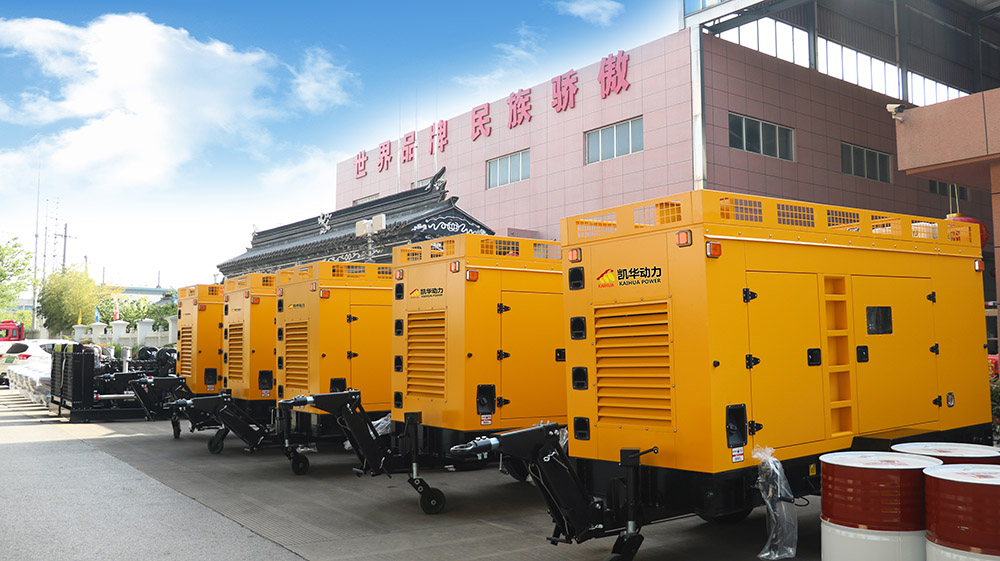
Every road-ready generator trailer begins with a rugged chassis engineered to handle the weight of the genset, fuel tank, and auxiliary equipment while enduring highway vibrations. High-strength steel frames with reinforced cross members distribute the load evenly, and torsion axles paired with electric brakes ensure stable towing even at highway speeds. The frame is often hot-dip galvanized or coated with durable polyurethane paint to resist rust from rain, salt spray, and mud.
At the heart of the trailer lies the generator enclosure—typically sound-attenuated with acoustic insulation to meet noise regulations for urban job sites. Inside, the diesel or natural gas engine is mounted on vibration isolators, connected to a brushless alternator sized for the required prime or standby kVA. Fuel plumbing, coolant lines, and exhaust systems are routed through weather-sealed compartments, with external access points for daily fluid checks without opening the main canopy.
Control and distribution panels are placed at a convenient height, integrating circuit breakers, voltage regulators, and digital controllers that auto-start the unit upon grid failure. External connection lugs and cam-lock receptacles allow quick cable hookup, while integrated battery chargers and block heaters maintain standby readiness. A fully equipped trailer also carries spill containment berms, fire extinguishers, and tie-down rings that satisfy DOT and OSHA requirements, making the unit truly "plug-and-play" from the moment it arrives on site.
Materials and methods that extend service life
Choosing the right base materials is one of the most straightforward ways to push a product’s usable life further. For metals, corrosion-resistant alloys like certain stainless steels or weathering steel naturally develop protective oxide layers that slow degradation, while polymer composites with UV stabilizers and antioxidants resist cracking and fading under harsh sunlight or thermal cycling. Advanced ceramic coatings and surface treatments, such as physical vapor deposition or plasma nitriding, can dramatically increase hardness and wear resistance without altering the core material’s properties. These material choices aren’t just about withstanding stress—they also reduce maintenance frequency and keep performance levels stable over time.
Service life also hinges on how components are put together and protected during assembly. Modular designs that allow individual parts to be swapped out or reinforced without discarding the entire system can keep equipment running long after a single failure would have otherwise caused a shutdown. Techniques like stress relief annealing after welding remove residual stresses that often lead to fatigue cracks, while precision engineering tolerances minimize internal friction and uneven load distribution. Intelligent joining methods, such as adhesive bonding combined with riveting, prevent galvanic corrosion by isolating dissimilar metals and promote more even stress transfer across structures.
Beyond initial construction, real-time monitoring and predictive upkeep are becoming just as important as the physical materials themselves. Embedding sensors to track strain, vibration, or corrosion rates gives operators the data they need to intervene before small issues turn into catastrophic failures—without resorting to rigid, calendar-based replacement schedules that often waste resources. Alongside this, treatments like self-healing polymers and microcapsules filled with repair agents are moving out of the lab and into practical applications, automatically sealing microcracks as they form. Pairing these active systems with periodic but smartly timed inspections creates a feedback loop where material performance and maintenance strategy continually refine each other, stretching service life further than either could alone.
Adapting power output for specialized applications
Customizing power delivery isn't just about cranking up the wattage—it's about tuning output curves to match load behaviors that industrial or scientific gear actually exhibits. For instance, a high-frequency surgical plasma system may demand brief, intense bursts at precisely 2-4 kV for clean tissue cutting, while a delicate semiconductor plasma etch process often requires a steady lower-power glow discharge with minimal ripple. This means designing or retuning inverter stages, pulse-forming networks, and feedback loops so that the output waveform, crest factor, and transient response are not off-the-shelf compromises but engineered fits.
The real craft lies in embedding adaptability without sacrificing reliability. A power stage meant for a laser pumping application might have to seamlessly shift from constant current mode to constant power mode depending on the flashlamp temperature and aging characteristics. We often integrate digital controllers that sample output characteristics in real time and adjust switching frequency or phase shift on the fly, avoiding hot spots and maintaining efficiency across a wide operating envelope. This isn't just a control tweak; it involves selecting topologies—like phase-shifted full bridges or resonant LLC converters—that inherently support wide-range regulation while keeping magnetics and heatsinks within practical limits.
Field realities also push adaptation further. In ruggedized mobile systems, the same core power block might need to run off a 24V vehicle bus one day and a 400 Hz aircraft supply the next, all while delivering tightly regulated 10 kV for particle acceleration tests. Here, the input stage gets a rework with active rectifiers and bus conditioning that can handle both wild frequency swings and voltage sags, and the output control algorithm might pre-distort the drive signals to compensate for known load nonlinearities. The end result is a power conversion chain that feels bespoke, not because it’s built from scratch each time, but because its adaptable architecture lets us reconfigure it rapidly for the job at hand.
Testing protocols that simulate extreme conditions
To truly gauge a product’s resilience, protocols go well beyond standard bench tests, plunging components into scenarios that mimic decades of wear in mere hours. These aren’t just accelerated life cycles, but choreographed ordeals combining thermal shock, corrosive mist, and mechanical vibration in a single sequence. A connector might face rapid swings from -55°C to 200°C while being doused with salt spray, all under heavy electrical load. The aim is to provoke failure modes that only emerge when stressors overlap, revealing weaknesses that isolated tests conveniently miss.
Mimicking real-world extremes isn’t about finding a single threshold—it’s about charting the ragged edge where multiple variables collide. Consider a pressure sensor destined for deep-sea robotics: it’s repeatedly cycled from surface conditions to 6,000-meter simulated depths while experiencing lateral shock and electromagnetic interference. The protocol demands that sensors maintain accuracy within 0.05% full scale, even as saltwater ingress gnaws at seals and thermal gradients warp diaphragms. Each run generates a fingerprint of degradation, letting engineers trace whether a drift stems from material fatigue or electrochemical migration.
The best testing frameworks don’t just replicate nature’s fury; they dissect how a device’s own operation amplifies punishment. A wind turbine controller, for instance, endures not only simulated 150 mph gusts laden with abrasive dust, but also the vibration spectrum produced by its own switching currents. The protocol layers these inputs, then introduces sudden grid faults, watching for cascade failures. It’s this intertwined choreography—environmental stress married to self-generated strain—that separates elegantly overbuilt gear from designs that collapse under their own demands.
User-centric design: simplifying setup and maintenance
Getting started with new software often feels like a chore, but when the interface is built around how people actually think and work, that friction disappears. Instead of wading through dense manuals or hunting for hidden settings, users find clear, guided steps that feel almost intuitive. The focus stays on their goals, not on decoding the tool itself, which means less frustration and more immediate value right out of the box.
Ongoing maintenance is where many products lose their shine, yet a thoughtful design turns it into a background activity. Smart defaults, auto-updates that don't disrupt your flow, and simple troubleshooting prompts make sure the system keeps running smoothly without demanding constant attention. It's about respecting the user's time and mental bandwidth, so they can stay focused on what matters rather than babysitting the technology.
This approach isn't about dumbing things down—it's about removing unnecessary complexity so the experience feels effortless. When setup and upkeep blend into the daily rhythm instead of interrupting it, people naturally engage more deeply. The result is a product that feels like a reliable partner, adapting quietly to real-world use rather than forcing users into rigid, time-consuming routines.
Stories from the field: unexpected challenges and solutions
Out in the field, things rarely go as planned. I once arrived at a remote site to install monitoring equipment, only to discover that the local habitat was flooded far earlier than usual. My carefully scheduled setup dates became impossible, and I had to improvise with a floating rig made from recycled barrels and zip ties. It looked absurd, but it kept the sensors above water and even survived a sudden storm. The data we gathered that season ended up revealing how the flooding patterns had shifted, something we would have missed entirely if we had stuck to the original timeline.
Another time, while working on a community health survey in a mountainous region, we realized the translation app we relied on had no support for the local dialect. Conversations stalled, and trust began to fray. One of our drivers, a local resident, stepped in to interpret, but he wasn’t trained in the technical terms. We ended up doing role-play sessions each evening, acting out symptoms and treatments until he got comfortable with the vocabulary. Those nightly rehearsals not only saved the project but also turned the driver into a respected health promoter long after we left.
Perhaps the most humbling challenge came during a soil restoration project where we introduced a fast-growing cover crop that was supposed to stabilize the land. Within weeks, it choked out the native seedlings we had painstakingly planted. Instead of starting over, we turned the problem into an experiment: we selectively cut the cover crop to use as mulch, which suppressed weeds and slowly released nutrients. The natives bounced back stronger than ever, and we stumbled onto a low-cost method that local farmers still use today. Those moments teach you that the best solutions often come from the very obstacles that threaten your work.
FAQ
A mobile trailer generator set is a portable power solution mounted on a trailer, combining a diesel or gas generator with a towable chassis. It works by converting mechanical energy from an engine into electrical energy, which can be deployed quickly to remote locations, disaster sites, or construction zones, ensuring continuous power without permanent installation.
Manufacturing involves rigorous welding, heavy-duty steel framing, and weatherproof enclosures to withstand harsh conditions. Each unit undergoes load bank testing, vibration analysis, and quality checks, ensuring that components like alternators, control panels, and fuel tanks meet strict standards for long-term reliability.
Trailer-mounted generators offer unmatched portability, allowing rapid relocation between sites without cranes or special permits. They include built-in fuel tanks, hitches, and roadworthy lighting, making them ideal for emergency response, outdoor events, and remote work where fixed generators would be impractical.
We offer full customization including power output (from 20 kVA to over 2000 kVA), sound-attenuated enclosures, dual fuel systems, synchronization panels for paralleling multiple units, remote monitoring, and specialized trailer designs such as off-road or lowboy trailers to fit specific operational needs.
Safety features include automatic voltage regulation, emergency stop buttons, secure lockable doors, fire extinguisher mounts, and grounding systems. Trailers are equipped with electric brakes, breakaway kits, and DOT-compliant lighting to ensure stable towing and compliance with road safety regulations.
They are designed for extreme environments, from arctic cold to desert heat, with options like cold-weather kits and tropical radiators. Regular maintenance includes oil changes, fuel filter replacements, and occasional load testing, with remote diagnostics available to simplify upkeep even in remote locations.
Conclusion
In the demanding world of mobile power generation, trailer-mounted generator sets are engineered to deliver reliable electricity wherever it’s needed, from remote construction sites to emergency disaster zones. The heart of this versatility lies in the robust anatomy of road-ready generator trailers, which integrate weatherproof enclosures, vibration-dampening mounts, and compact yet powerful engines. Manufacturers prioritize materials and methods that extend service life, such as marine-grade aluminum alloys and stainless-steel fasteners that resist corrosion in harsh environments, along with advanced powder coating and sealed electrical connections. This focus on durability ensures that the unit can withstand the rigors of transport and continuous operation without compromising performance.
Tailoring power output for specialized applications is another hallmark of modern trailer generator manufacturing, with configurable voltage, frequency, and paralleling capabilities that serve everything from medical facilities to mining operations. Rigorous testing protocols simulating extreme conditions—like desert heat, arctic cold, and high-altitude thin air—validate every system before deployment, guaranteeing that the generator will start and run when it matters most. User-centric design further simplifies setup and maintenance, featuring intuitive controls, tool-less access panels, and ergonomic fuel and oil management. Real-world stories from the field repeatedly highlight how these thoughtfully designed units overcome unexpected challenges, from sudden load spikes to prolonged off-grid missions, proving that mobile trailer generator sets are not just equipment but critical lifelines on the move.
Contact Us
Contact Person: Ms. Lu
Email: [email protected]
Tel/WhatsApp: 8618917899306
Website: https://www.hichaipower.com