

Best Energy Storage Cabinet for Reliable Backup Power
2026-08-28
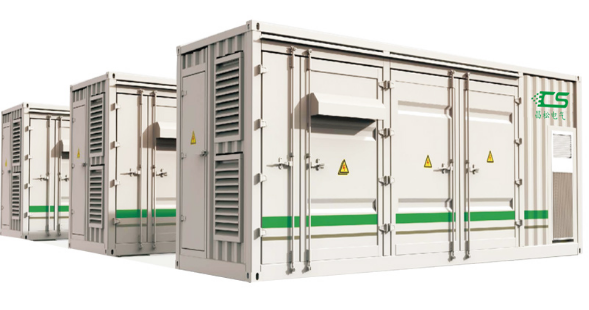
When the grid fails, hesitation is the biggest threat. The best energy storage cabinet for reliable backup power isn't just a box of batteries—it's the difference between a minor disruption and a full outage. Chang Song approaches this challenge with a focus on real-world resilience, and in this post we explore the key features that separate a dependable cabinet from a costly compromise.
How Many Hours of Backup Do You Actually Need?
Most people never time how long their worst local outage actually lasts, so they either overspend on battery capacity or end up with a system that quits before the fridge warms up. Pull your utility's outage history for the last few years and note the three longest events—those are the ones that dictate real need, not the average.
Once you know that number, subtract what a generator or solar array can cover during the daytime, then size storage for the overnight stretch. A home running only lights, internet, a refrigerator, and a gas furnace blower rarely needs more than 8 to 10 hours; adding an air conditioner or well pump can easily push that past 24. Match the hours to the loads you refuse to lose, not to a salesman's one-size-fits-all chart.
Why Lithium Iron Phosphate Outlasts Other Chemistries
The secret behind lithium iron phosphate's remarkable cycle life lies in its stable olivine crystal structure. Unlike layered oxide cathodes that tend to crack and degrade under repeated stress, LFP's phosphate framework holds its shape even after thousands of charge-discharge cycles. This structural integrity means the active material doesn't shed capacity the way nickel-rich alternatives do, so your battery keeps delivering nearly the same energy on day one as it does three years later.
There's also the matter of thermal headroom. LFP batteries can shrug off higher temperatures that would send other chemistries into accelerated aging. Because the iron-phosphate bond is inherently resistant to oxygen release, the cathode doesn't undergo exothermic side reactions that quietly eat away at capacity. This translates to a battery that tolerates hot climates, fast charging, and less-than-perfect thermal management without paying a steep longevity penalty.
Real-world data backs this up. Fleet operators using LFP packs commonly report 80% capacity retention after 3,000 to 5,000 full cycles, while conventional NMC cells often fall below that threshold in half the time. For anyone tired of swapping out batteries every couple of years, the chemistry's refusal to die young is the strongest argument for making the switch.
Cabinet Ventilation and Heat: The Silent Lifespan Killers
Heat inside a cabinet rarely announces itself with a bang or a visible flame. It accumulates quietly, trapped between equipment chassis and closed door panels, slowly pushing components past their thermal comfort zone. Power supplies run a few degrees hotter each month, capacitors dry out faster than their datasheets predicted, and solder joints expand and contract until microscopic cracks appear. Most people blame age or a cheap power strip, but the real culprit is often the cabinet itself holding heat like a wool blanket in July.
The problem compounds because airflow paths are rarely obvious. A cabinet crammed against a wall with no rear clearance recirculates its own exhaust, and stacking network switches directly on top of amplifiers creates vertical heat columns with nowhere to escape. Even a modest setup can turn a well-ventilated room into a miniature oven behind a closed door. The first warning signs are subtle: a cooling fan that cycles more often than it used to, or a drive that reports SMART temperature warnings only after the system has been running for an hour. By the time hardware starts throttling or randomly rebooting, the lifespan damage has already accumulated.
Addressing silent heat death does not require exotic cooling gear. Rethink shelf spacing, move the cabinet away from heat sources like direct sunlight or radiators, and add a small low-speed fan at the top to pull air upward while fresh air enters through a filtered bottom vent. In passive cabinets, leaving an inch of clearance behind each component and using short patch cables instead of dense bundles lets natural convection do its job. The key is treating ventilation as a permanent design constraint, not an afterthought — because every degree above ambient temperature trims days or weeks from the life of every electronic part inside.
Inverter Pairing Mistakes That Leave You Powerless
Most people assume any inverter will work with any battery bank, but that casual assumption is exactly where blackouts begin. A 12V inverter paired with a 24V battery string won't just underperform—it may refuse to start at all, or worse, trip its internal protection and leave you fumbling in the dark. The real trap is matching voltage by habit instead of checking the actual battery configuration under load. A bank that reads 12.8V at rest can sag below the inverter's cutoff threshold the moment the fridge kicks on. Suddenly your "safe" setup becomes a nightly power failure waiting to happen.
Another silent killer is ignoring surge capacity. You might think a 1000W inverter handles a 900W microwave, but the startup draw can spike two or three times that rating for a second or two. Without enough headroom, the inverter chokes, the microwave dies mid-cycle, and you're left resetting breakers in the cold. Pairing by continuous wattage alone is how people end up with a system that works fine on paper and not at all in real life.
Then there's the cable mistake nobody talks about—using undersized wires because the inverter terminals fit. A 2000W inverter pulling 200 amps at 12V needs thick, short cables with proper lugs. A flimsy 4-gauge wire will heat up, drop voltage, and eventually melt insulation or weld itself to the terminal. That's not just inconvenience; it's a fire hazard that leaves you powerless in more ways than one. Pair the right inverter with the wrong wire, and you've built a system designed to fail when you need it most.
Solar Charging Limits Most Spec Sheets Hide
Most spec sheets lead with peak wattage under standard test conditions—cool panel, perfect angle, 1000 W/m² irradiance. What they don't say is that those numbers start crumbling the moment the panel heats up. On a 35°C rooftop, cell temperature can easily hit 60°C, and voltage drops enough to shave 12–18% off the rated output. Add a thin layer of dust or a single leaf shadowing a few cells, and the whole string sags further. The real charging limit isn't the number printed on the back; it's the thermal and shading reality nobody puts in the brochure.
Then there's the charge controller and the battery's own appetite. A panel may push 300 watts at noon, but if the battery bank is above 85% state of charge, most lithium BMS units taper current hard—sometimes to 10% of the panel's capability. Even with an MPPT controller, low-light behavior is rarely disclosed: below a certain input voltage threshold, the controller won't wake up, which means the first and last hour of daylight contribute almost nothing. That shortens the useful charging window far more than sunrise-to-sunset numbers suggest.
Wiring losses get even less attention. Long cable runs, undersized conductors, or corroded terminals create voltage drop that eats into the margin between panel voltage and battery voltage. A 5% drop from panel to controller might not sound like much, but paired with a hot panel and a half-full battery, it can prevent the system from reaching absorption voltage at all. These stacked inefficiencies are why real-world solar charging routinely lands 25–40% below the spec-sheet headline—not because the panel is faulty, but because the limits are hiding in plain sight.
Modular vs. All-in-One Cabinets: Which One Ages Better?
The usual assumption is that all-in-one cabinets look sleeker at first, but modular designs have a quiet advantage as years pass. Rather than a single statement piece that must be replaced wholesale when one section fails, a modular setup lets you swap out a drawer front, a hinge, or an entire cabinet box without disturbing the rest. That repair-friendly nature often keeps modular cabinets looking intentional longer, while an all-in-one unit can start showing cumulative wear in high-touch areas that then drags down the whole appearance.
All-in-one cabinets do have their own aging story. Because they are built as a single unit with fewer visible seams, they tend to avoid the slight misalignments that can develop between modular pieces over time. However, that rigidity cuts both ways: if the finish fades unevenly or a door warps from humidity, you cannot simply replace the affected part. You either live with the flaw or refinish the entire cabinet, which is rarely practical in a busy kitchen.
In the end, modular cabinets generally age better for households that value adaptation and easy fixes, while all-in-one cabinets can stay handsome if they are treated gently and kept away from moisture extremes. The real difference is not which one is more durable out of the box, but which one gives you a graceful way to handle the inevitable scuffs, loose hardware, and design fatigue that come with time.
FAQ
Start with the inverter's surge rating, not just the battery capacity. Many people buy a cabinet with plenty of kilowatt-hours but then find it can't start a well pump or air conditioner because the inverter can't handle the startup draw. Also check the depth of discharge the manufacturer actually allows, and whether the system supports time-of-use shifting if you want it to pay for itself over time.
Don't just add up every appliance's wattage. Pick the few loads you truly need during an outage—fridge, lights, internet, maybe a furnace blower—and run them through a typical day. Multiply that by the number of hours you expect the outage to last, then add 20% buffer. That gives a much more realistic number than guessing based on whole-house usage.
For most people, yes. LFP batteries last several times longer, can be discharged deeper without damage, and take up less space. Lead-acid still makes sense for a rarely used cabin or a very tight budget, but if you're installing something in a primary home, the lower lifetime cost of LFP usually wins.
Yes, but you need a model rated for outdoor use, not just any indoor cabinet with a cover. Outdoor installation requires proper clearance for ventilation, protection from direct sun and rain, and sometimes a concrete pad. Check the operating temperature range—cold winters can reduce usable capacity unless the cabinet has a built-in heater.
Very little compared to older systems. There's no water to top up or terminals to clean on most lithium-based units. The main tasks are keeping the cabinet free of dust and debris, checking that firmware updates are installed, and every few months verifying that the system switches over correctly during a test outage.
Look for a battery management system that monitors each cell's temperature and voltage, not just the pack as a whole. Thermal runaway protection is critical with lithium chemistries, and a metal enclosure with proper venting adds another layer. Also make sure the inverter has anti-islanding protection so it won't backfeed the grid during an outage.
It depends on your current inverter. If you have a string inverter, you may need to add a separate battery inverter or replace it with a hybrid model. Microinverter systems usually work more easily with an AC-coupled battery. The key is to check compatibility before you buy, not after the panels are already on the roof.
Most LFP cabinets are rated for 6,000 to 10,000 cycles, which translates to well over a decade of daily use. To extend that, avoid keeping the battery at 100% charge all the time if you're not using it for backup, and keep it within the manufacturer's recommended temperature range. Firmware updates also help the system manage cells more efficiently.
Conclusion
Choosing a reliable backup power cabinet means first calculating your actual runtime needs, not just peak wattage. Too many buyers discover on the first outage that a few LED lights and a fridge drain their reserve in under four hours, while others overpay for days of capacity they will never tap. Lithium iron phosphate remains the safest long-term bet because its cycle life routinely exceeds 6,000 full discharges—often three times what older lithium or lead-acid chemistries survive—and its thermal stability prevents the slow internal damage that quietly kills cheaper cells. Yet chemistry alone is not enough: a cabinet crammed into a closet with no airflow will cook its own electronics, cutting lifespan in half even when specs look impressive on paper. Pairing the storage with the wrong inverter—one too small for your startup surges or incompatible with your home's split-phase wiring—leaves you literally powerless when the grid drops.
Solar charging is where many spec sheets overpromise. A 5kW array rarely delivers 5kW into the battery after conversion losses, cable voltage drop, and temperature derating; real-world charge limits often sit 20-30% below the marketing number, so size your array around measured winter output, not summer peaks. Modular cabinets, despite their higher upfront cost, age more gracefully than all-in-one units because you can replace a single failed battery module or add capacity without junking the entire system. All-in-one designs win on plug-and-play convenience, but a dead integrated charger or BMS often means a full replacement under warranty headache. The best cabinet for reliable backup power is the one whose ventilation, inverter headroom, and modular battery design you have verified against your own measured loads and charge patterns—not the one with the longest spec sheet.
Contact Us
Contact Person: Tonglun Chen
Email: [email protected]
Tel/WhatsApp: 8618906642555
Website: https://www.cncsele.com